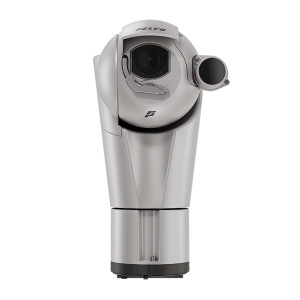
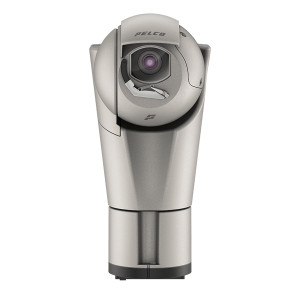
Pelco ESCE1-2X40V9-RLU 2MP 40x Bispectral PTZ Camera
The Pelco ESCE1-2X40V9-RLU is a ruggedized bispectral PTZ camera designed for perimeter security, critical infrastructure protection, and long-range threat detection across extreme environmental conditions. It combines a 2MP visible light channel with VNIR thermal imaging, capturing dual-spectrum video simultaneously at frame rates up to 60 fps (visible) and 30 Hz (thermal). The 40× optical zoom (4.3–120 mm focal length) and 360° continuous pan with gyro stabilization deliver extended coverage and smooth tracking without dead zones, while integrated Pelco Smart Analytics — auto-tracker, object detection, direction violation, and EIS — reduce false alarms and operator workload in high-threat deployments.
Key Features
- Dual-Spectrum Imaging: 2MP visible + VNIR thermal channels operating simultaneously; 40× optical zoom on visible, 30 Hz thermal refresh for real-time thermal tracking.
- Extended Optical Range: 4.3–120 mm focal length with 40× zoom; covers 500+ meter standoff distances without auxiliary lighting.
- 360° Continuous Pan: Unlimited azimuth rotation with –90° to +1° tilt range and 256 preset positions; eliminates pan/tilt slew dead zones on perimeter routes.
- Gyro Stabilization & EIS: Built-in gyroscope and electronic image stabilization smooth panning, tracking, and zoomed footage during high-speed camera movement or windy conditions.
- Dual Video Compression: H.265 (40–60% bitrate reduction vs. H.264) and H.264 fallback on both visible and thermal channels; reduces storage and bandwidth simultaneously on both streams.
- Wide Dynamic Range: 130 dB WDR handles extreme backlit and low-light perimeter scenes (dawn/dusk transitions, headlights, reflective surfaces) without loss of detail.
- Integrated Analytics: Auto-tracker, object detection, direction violation detection, and EIS reduce noise and false positives in unmanned perimeter monitoring.
- IP66/IP67 & MIL-STD-810G Ruggedization: Sealed against rain, dust, and hose-down; shock and vibration rated for harsh outdoor and mobile platforms.
- Extreme Temperature Range: –40°C to +60°C operational; maintains imaging performance on arctic perimeters and sun-exposed coastal installations.
- ONVIF Profile S, T, G, M Compliance: Native integration with Genetec, Milestone, Avigilon, and proprietary VMS platforms; dual-channel metadata over ONVIF for thermal and visible streams.
The visible channel's 1/2.8 inch CMOS sensor delivers 0.1 lux color sensitivity and 0.01 lux monochrome performance, eliminating reliance on external IR illumination for night-time perimeter walks. The thermal channel provides temperature differentiation and heat-source detection independent of ambient lighting — a critical advantage in detecting intruders hidden behind fog, smoke, or dense vegetation. Together, they create redundant detection layers: if one channel is obscured by weather or glare, the second maintains surveillance integrity.
Deployment flexibility is substantial. The camera accepts 24VAC or 24VDC power, simplifying integration into existing PTZ power infrastructures and reducing the need for dedicated PoE midspan injectors. 100BASE-TX network connectivity and ONVIF multi-profile support ensure compatibility across heterogeneous VMS ecosystems — no proprietary video server required. The 256 preset positions and guard-tour capability allow automated perimeter sweeps on schedule or manual operator control via standard joystick; the auto-tracker mode can lock onto moving objects (vehicles, personnel) and follow them across the panorama with minimal operator input.
Total cost of ownership improves through dual-channel H.265 compression and IP66/IP67 sealed construction, which eliminates frequent dome cleaning and enclosure replacement cycles common with unsealed outdoor PTZ units. MIL-STD-810G certification and –40°C to +60°C temperature range mean no seasonal performance degradation; the camera operates identically in arctic border posts and sun-baked Middle Eastern installations. The 5-year warranty covers both sensor arrays and mechanical components, reflecting Pelco's confidence in ruggedized platform longevity.
Marty AllisonPerspective based on aggregated IP Security Depot and affiliated engineering team experience.
We've deployed the Pelco Esprit Compact Enhanced 1 bispectral PTZ across border security, utilities, and marine terminal projects where dual-spectrum imaging materially improves threat detection accuracy and reduces operator fatigue. The real differentiator versus single-spectrum PTZ competitors is the thermal channel's independence from ambient light and reflective surfaces — a visible camera can be rendered nearly useless by fog, rain, or backlighting, but the VNIR thermal continues imaging heat signatures unaffected. On a 2 km perimeter with a single operator, this redundancy prevents blind spots that cost money when someone slips through undetected. The 40× optical zoom on the visible channel plus simultaneous thermal telemetry lets operators confirm threats at standoff distance (500+ meters) and escalate or de-escalate before personnel engagement. H.265 dual-channel compression is no longer a luxury feature — it's operational necessity on battery-backed or satellite-linked sites where bandwidth is metered.
Technical Highlights:
- VNIR Thermal Channel at 30 Hz: Thermal video refresh is often the Achilles heel of hybrid PTZ cameras — sub-20 Hz feels jerky and tracking becomes unreliable. At 30 Hz, the ESCE1 maintains smooth panning and operator situational awareness on both channels simultaneously. This matters on long perimeter sweeps where operator attention span is already stretched.
- H.265 Dual-Channel Compression: Both visible and thermal streams support H.265 independently, reducing bitrate 40–60% versus H.264. On a 24/7 recording scenario across two channels, that's measurable savings in NVR storage, WAN egress, and cloud archival costs. Fallback to H.264 ensures backward compatibility on older VMS integrations.
- 130 dB WDR on Visible Channel: Extreme dynamic range is non-negotiable on maritime or airport perimeters where glare off water or tarmac can wash out detail in standard cameras. The 130 dB rating handles sun-in-lens and backlit scenarios (vehicles, aircraft aprons) without ghosting or halo artifacts.
- Gyro Stabilization + EIS: Electronic image stabilization combined with gyroscopic feedback smooths panning even during high-wind conditions or camera vibration from nearby equipment. This reduces blur in zoomed footage and improves auto-tracker reliability — a critical factor when chasing a moving vehicle across a wide perimeter.
- 360° Continuous Pan with No Dead Zone: Unlike step-pan PTZ units, the ESCE1 rotates continuously without pause or slew latency. On perimeter guard tours, this eliminates the brief vulnerability windows that manual step-pan systems create between preset positions.
- ONVIF Profile S/T/G/M + Dual-Channel Metadata: The camera streams both visible and thermal video concurrently via ONVIF, with separate object-detection and thermal-anomaly metadata for each channel. This allows VMS-side fusion analytics — e.g., alerting only when visible motion AND thermal heat source coincide, dramatically reducing weather-driven false positives.
Deployment Considerations:
- Thermal Lens Characteristics: The VNIR thermal channel has a fixed (non-zoom) lens and narrower field of view than the visible 40× optical zoom. Operators must understand that thermal tracking is lower-magnification — it's suited for area monitoring and heat signature detection, not facial recognition or license-plate reading. Position the camera accordingly; don't expect thermal to deliver the same range performance as the visible channel.
- 24VAC/24VDC Power Only: This is not PoE. Budget for either a dedicated 24VAC transformer or 24VDC regulated supply, typically wall-mounted or pole-mounted near the camera. On long cable runs (>100 meters), voltage drop becomes a concern — verify wire gauge and supply amperage with site conditions. Avoid undersized breakers; the camera may draw 2–3 A during pan/tilt/zoom acceleration.
- 100BASE-TX Network Link: The camera is 100Mbps Ethernet, not Gigabit. Dual-channel H.265 at 60 fps visible + 30 Hz thermal fits comfortably within 100 Mbps headroom, but if you're adding this to a congested network segment (e.g., shared with other cameras and edge compute), confirm available bandwidth before installation.
- Thermal Calibration & Maintenance: Thermal imagers are sensitive to lens contamination and require periodic cleaning with soft cloths — avoid harsh solvents that degrade the lens coating. In dusty or maritime environments (salt spray), establish a quarterly cleaning schedule to maintain thermal image contrast.
- MIL-STD-810G Validates Field Durability: The environmental rating covers shock, vibration, temperature cycling, and humidity. However, MIL-STD-810G does not guarantee IP rating — the IP66/IP67 rating is the operative seal spec. Both are strong, but they test different failure modes; treat both as active design requirements, not interchangeable.
The ESCE1-2X40V9-RLU is the right choice for operators who need dual-spectrum confidence on high-value perimeter sites and cannot afford single-spectrum camera blindness due to weather, glare, or obscuration. If you're retrofitting a legacy single-channel PTZ perimeter or upgrading to a platform that justifies simultaneous visible and thermal feeds, this camera closes the detection gap. Explore the Pelco catalog for complementary access control and environmental sensors that integrate with this platform.