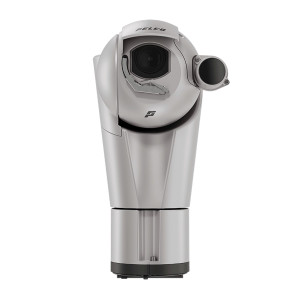
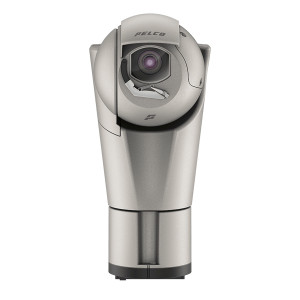
Pelco ESCE1-2X40-RLU Esprit Compact 2MP 40x PTZ Camera
The Pelco ESCE1-2X40-RLU is a ruggedized 2MP PTZ dome engineered for defense, government, and critical infrastructure deployments where equipment reliability under extreme environmental stress is non-negotiable. Built to MIL-STD-810G environmental standards, this camera delivers identification-grade imagery across forward operating bases, border perimeters, and high-threat surveillance scenarios where thermal cycling, sand/dust ingestion, salt-fog corrosion, and sustained vibration are routine operational factors.
Key Features
- 2MP 1/2.8-inch CMOS sensor with 40x optical zoom: The 4.3–120 mm lens range means you can identify individuals at 500+ feet standoff distance — critical for force protection where operator safety depends on early threat detection before personnel are exposed.
- 360° continuous pan; −90° to +1° tilt with 256 preset positions: Continuous pan eliminates dead zones during automated perimeter sweeps. 256 presets reduce operator workload on multi-camera installations by automating routine monitoring sequences.
- MIL-STD-810G certification with IP66/IP67 ingress protection: MIL-STD-810G documents resilience against environmental stressors (thermal shock, vibration, sand, salt fog, humidity, UV) that exceed commercial IP ratings. IP66/IP67 means direct rain and dust ingestion won't degrade optics or electronics, but full submersion requires IP68 — these specs cover weathering, not water immersion.
- Operating range −40°C to +60°C; survives extreme thermal cycling: Forward bases and desert perimeters experience 60°C+ daytime and −40°C nighttime swings. This camera's thermal range means no seasonal swaps or environmental enclosures — one unit through the year.
- 60 fps at 2MP; H.265, H.264, and Motion JPEG compression: 60 fps captures fast-moving threats with minimal motion blur. H.265 cuts storage costs roughly 40–60% compared to H.264 on 24/7 recording — meaningful on multi-camera perimeter systems running months of archive.
- 130 dB WDR for high-contrast scenes; 0.1 lux color / 0.01 lux monochrome: WDR prevents blown-out skies and shadows during sunrise/sunset patrols. 0.01 lux monochrome mode captures identifiable silhouettes under starlight alone — no IR blast needed, reducing detection risk in covert surveillance.
- Gyro stabilization and electronic image stabilization (EIS): Vehicle-mounted or elevated installations on vibrating platforms (helicopters, towers, moving vehicles) benefit from gyro compensation — reduces operator fatigue from image jitter and improves trackability of moving subjects.
- Auto-tracker, object detection, and direction violation analytics: On-camera analytics reduce bandwidth demands on edge processing and VMS. Direction violation flags unauthorized perimeter crossings without human review; auto-tracker locks onto motion during automated patrols.
- ONVIF Profiles S, T, G, M compliant: Ensures third-party VMS (Milestone, Genetec, Axis Camera Station, etc.) integration without proprietary adapters. Profile M adds metadata transmission — critical for analytics correlation across multi-vendor installations.
- 24VAC/24VDC power input; 100BASE-TX network interface: Standard 24V power is available at most defense/infrastructure sites without special PSU logistics. 100BASE-TX integrates into legacy Ethernet backhaul; gigabit uplink is not required, reducing switch port costs on bandwidth-constrained networks.
- 5-year manufacturer warranty: Defense and government deployments favor extended support terms. Five years covers the typical replacement cycle for fixed surveillance infrastructure.
Integration and Compatibility
Verify 24VAC or 24VDC availability at your installation site before committing to power infrastructure. The 100BASE-TX interface pairs with standard managed switches; if you're consolidating video over WAN or wireless backhaul, confirm adequate bandwidth for dual-compression (H.265 primary, H.264 fallback). Full Pelco IP cameras integration with Pelco client software and third-party ONVIF platforms ensures compatibility with your existing VMS. For high-pressure washdown or marine salt-spray environments, consider the ESSE1 Esprit Stainless series instead — this model is rated for dust and rain, not continuous spray.
When to Choose a Different Model
If your deployment doesn't require MIL-STD-810G environmental documentation or operates in standard commercial conditions, a lower-cost compact PTZ without military-grade ruggedization will reduce capital outlay. If you need higher resolution (4K or 5MP) for forensic detail, explore higher-megapixel variants within the Esprit family. If your application requires full-immersion underwater mounting, this IP66/IP67 unit is not suitable — specify IP68 or purpose-built subsurface models.
Deployment Context
The ESCE1-2X40-RLU is purpose-built for scenarios where equipment failure during a security event creates operational or safety risk. Border security, military base perimeter monitoring, critical infrastructure protection, and government facilities that document environmental resilience in procurement specs will recognize the value of MIL-STD-810G compliance. Commercial outdoor PTZ cameras are cheaper but lack this environmental pedigree. If your RFP mandates MIL-STD-810G or equivalent hardening, this model closes that requirement directly.
Frequently Asked Questions
Q: Is the ESCE1-2X40-RLU suitable for a forward operating base in a desert environment?
A: Yes. MIL-STD-810G certification includes sand and dust ingestion testing, thermal cycling (−40°C to +60°C), and salt-fog corrosion. The camera is engineered for sustained desert operations without seasonal replacement.
Q: What is the warranty on the Pelco ESCE1-2X40-RLU?
A: The ESCE1-2X40-RLU includes a 5-year manufacturer warranty, standard for defense and critical infrastructure deployments.
Q: Does the ESCE1-2X40-RLU support ONVIF integration?
A: Yes. The camera complies with ONVIF Profiles S, T, G, and M, enabling integration with third-party VMS platforms (Milestone XProtect, Genetec Security Center, Axis Camera Station, etc.) without proprietary adapters.
Q: Can I use H.265 compression on the ESCE1-2X40-RLU to reduce storage?
A: Yes. The camera supports H.265, H.264, and Motion JPEG. H.265 typically reduces storage 40–60% compared to H.264 on 24/7 recording, making it ideal for multi-camera perimeter systems with months of archive.
Q: What is the power requirement for the ESCE1-2X40-RLU?
A: The camera accepts 24VAC or 24VDC input. Confirm 24V availability at your installation site; no PoE or 110–240V AC input available.
Q: Is the ESCE1-2X40-RLU suitable for permanent outdoor submersion or high-pressure washdown?
A: No. The camera is rated IP66/IP67 for rain and dust, but not full submersion (IP68) or continuous high-pressure spray. For washdown environments, consider the ESSE1 Esprit Stainless series instead.
Marty AllisonPerspective based on aggregated IP Security Depot and affiliated engineering team experience.
The ESCE1-2X40-RLU (often searched as ESCE1 2X40 RLU) is a niche product with a clear audience: defense, government, and critical infrastructure buyers who need to document MIL-STD-810G environmental resilience in procurement. The 40x optical zoom delivers identification-grade imagery at extended standoff distances, and the ruggedized dome form factor combined with 360° continuous pan makes it ideally suited to perimeter defense and force protection scenarios. This is not a general-purpose PTZ — it's purpose-built for extreme environments where cheaper commercial alternatives will fail or require seasonal replacement.
Technical Highlights:
- MIL-STD-810G environmental certification: Tested against thermal shock (−40°C to +60°C), sand/dust ingestion, salt-fog corrosion, rain, humidity, and UV degradation. Commercial IP66/IP67 ratings don't document these stressors explicitly — MIL-STD-810G does. This is not marketing; it's procurement liability documentation.
- 40x optical zoom with 2MP resolution: At 120 mm focal length, positive identification is achievable at 500+ feet. Critical for force protection — operators can assess threats before personnel proximity. Gyro stabilization ensures zoom tracking remains steady on moving subjects even from vibrating platforms (helicopters, elevated towers, mobile units).
- H.265 dual-compression support: On a 24/7 multi-camera perimeter system, H.265 cuts storage 40–60% versus H.264. Over 12 months across a 10-camera installation, that's measurable capex relief. H.264 fallback ensures backward compatibility with legacy NVRs that lack H.265 decode.
- 0.01 lux monochrome + 130 dB WDR: Starlight-level sensitivity without IR illumination reduces detection footprint in covert or contested environments. WDR handles sunrise/sunset and high-contrast scenes without operator intervention — autonomous operation reduces staffing.
Deployment Considerations:
- Power infrastructure: 24VAC or 24VDC only — no PoE, no 110–240V AC input. Verify availability at your site before committing to this model. Defense installations typically have 24V backbone, but verify early in design phase.
- IP rating limits: IP66/IP67 covers rain and dust, but not full submersion or high-pressure washdown. If your application involves permanent waterside mounting or washdown bays, specify IP68 or the stainless ESSE1 variant instead. Confusing these ratings in procurement wastes budget and schedule.
- 100BASE-TX legacy interface: Gigabit uplink is not required. If you're backhaul-constrained (wireless, satellite, WAN), dual-compression (H.265 + H.264) gives you codec options without adding bandwidth overhead. Plan codec failover at the NVR.
The ESCE1-2X40-RLU is not a cost-leader — it's a compliance tool for buyers whose RFPs or policies mandate documented environmental hardening. If MIL-STD-810G is in your procurement spec, this camera closes that requirement directly. If your deployment is standard commercial outdoor (parking lot, warehouse perimeter, commercial campus), cheaper compact PTZ models will do the job at half the capex. Position this model for government, military, and critical infrastructure buyers only.
Key Specifications:
Color: White