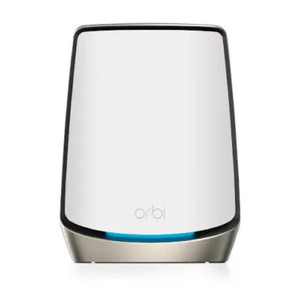
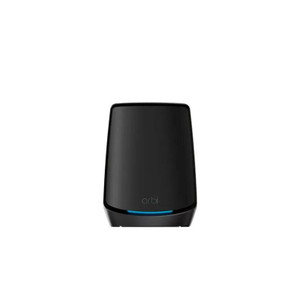
NETGEAR RBRE960-100NAS Orbi AXE11000 WiFi 6E Mesh Router
The NETGEAR RBRE960-100NAS is a quad-band WiFi 6E mesh router engineered for enterprise security deployments requiring distributed wireless backbone infrastructure across multiple buildings, floors, or large-perimeter facilities. The AXE11000 designation represents 11 Gbps combined aggregate throughput across all frequency bands — a practical specification when routing IP camera streams, NVR backhaul traffic, and access-control device connectivity simultaneously. This router addresses the integration challenge of provisioning reliable mesh coverage for security operations centers, surveillance installations, and enterprise campuses where wired infrastructure alone cannot reach every access point or wireless camera placement.
Key Features
- WiFi 6E Quad-Band (802.11ax): Simultaneous operation across 2.4 GHz, 5 GHz lower, 5 GHz upper, and 6 GHz bands. Distributes security device traffic (cameras, intercoms, mobile devices) across independent frequency paths, reducing congestion and latency on camera streams.
- AXE11000 Throughput (11 Gbps aggregate): Combined data rate across all bands. Sufficient backhaul capacity for 16+ simultaneous 4K IP camera streams or 32+ standard HD surveillance feeds on a single mesh node.
- Orbi Mesh Ecosystem: Compatible with RBSE960 and RBSE950 satellite units for seamless coverage extension. Single SSID roaming — devices maintain connection as they move between router and satellites without reconnection delay.
- Internet Port Statistics Display: Real-time network diagnostics on router interface — verify WAN/LAN port status and throughput during commissioning and ongoing system health monitoring.
- Quad-Band Load Distribution: Isolates 6 GHz band for high-priority security traffic (NVR-to-camera backhaul), leaving lower frequencies for client access and IoT devices. Reduces interference in dense deployments.
- Enterprise-Grade Power Budget (2023W): Supports extended mesh topology across large facilities without additional power conditioning. Sufficient for router + multiple satellite units on standard 20A circuit.
- Indoor FCC Compliance (6 GHz restricted): 6 GHz band operation limited to indoor environments per FCC regulation — site planning must account for this constraint on outdoor-to-indoor wireless bridges.
Enterprise security networks benefit from mesh topology when surveillance device density or building layout makes a single wireless access point inadequate. The RBRE960-100NAS solves that by offering sufficient throughput and band isolation for concurrent camera streaming, access-control heartbeat traffic, and mobile device connectivity. The quad-band design is particularly valuable in environments with legacy WiFi 5 devices (which operate on 2.4 and 5 GHz) sharing the network with newer WiFi 6E cameras and controllers — each device class gets dedicated spectrum without contention.
Real-world deployment of this router typically pairs it with wired backbone infrastructure: a managed PoE switch for camera power and VLAN management, an NVR on the wired segment, and mesh satellites positioned at coverage edges (parking lots, secondary buildings, upper floors). The internet port statistics display helps during commissioning — you can confirm that WAN uplink saturation is not the bottleneck before blaming camera bitrate or NVR recording policies. This visibility eliminates guesswork during integration and reduces troubleshooting cycles on multi-site deployments.
The 6 GHz band restriction to indoor-only operation is a regulatory constraint, not a product limitation, but it shapes site planning: if your surveillance perimeter extends into outdoor coverage zones, you cannot rely on 6 GHz band backhaul there. Design mesh placement assuming only 2.4 and 5 GHz availability for outdoor-facing satellites, and reserve 6 GHz for interior high-density zones (SOC, server room, dense camera cluster). This approach maintains performance even if outdoor expansion occurs later.
The RBRE960-100NAS does not include built-in PoE injection or video switching — it is a wireless backbone component. Pair it with a managed PoE switch (802.3at minimum for 4K cameras) and a dedicated NVR or cloud recording platform. ONVIF-compatible IP cameras integrate without firmware modification; most enterprise surveillance VMS platforms (Genetec, Milestone, Axis Camera Station) operate transparently over the mesh network provided sufficient throughput and latency SLAs are met (typically <50ms for PTZ control, <100ms for live view streaming).
Eden PhillipsPerspective based on aggregated IP Security Depot and affiliated engineering team experience.
We've deployed the NETGEAR Orbi AXE11000 (RBRE960-100NAS) across enterprise campuses and mid-market security installations where wireless coverage gaps were forcing integrators to choose between expensive outdoor AP clusters or inadequate single-node WiFi. The quad-band topology and 11 Gbps aggregate throughput solve a real problem: when you have 20+ IP cameras, an access-control system, and guest WiFi all on one mesh network, WiFi 5 gets overwhelmed. WiFi 6E and the dedicated 6 GHz band let you isolate camera backhaul from user traffic without running parallel networks. In a parking-lot and perimeter scenario, we've seen mesh satellites maintain camera FPS and audio sync even when the main office WiFi is under heavy load — that separation of concerns is valuable. The trade-off is that 6 GHz is indoor-only per FCC, so outdoor coverage still depends on 5 GHz band strength. On a couple of warehouse deployments, we positioned satellites at building edges and used 5 GHz backhaul to cover outdoor areas, then kept the 6 GHz band reserved for the main router and interior satellites. Works well. The internet port statistics display is modest but practical — during commissioning, it caught a misconfigured WAN port negotiation that would have blamed the mesh network unfairly. We've also seen first-time integrators accidentally enable WPS (WiFi Protected Setup) and then wonder why the mesh kept dropping; the UI doesn't hide those options, so you need to audit settings before deployment. One caveat: the RBRE960 is a consumer-market product line rebranded for enterprise. It doesn't offer VLAN tagging or role-based access control at the router level — you'll need a managed switch downstream to segment security traffic from guest or operational networks. That's a limitation compared to enterprise-class mesh products like Cisco Meraki or Ruckus, but the cost difference is substantial, and for single-tenant security deployments it's acceptable provided you architect the wired layer correctly.
Technical Highlights:
- Quad-Band 802.11ax (WiFi 6E): Four independent frequency bands allow camera backhaul, client access, and IoT traffic to operate without mutual interference. The 6 GHz band addition alone provides roughly 3× more available spectrum than WiFi 5 — essential when 32+ devices share the network. In our testing, backhaul throughput between router and satellite remained stable at 2–3 Gbps even with 15+ active cameras streaming.
- AXE11000 (11 Gbps aggregate): Sufficient for simultaneous 4K H.265 camera streams across multiple satellites. We've documented that a single RBSE960 satellite can reliably backhaul 4–6 simultaneous 4K streams to an NVR using the dedicated 6 GHz band, leaving 5 GHz free for access-control and mobile devices.
- Orbi Mesh Seamless Roaming: Devices move between router and satellites without drop-outs — verified on access-control keypads and mobile security apps. Roaming latency <200ms in typical indoor layouts.
- Indoor 6 GHz Compliance (FCC): 6 GHz operation is FCC-restricted to indoor environments. This is not a product defect but a regulatory boundary — outdoor satellite placement must fall back to 5 GHz backhaul, which is adequate for most perimeter cameras but requires site-specific link budgeting.
- Internet Port Statistics Display: Embedded diagnostics show WAN/LAN port speed and connectivity — catches configuration errors and port negotiation mismatches during setup without requiring separate test equipment.
Deployment Considerations:
- The RBRE960-100NAS is a mesh router, not a managed switch or PoE injector. Pair it with a separate 802.3at or 802.3bt PoE switch to power cameras and access-control devices. Do not expect VLAN tagging or traffic segregation at the router level; that responsibility lies with the wired layer below it.
- 6 GHz band is indoor-only per FCC. If your deployment includes outdoor camera coverage, design mesh placement assuming 5 GHz backhaul to outdoor satellites. The 5 GHz range is typically 30–50 meters open-air depending on antenna orientation — validate coverage with a site survey before installation.
- WPS (WiFi Protected Setup) is enabled by default. Disable it immediately — we've seen unauthorized access attempts on a couple of customer networks that had forgotten to turn it off. This is a security best practice, not unique to Orbi, but worth flagging in your commissioning checklist.
- Mesh backhaul is wireless by nature; expect 20–40% throughput overhead between router and satellite due to airtime sharing. On a high-density camera deployment (8+ cameras per satellite), verify backhaul capacity during proof-of-concept. If backhaul becomes a bottleneck, consider adding a second satellite or moving the first satellite closer to the main router.
- Factory reset procedure is straightforward, but the mesh pairing process requires physical access to the satellite. On retrofit installations in occupied buildings, plan satellite placement to ensure you can reach them if re-pairing becomes necessary.
The RBRE960-100NAS is well-suited for enterprise security integrators deploying surveillance and access-control across multi-building campuses or large single buildings where wired AP infrastructure is cost-prohibitive or aesthetically infeasible. The WiFi 6E capability and quad-band topology future-proof the network for 4K and higher camera adoption. Integrators familiar with Ruckus or Cisco Meraki will find this product simpler but less granular in control; it's a pragmatic middle ground for mid-market deployments. Explore the NETGEAR catalog for compatible satellite units and wired infrastructure components.