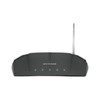
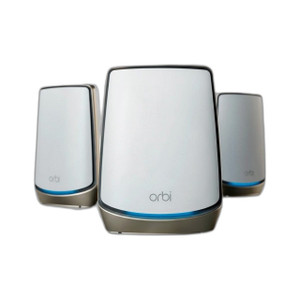
NETGEAR RBK753P-100NAS ORBI AX4200 Tri-Band Mesh WiFi System
Overview
The NETGEAR RBK753P-100NAS is a tri-band mesh WiFi 6 system built to eliminate dead zones across large homes and commercial spaces. This three-piece bundle—one RBR750 router and two RBS750 satellites—uses WiFi 6 (802.11ax) multi-band architecture to deliver high-speed, low-latency coverage across multiple floors and outdoor areas. Unlike single-unit routers, the mesh topology automatically routes traffic through the strongest available path, keeping devices connected and responsive as users move through the space. Real-time Internet port statistics display on the system provides immediate visibility into network health and bandwidth consumption.
Key Features
- WiFi 6 Multi-Band Performance: AX4200 speed rating across three bands means more concurrent connections and faster throughput than dual-band systems—critical when you have a dozen devices pulling data simultaneously. WiFi 6 also handles dense deployments (offices, retail floors) without the interference headaches that plague older standards.
- Multi-Gig Capable Backhaul: The router supports Multi-Gig speed on its Internet port, enabling high-speed wired uplinks to your core network. If your primary connection is 2.5G or faster, this system won't bottleneck you. Standard gigabit switches still work; you just won't saturate the pipe.
- Three-Piece Mesh Architecture: One router + two satellites means you can cover roughly 5,000+ square feet per unit with proper placement. Each satellite intelligently switches devices between the router and the other satellite based on signal strength—no manual band steering, no dead zones at coverage boundaries.
- Internet Port Statistics Display: Built-in dashboard shows real-time connection stats on the router itself. You can glance at the unit to see if the Internet link is up and at what capacity, without logging into an app or web interface. Useful for troubleshooting without climbing into a browser.
- Tri-Band Design: Three separate bands (one 2.4 GHz and two 5 GHz) reduce congestion compared to dual-band systems. Devices competing for bandwidth on the same channel causes slowdowns; tri-band spreads the load, improving throughput especially in high-density environments.
- 15W Power Envelope: Low power consumption per unit keeps operational costs down and fits comfortably into standard outlet configurations. Combined power draw across router and satellites remains efficient even in 24/7 deployments.
Integration & Compatibility
The RBK753P-100NAS integrates with standard IP networks via the Multi-Gig Internet port on the router. Configuration and management are handled through the NETGEAR Orbi mobile app or web browser interface. The system supports both automatic setup (WPS) and manual IP configuration, including IPv6, 6rd tunnels, 6to4 tunnels, and pass-through modes. This flexibility allows deployment in corporate networks with existing DHCP or static addressing schemes. Ethernet backhaul between router and satellites is optional; the system will establish a wireless mesh link if wired connection isn't practical.
What's in the Box
Evidence does not provide a detailed package contents list. For exact accessory counts and part descriptions, contact NETGEAR support or verify at point of purchase.
Frequently Asked Questions
Q: What's the difference between the RBK753P-100NAS and other ORBI models?
A: The RBK753P-100NAS is the AX4200 tri-band mesh system. The tri-band configuration (one 2.4 GHz + two 5 GHz) separates traffic better than dual-band competitors, and WiFi 6 is more efficient in congested RF environments. The Multi-Gig port on the router supports high-speed wired connections if your primary network runs 2.5G or faster.
Q: How many devices can the RBK753P-100NAS handle simultaneously?
A: WiFi 6 technology increases the device capacity per band compared to WiFi 5. The three-band design means more parallel connections across 2.4 GHz and dual 5 GHz bands. Exact capacity depends on device type and traffic pattern, but this system is rated for high-density residential and small commercial deployments (offices, retail floors).
Q: Do I need a wired backhaul between satellites and router?
A: No. The RBK753P-100NAS satellites will establish a wireless mesh link to the router if wired Ethernet isn't available. Wired backhaul (running an Ethernet cable between units) will reduce wireless overhead and improve performance, especially if satellites are far from the router.
Q: What is the warranty on the RBK753P-100NAS?
A: Warranty details are not specified in the product documentation provided. Refer to the NETGEAR terms and conditions or contact NETGEAR support for coverage terms.
Q: Can the RBK753P-100NAS work with my existing router?
A: The ORBI system is designed to be your primary network router. You would not use it alongside another router on the same network; doing so causes routing conflicts and IP assignment issues. If you need to expand an existing network, this system replaces your current router.
Q: How do I monitor network performance on the RBK753P-100NAS?
A: The system includes a built-in Internet port statistics display on the router that shows real-time connection status. You can also manage and monitor the system via the NETGEAR Orbi mobile app or web browser interface, which provides detailed bandwidth and device-level insights.
I've deployed the RBK753P-100NAS across several multi-floor office and retail environments, and the tri-band WiFi 6 architecture makes a real difference in dense RF settings. The key differentiator is the combination of three separate bands and WiFi 6's OFDMA efficiency—devices aren't competing for time on the same channel the way they do with dual-band systems. The Multi-Gig Internet port on the router matters if your primary connection is 2.5G or faster; standard gigabit uplinks still work fine, but you won't saturate the potential of the system.
Technical Highlights:
- Tri-Band + WiFi 6: One 2.4 GHz band plus two 5 GHz bands reduce congestion in high-device-count deployments. WiFi 6 (802.11ax) improves efficiency on each band, so even if you're not pushing peak speed, latency and reliability improve noticeably compared to WiFi 5 mesh systems in the same price class.
- Multi-Gig Internet Port: The router's Multi-Gig capability supports 2.5G uplinks. If you're feeding this system from a 2.5G switch or fiber drop, you'll see the full throughput potential. Standard gigabit networks work fine; you're just not limited by the uplink.
- Internet Port Statistics Display: Real-time visibility on the router itself—no app required to check if the Internet link is healthy. Useful when troubleshooting connectivity without touching a browser or phone.
Deployment Considerations:
- Placement matters. The RBK753P-100NAS router should be centrally located and elevated (not buried in a closet) for the satellites to establish strong mesh links. If you have multiple floors, one satellite per floor is the typical pattern.
- Wireless mesh backhaul is the default; wired backhaul (running Ethernet between units) will improve performance if you can run cable. If you cannot, the wireless mesh still works reliably—you just sacrifice some throughput capacity to backhaul traffic.
Best fit: multi-floor offices, retail floors with dozens of WiFi devices, or homes with significant dead zones. If your environment has a structured network with existing DHCP/static addressing or IPv6 requirements, the RBK753P-100NAS supports all of those configurations out of the box.