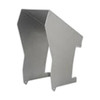
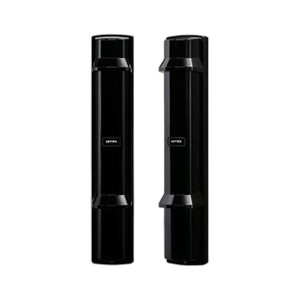
Optex SIP-5030 REDWALL Smart Intelligent Outdoor PIR Detector
Overview
The Optex SIP-5030 is a wide-area outdoor passive infrared (PIR) detector engineered for perimeter and open-ground protection where coverage, tamper resistance, and environmental reliability all need to work together. Covering a 50 × 30 m (164 × 98 ft) detection footprint, the SIP-5030 is purpose-built for large commercial yards, logistics staging areas, critical infrastructure perimeters, and campus-edge deployments where a narrow-beam sensor simply cannot do the job. Built to outdoor motion detection standards, the REDWALL line has long been the integrator's choice for high-reliability perimeter alarm applications.
Compliance with BS8418 (UK) makes the SIP-5030 a credible specification for monitored alarm systems in regulated environments. For the full Optex sensor catalog, including indoor and volumetric variants, a broader range of coverage patterns and form factors is available.
Key Features
- 50 × 30 m Wide-Area Coverage (164 × 98 ft): A single SIP-5030 can cover a surface area that would otherwise demand two or three narrower sensors — meaningful on large open sites where minimizing device count reduces wiring, commissioning time, and ongoing maintenance overhead.
- Adjustable 135° Creep Zone: The horizontal creep zone is field-adjustable, which lets you trim the near-field detection boundary to suit the exact site geometry. You can suppress a footpath running parallel to a fence line without giving up the main coverage depth — a feature that pays off in sites with legitimate pedestrian traffic adjacent to the monitored zone.
- Photo-Beam Anti-Masking: A masked detector is a useless detector. The SIP-5030 uses a built-in photo-beam to continuously verify that the sensor's face is unobstructed. If someone tapes cardboard over the lens, the system sees it — immediately, not at the next patrol check. This is a load-bearing spec for installations where the threat model includes deliberate sensor defeat.
- 3-Axis Accelerometer Anti-Rotation: The accelerometer detects if the housing is physically rotated away from its commissioned orientation — a method sometimes used to redirect detection coverage away from an intrusion path. Any movement outside tolerance triggers an alert before the sensor's aim is compromised enough to matter.
- AND / OR Selectable Detection Logic: Running dual PIR channels in AND mode requires both channels to trigger simultaneously before generating an alarm — reducing false alarms from birds, blowing debris, or thermal gradients. OR mode gives you maximum sensitivity. The choice is yours on-site without replacing hardware.
- IP65 Main / IP55 Chassis: The detection head meets IP65 (dust-tight, direct jet-resistant), and the chassis is rated IP55. Outdoor deployments in rain, dust, and industrial environments are covered. If your site has regular pressure-washing activity near the sensor, plan your mounting position accordingly — IP65 handles jets but not sustained immersion.
- -25 to +60°C Operating Range (-13 to +140°F): The SIP-5030 stays operational from hard winter cold to summer heat on sun-exposed steel structures. This range covers the vast majority of continental North American and European outdoor deployments without needing a heated enclosure.
- 11–26 VDC / 22–26 VAC Power Input, 40 mA max at 12 VDC: Broad input voltage tolerance means you can power the SIP-5030 from a wide range of alarm panel auxiliary outputs and power supplies without adding a converter. At 40 mA max, power budget impact on multi-sensor loops is minimal.
- N.O./N.C. Alarm Output, 28 VDC / 0.2 A max: The relay output is selectable between normally-open and normally-closed, giving you clean integration with virtually any alarm panel or access control system that accepts a dry-contact input. Standard wiring practice applies — no proprietary bus required.
- 60-Second Warm-Up Period: The SIP-5030 requires 60 seconds after power-on before detection is active. Build this into your commissioning and restart sequences, particularly in applications where the panel polls sensors immediately after a power-restore event.
- Mounting Height 2.3–4 m (7.6–13 ft): The specified mounting height range gives you flexibility on fence posts, building walls, and dedicated poles. Deviating outside this range will shift the detection pattern in ways the manufacturer did not validate — stay within it.
Integration & Compatibility
The SIP-5030 integrates with alarm panels and video management systems through its dry-contact relay output (N.O./N.C., 28 VDC 0.2 A max). Any panel accepting a contact closure input — DSC, Bosch, Honeywell, Texecom, or equivalent commercial-grade control equipment — can accept the SIP-5030's alarm signal directly. BS8418 compliance makes it specifiable for confirmed-alarm monitored systems in the UK market. For AND/OR logic, configure at the detector before final commissioning to match your false-alarm tolerance and sensitivity requirements at the specific site.
The adjustable creep zone and anti-masking output can also be wired to separate panel zones if your panel supports it, enabling differentiated event handling (tamper vs. intrusion). Consult your panel documentation for zone count and input type compatibility before finalizing the zone plan. Refer to your integrator's outdoor perimeter security layout plan to coordinate detector placement with camera coverage zones for a unified site picture.
Frequently Asked Questions
Q: What is the maximum detection range of the SIP-5030?
A: The SIP-5030 covers a 50 × 30 m (164 × 98 ft) area when mounted at the correct height of 2.3 to 4 m (7.6 to 13 ft). Coverage will be reduced or distorted if the detector is mounted outside this height range.
Q: Does the SIP-5030 have tamper detection?
A: Yes. The SIP-5030 includes two independent tamper-detection mechanisms: a photo-beam anti-masking system that detects if the sensor face is covered or obstructed, and a 3-axis accelerometer that triggers an alert if the housing is physically rotated from its installed orientation.
Q: Can the SIP-5030 be used in very cold climates?
A: The operating temperature range is -25 to +60°C (-13 to +140°F), which covers most outdoor deployments in continental climates. For sites with sustained temperatures below -25°C, a heated enclosure or a different model rated for lower temperatures would be required.
Q: What alarm panel types are compatible with the SIP-5030?
A: The SIP-5030 outputs a standard dry-contact relay (N.O./N.C., 28 VDC 0.2 A max), which is compatible with virtually any commercial alarm panel accepting contact-closure zone inputs. No proprietary bus or protocol is required.
Q: What is the difference between AND and OR detection logic on the SIP-5030?
A: In AND mode, both internal PIR channels must trigger simultaneously to generate an alarm, which significantly reduces nuisance alarms from animals, birds, or thermal events. In OR mode, either channel alone triggers the alarm for maximum detection sensitivity. The selection is made on the detector itself during commissioning.
Q: Is the SIP-5030 suitable for monitored alarm systems under BS8418?
A: Yes. The SIP-5030 is BS8418-compliant, which is the UK standard for detector-activated CCTV and confirmation alarm systems. This makes it specifiable for confirmed-alarm contracts with monitoring centers operating under that framework.
I've specified the SIP-5030 on commercial logistics yards and utility perimeters where the client's biggest complaint was nuisance alarms and sensor defeat. The 50 × 30 m wide-area coverage pattern is the right starting point for those sites — you're not chaining five narrow beams together and debugging alignment every quarter. The AND/OR detection logic is what actually keeps the nuisance alarm rate in check once it's deployed.
Technical Highlights:
- Photo-Beam Anti-Masking: This is the spec that separates the SIP-5030 from basic PIR sensors in high-risk applications. A defeated sensor with no masking detection can sit blind for hours or days before anyone notices — the photo-beam closes that gap instantly.
- AND Logic / Dual-Channel PIR: Running in AND mode filters out single-channel events from birds, small animals, and thermal drift. On an open yard with regular vehicle traffic adjacent to the monitored zone, the false alarm reduction is measurable from the first week of operation.
- 3-Axis Accelerometer Anti-Rotation: On fence-post installations where the hardware is accessible from outside the perimeter, this is a meaningful deterrent. An intruder who physically rotates the head to miss their approach path will generate a tamper event before they move.
Deployment Considerations:
- Mount between 2.3 and 4 m (7.6 to 13 ft) strictly — the coverage pattern is calibrated for this range. A pole-mounted install at 5 m will shorten the effective near-field and push the far-field boundary in unpredictable ways.
- Allow the full 60-second warm-up after every power cycle before expecting valid detections. If your panel performs a zone-poll immediately on power restore, you may see spurious activations during that window — add a walk-test delay or panel-side masking if this is a concern.
The SIP-5030 (often searched as SIP 5030) is the right detector for open-compound perimeter protection at logistics depots, utility switchyards, and commercial staging areas where you need wide-area coverage with active tamper resistance and the ability to dial in detection sensitivity without swapping hardware.