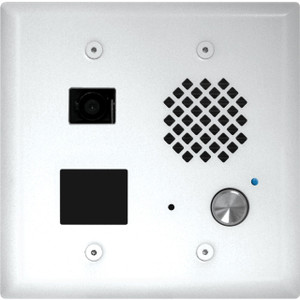
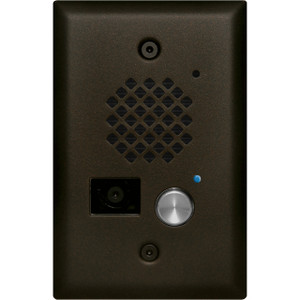
Viking Electronics E-75-BN-EWP Oil Rubbed Bronze Entry Phone with Proximity Card Reader and Color Video Camera
Overview
The Viking Electronics E-75-BN-EWP is a three-in-one entry point solution that combines a hands-free speakerphone, a 125KHz proximity card reader, and a color video camera in a compact, vandal-resistant faceplate finished in oil rubbed bronze. Designed for flush mounting in a standard double gang box or surface mounting with the optional VE-5x5 enclosure, the E-75-BN-EWP ships with Enhanced Weather Protection (EWP) — meaning foam rubber gaskets, sealed connections, gel-filled butt connectors, and potted electronics — making it a practical choice for covered exterior entries, vestibules, and controlled-access lobbies where a single device needs to handle identification, communication, and visual verification simultaneously.
Unlike IP-based entry systems that demand network infrastructure and SIP licensing, this device runs entirely on telephone line power. If you have a standard POTS line or a compatible telephone system at the door, you can commission this without a PoE switch, injector, or VoIP provisioning. That simplicity is genuinely useful in retrofit scenarios or locations where running Cat6 is not practical.
Key Features
- 125KHz 26-bit Wiegand Proximity Reader: Compatible with Viking PRx-C, PRx-C-ISO, PRx-FOB, and AWID credentials — covers the vast majority of legacy proximity card stock already deployed in commercial buildings. Card read range is 1.25″ to 2.0″, which is standard for surface-mounted readers at a door post. If your site uses 13.56MHz MIFARE or HID iCLASS, this reader will not work — verify your credential technology before ordering.
- Color Video Camera — 420 Lines, 0.025 Lux: The 2.1mm conical pinhole lens delivers an 80° horizontal by 60° vertical field of view (100° diagonal), wide enough to capture the full width of a standard doorway and the face of anyone presenting a credential. At 0.025 lux sensitivity, the camera maintains usable color imagery in dim lobbies or covered entries with minimal ambient lighting — not a starlight sensor, but adequate for most interior-lit vestibule scenarios.
- Vertical ±20° / Horizontal ±30° Tilt-Swivel Adjustment: The camera module adjusts after installation so you can fine-tune the capture angle without relocating the backbox. On a flush-mounted gang box installation this matters — you cannot reposition the faceplate once drywall is cut.
- IP66 Enhanced Weather Protection (EWP): IP66 means sustained high-pressure water jets and complete dust ingress protection. The EWP build adds foam gaskets, sealed wiring terminations, and potted PCBs, which collectively address the condensation and capillary wicking failures that kill standard-rated enclosures in freeze-thaw cycles. Operating temperature range is -30°F to 150°F, so installation in an unheated vestibule or a northern exterior overhang is within spec.
- Telephone Line Powered: The entire unit draws power from the connected telephone line — no separate transformer, no low-voltage home-run to a power supply. This reduces installation materials and eliminates a failure point. It does mean you need an active telephone line or telephone system port at the door location.
- Composite Video Output — 1 Vp-p NTSC, 75Ω: Video is delivered as a standard analog composite signal. Connect to a compatible monitor, DVR input, or video door controller. This is not an IP stream — there is no RTSP, no ONVIF, no NVR integration. Plan your video monitoring path accordingly before specifying.
- Compact Faceplate — 4.875″ × 4.938″ × 0.17″: The faceplate fits a standard double gang rough-in without a custom surround. The internal phone module is 2.84″ × 1.8″ × 1.65″. Surface mount installations require the separately sold VE-5x5 enclosure.
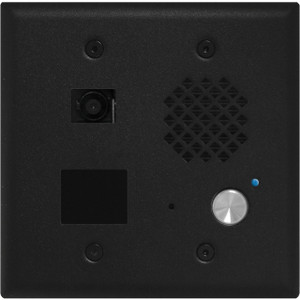
- Oil Rubbed Bronze Finish: Matches architectural hardware common in hospitality, multifamily residential, and commercial lobbies where brushed stainless or painted finishes would stand out. The same E-75 platform is available in brushed stainless, satin black, and satin white if finish coordination is needed across multiple entry points.
Integration and Compatibility
The proximity reader outputs standard 26-bit Wiegand data, compatible with any access control panel that accepts Wiegand input — Lenel, Software House, Honeywell Pro-Watch, Bosch, and virtually every mid-market panel on the market. Pair with a access control system that provides a Wiegand reader port and door strike or magnetic lock relay output. The audio side connects to a standard telephone line or a Viking Electronics telephone system; review Viking's E-75 product manual for specific telephone system compatibility and ring/talk wiring diagrams. The composite video output feeds any analog video input — a standalone monitor at a guard desk, a DVR channel, or a hybrid NVR with analog inputs. For a broader look at entry-point hardware options, see the video entry and intercom category. If you are planning a multi-door deployment, also review PoE switches only if mixing with IP-based devices — this unit itself does not require network infrastructure.
Frequently Asked Questions
Q: Does the E-75-BN-EWP work with 13.56MHz smart cards or HID iCLASS credentials?
A: No. The built-in reader operates at 125KHz and reads 26-bit Wiegand format credentials — compatible with Viking PRx-C, PRx-C-ISO, PRx-FOB, and AWID proximity cards and fobs. 13.56MHz MIFARE, DESFire, or iCLASS cards will not be read. Verify your credential technology before ordering.
Q: Does the E-75-BN-EWP require a network connection or PoE?
A: No. The unit is telephone line powered and does not require an Ethernet connection, PoE switch, or IP infrastructure. The video output is analog composite (NTSC), not an IP stream. You need a standard telephone line or compatible telephone system port at the door location.
Q: What enclosure is needed for surface mounting?
A: For surface mounting, Viking's VE-5x5 enclosure is required (sold separately). For flush mounting, the faceplate installs in a standard double gang electrical box. The faceplate dimensions are 4.875″ × 4.938″ × 0.17″.
Q: What is the operating temperature range for the E-75-BN-EWP?
A: The unit is rated for -30°F to 150°F. Combined with the IP66 EWP build (foam gaskets, sealed connections, gel-filled butt connectors, and potted electronics), it is suitable for covered exterior entries and unheated vestibules in cold climates.
Q: Can the video output from the E-75-BN-EWP be recorded on an NVR?
A: The video is a 1 Vp-p composite NTSC analog signal at 75 ohms — not an IP stream. It can be recorded on a DVR with an analog input or a hybrid NVR with analog channels. It is not compatible with IP-only NVRs or ONVIF-based video management systems without an analog-to-IP encoder in the path.
Q: Is the E-75-BN-EWP available in other finishes?
A: Yes. The E-75 platform is available in brushed stainless steel, oil rubbed bronze (this model), satin black, and satin white. All share the same core specifications — finish is the only difference between variants.
The E-75-BN-EWP is the kind of device that wins in retrofit commercial projects where running Cat6 to every entry point isn't realistic. The telephone line power architecture means you're working with existing infrastructure — no new low-voltage home-runs, no PoE budget calculations, no SIP trunk provisioning. The 26-bit Wiegand output drops straight into any access control panel already on-site, and the IP66 EWP construction with foam gaskets and gel-filled butt connectors is meaningfully more durable than a standard IP-rated enclosure in freeze-thaw environments.
Technical Highlights:
- 0.025 Lux Camera Sensitivity: At 0.025 lux, the 420-line color camera will produce usable imagery in dim lobbies and covered vestibules under minimal ambient light — adequate for face identification at a controlled entry without supplemental lighting in most interior-lit scenarios.
- 125KHz 26-Bit Wiegand Reader: Compatible with the widest installed base of proximity credentials — PRx-C, PRx-C-ISO, PRx-FOB, and AWID. Read range of 1.25″ to 2.0″ is consistent with standard door-post presentation distance. No firmware configuration needed for credential format on most panels.
- Camera Adjust Range ±20° Vertical / ±30° Horizontal: Post-installation angle adjustment without relocating the backbox is a practical feature on flush-mount gang box installs — once the drywall is closed, you cannot shift the faceplate, so field-adjustable optics matter.
Deployment Considerations:
- The composite video output (1 Vp-p NTSC, 75Ω) is analog-only — budget for a DVR analog input channel or a video balun/encoder if your recording infrastructure is IP-based. Do not assume ONVIF or RTSP compatibility; there is none.
- The 125KHz reader is credential-locked — if a future site standardization moves to 13.56MHz MIFARE or iCLASS, this reader cannot be field-upgraded. Document the credential technology in your as-built so the next integrator on-site doesn't discover the mismatch at 11pm during a re-keying project.
The E-75-BN-EWP is the right call for multifamily residential entries, hospitality side doors, and commercial lobby retrofit projects where architectural finish matters, existing phone wiring is in place, and the access control panel already has open Wiegand reader ports — not for greenfield IP deployments or sites migrating to smart card credentials.