Panduit CP48688HDVNBL 48-Port 1U Cat6 Coupler Patch Panel
Overview
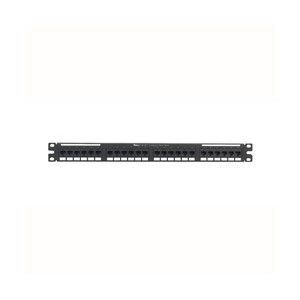
The Panduit CP48688HDVNBL is a 48-port, 1 RU Cat 6 coupler patch panel built for structured cabling installations where port density, cable management, and long-term traceability matter. The panel ships in black and features vertical port numbering — meaning port IDs run top-to-bottom rather than left-to-right, a layout that dramatically reduces misidentification errors when you're working in a populated rack under time pressure. If your team has ever traced the wrong cable because port labels were obscured by cable bundles, this numbering orientation is worth evaluating seriously. Browse the full Panduit structured cabling line for complementary raceway, connectors, and cable management products.
Key Features
- 48 Ports in 1 RU: Maximum port density without sacrificing a second rack unit. At 48 ports per U, a standard 42U cabinet can host over 2,000 Cat 6 terminations on patch panels alone — leaving room for active gear. This panel is the right pick for high-density patch panel deployments in IDFs and MDF rooms where U-space is always at a premium.
- Cat 6 Performance: Rated for Category 6 (250 MHz), this panel supports Gigabit Ethernet at full 100-meter channel lengths and 10GBase-T at shorter distances. Specifying Cat 6 at the patch panel maintains channel compliance when the horizontal cabling is also Cat 6 — mixing down to Cat 5e here would bottleneck the entire run.
- Coupler (Feed-Through) Design: Unlike punch-down panels, the CP48688HDVNBL uses RJ-45 couplers on both faces. This means you're connecting pre-terminated patch cords front and rear — no punch-down tool, no re-termination. Ideal for structured cabling environments where moves, adds, and changes happen frequently, or where pre-terminated trunk cables land at the panel rear.
- Vertical Port Numbering: Ports are numbered vertically rather than in the standard horizontal sequence. This layout aligns naturally with the way cables stack and fan out in a loaded rack, reducing mis-patch risk during hot work on live infrastructure.
- Black Finish: The black panel finish matches standard black rack enclosures without requiring a color-conversion kit. Consistent rack aesthetics also support visual zone identification in multi-tenant or color-coded cabinet schemes.
- Mini-Com Module Compatibility: Built on Panduit's Mini-Com platform, the panel accepts Mini-Com modules — giving you the option to convert individual ports to fiber, coax, or alternate connector types by swapping modules rather than replacing the panel. This forward-compatibility matters on campuses where media types may shift across refresh cycles. Pair with a PoE network switch to complete the horizontal cabling segment.
Integration and Compatibility
The CP48688HDVNBL is designed to integrate within Panduit's broader Mini-Com ecosystem, supporting the full range of Mini-Com snap-in modules. As a coupler panel, it is VMS- and switch-agnostic — performance depends on the quality of the patch cords and horizontal cable plant on either side. Verify that connecting cables are also rated Cat 6 or higher to maintain channel compliance per TIA-568 standards. The 1 RU form factor fits any standard EIA 19-inch equipment rack.
Frequently Asked Questions
Q: What does 'coupler' mean on the CP48688HDVNBL — does it require punch-down termination?
A: No punch-down required. The CP48688HDVNBL uses RJ-45 feed-through couplers on both the front and rear faces. You plug pre-terminated patch cords into both sides — no impact tool needed. This is the key distinction between a coupler panel and a punch-down (keystone or 110-block) panel.
Q: What is vertical port numbering and why does it matter?
A: Standard patch panels number ports left-to-right across the face. Vertical numbering sequences ports top-to-bottom in columns. In a densely patched rack, this orientation makes individual port IDs easier to read and trace without moving cable bundles, reducing mis-patch risk during live work.
Q: Is the CP48688HDVNBL compatible with Cat 6A cabling?
A: The panel is rated Cat 6 (250 MHz). While Cat 6A patch cords will physically connect, the channel rating will be limited to Cat 6. For 10GBase-T at full 100-meter distances, a Cat 6A-rated panel is required.
Q: Can individual ports be converted to fiber or other media types?
A: Yes. The panel is built on Panduit's Mini-Com platform, which accepts snap-in Mini-Com modules in alternate formats including fiber LC, SC, and coax. Individual ports can be converted by swapping the module without replacing the panel.
Q: How many of these panels can I install in a standard 42U rack?
A: Up to 42 panels in a fully open 42U rack — yielding a theoretical maximum of 2,016 Cat 6 coupler ports per cabinet. In practice, cable management panels and active gear will reduce available U-space.
The CP48688HDVNBL stands out in Panduit's coupler panel lineup specifically because of the vertical port numbering — a spec that sounds minor until you're working a live IDF at 2am tracing a ticketed port across 24 fully-patched panels. At 48 ports per 1 RU and a coupler (feed-through) architecture, this panel eliminates punch-down labor entirely and keeps the rear cable plant fully pre-terminated.
Technical Highlights:
- 48-Port Density at 1 RU: Full 48-port layout in a single rack unit — the highest practical density for Cat 6 coupler panels without moving to a modular high-density chassis format.
- Cat 6 Channel Rating: Supports 250 MHz bandwidth, sufficient for Gigabit Ethernet at 100m and 10GBase-T at reduced distances. Maintains channel compliance when paired with Cat 6-rated horizontal cabling and patch cords.
- Mini-Com Module Platform: Individual port slots accept Panduit Mini-Com snap-in modules — meaning a single panel can host mixed media types (copper RJ-45, fiber LC/SC, coax) without chassis replacement, which matters on long-lived infrastructure.
Deployment Considerations:
- Coupler panels require pre-terminated patch cords on both faces — budget for rear patch cords in addition to front cords if the horizontal plant terminates at this panel rather than a rear-facing keystone block.
- Cat 6 coupler rating is the ceiling for the channel: if any segment (patch cord, horizontal run, or this panel) drops to Cat 5e, the entire channel degrades. Verify every component in the link before certifying the channel.
Best-fit deployment: high-churn MDF/IDF environments — enterprise campuses, colocation facilities, or structured cabling refresh projects — where pre-terminated trunk cables land at the panel rear and front-face patching changes frequently. The vertical numbering pays dividends specifically in fully-populated racks where horizontal label strips are obscured by patch cord bundles.