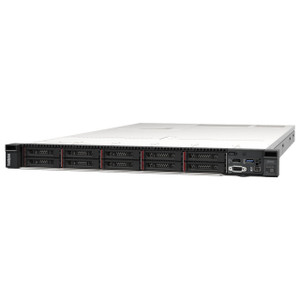
Lenovo 4XG7A63589 AMD EPYC 7543 32-Core Processor Kit for ThinkSystem SR645
The Lenovo 4XG7A63589 is a factory-configured processor option kit pairing the AMD EPYC 7543 with the ThinkSystem SR645 platform — a straightforward upgrade path for compute-dense workloads that need more core count, higher memory bandwidth, or greater parallel thread capacity than entry-level EPYC configurations deliver. The EPYC 7543 runs 32 cores and 64 threads at a 2.8 GHz base clock, boosting to 3.7 GHz under single- or lightly-threaded load, making it a practical fit for virtualization hosts, analytics pipelines, and multi-tenant workloads where core density per socket matters.
Browse the full Lenovo server and compute catalog for compatible ThinkSystem platform options.
Key Features
- 32 Cores / 64 Threads: At 32 physical cores per socket, the EPYC 7543 supports dense VM consolidation without the licensing overhead that comes with higher core-count SKUs. A two-socket SR645 configuration scales to 64 cores and 128 threads — useful for hypervisor workloads where per-core software licensing is the binding constraint.
- 2.8 GHz Base / 3.7 GHz Boost: The 900 MHz headroom between base and boost is meaningful for mixed workloads — background batch processes hold at 2.8 GHz while latency-sensitive threads get preferential clock allocation. For applications with unpredictable burst patterns, this range reduces the need to over-provision core count.
- 256 MB L3 Cache: EPYC 7543's 256 MB of L3 cache is among the largest available in the 32-core segment. Large working sets — database buffer pools, in-memory analytics, caching tiers — benefit directly: more data stays on-chip, reducing main memory round-trips and improving throughput without additional DRAM.
- DDR4-3200 Memory Support: The EPYC 7543 supports DDR4-3200 MHz across eight memory channels per socket, delivering substantial memory bandwidth for data-intensive workloads. On the SR645 platform this translates to high aggregate bandwidth — relevant for compute-dense server deployments running in-memory databases or streaming analytics.
- 64-bit Operating Mode: Full 64-bit execution support is table stakes for modern enterprise workloads, but it's worth noting explicitly for environments migrating legacy 32-bit workloads — the EPYC 7543 handles both without configuration changes.
- 225W TDP (Configurable to 240W): The base TDP is 225W, with a configurable TDP-up of 240W available for sustained-performance workloads. That's a meaningful power budget consideration: at 240W per socket in a dual-socket SR645, plan for 480W+ of CPU draw alone, before memory, storage, and platform overhead. Rack PDU and cooling capacity should be validated before deployment — especially in high-density rows.
- Socket SP3 Platform: The SP3 socket on the SR645 supports the full EPYC 7003 (Milan) generation. This means the 4XG7A63589 is a drop-in fit within the SR645's supported processor matrix — no platform board swap required if upgrading from a lower-tier EPYC SKU already on SP3.
Integration and Compatibility
The 4XG7A63589 is designed and validated for the Lenovo ThinkSystem SR645, a dual-socket 1U/2U rack server built on the AMD EPYC SP3 platform. Processor compatibility is platform-specific — do not assume this kit is interchangeable with other AMD EPYC SP3 servers from other manufacturers without confirming BIOS and firmware support on the target system.
Memory compatibility on the SR645 with EPYC 7543 follows AMD's eight-channel DDR4 architecture. For high-bandwidth network-attached storage and switching infrastructure feeding this platform, ensure your fabric can sustain the aggregate I/O the processor can drive. DDR4-3200 at full channel population delivers peak bandwidth — mixing speed grades will downclock the entire channel to the lowest-rated DIMM.
No cooler is included with the 4XG7A63589. A compatible processor heatsink and fan assembly must be sourced separately and validated against the SR645's thermal design. At 225–240W TDP, passive or low-airflow cooling is not viable — the SR645's active cooling infrastructure must be in place before installation. Consult Lenovo's ThinkSystem SR645 product guide for the approved heatsink option for this TDP class.
For rack server procurement and related data center components, verify rack power delivery and cooling capacity against total system TDP before placing an order.
Frequently Asked Questions
Q: What server platform is the Lenovo 4XG7A63589 compatible with?
A: The 4XG7A63589 is validated for the Lenovo ThinkSystem SR645, which uses the AMD EPYC SP3 socket. It is not a universal AMD EPYC processor — it is a Lenovo-configured option kit for the SR645 platform specifically.
Q: Does the 4XG7A63589 include a heatsink or cooler?
A: No. The cooler is not included. A compatible heatsink and fan assembly must be ordered separately. Given the 225W–240W TDP of the EPYC 7543, ensure you select a heatsink rated for this thermal envelope and confirmed compatible with the SR645 chassis.
Q: What is the base and boost clock speed of the EPYC 7543 in this kit?
A: The AMD EPYC 7543 operates at a 2.8 GHz base clock and boosts to 3.7 GHz. This is the standard operating range for this processor in its 225W TDP configuration.
Q: How much L3 cache does the EPYC 7543 include?
A: 256 MB of L3 cache. This large on-chip cache benefits workloads with large working sets — database engines, in-memory analytics, and caching applications — by keeping more data on-chip and reducing main memory latency.
Q: What memory type and speed does the EPYC 7543 support?
A: The processor supports DDR4-SDRAM at up to 3200 MHz across eight memory channels per socket. Mixing DIMM speeds will reduce all channels to the speed of the slowest installed module.
Q: Can the TDP be configured above 225W?
A: Yes. The configurable TDP-up is 240W, which can be enabled for sustained-performance scenarios. This requires adequate chassis cooling and power delivery — validate both before enabling the higher TDP setting in the SR645 BIOS.
The 4XG7A63589 is the right processor upgrade when you need to push the ThinkSystem SR645 toward its full compute ceiling — specifically, 32 cores at 2.8–3.7 GHz with 256 MB of L3 cache on a single socket. I see this kit most often in environments that started with a lower-tier EPYC configuration and hit a consolidation ratio wall, or in greenfield deployments where the workload modeling came back needing more threads than a 16- or 24-core option delivers.
Technical Highlights:
- 256 MB L3 Cache: On database workloads with active working sets in the tens of gigabytes, this cache depth meaningfully reduces DRAM pressure — fewer cache misses means latency stays flat as query complexity increases.
- DDR4-3200 / 8-Channel Memory Architecture: Eight memory channels per socket is the EPYC platform's real competitive differentiator for bandwidth-hungry workloads. Fill the SR645's DIMM slots at matched speeds — mismatched DIMMs downclock the channel and waste the bandwidth headroom this processor can drive.
- 225W Base TDP / 240W Configurable-Up: Plan your rack power budget before enabling cTDP-up. At 240W per socket in a dual-socket SR645, CPU power draw alone hits 480W — before storage, DRAM, NICs, or platform overhead. Undersized PDUs or branch circuits are the most common field problem I see on dense EPYC builds.
Deployment Considerations:
- No heatsink is included — source an SR645-validated heatsink assembly rated for the 225–240W TDP class before scheduling the installation. Running without the correct heatsink will trigger thermal throttling immediately and may damage the processor.
- Socket SP3 is shared across EPYC 7002 and 7003 generations, but firmware and BIOS compatibility is not universal — confirm the SR645's UEFI version supports the EPYC 7543 before installation, particularly on older SR645 units that shipped with early BIOS revisions.
For dual-socket SR645 builds running virtualized infrastructure or parallel analytics workloads, the 4XG7A63589 sits at a practical core-count sweet spot — enough threads to saturate a dense VM stack without the per-core software licensing penalty that comes with moving to a 48- or 64-core EPYC SKU.