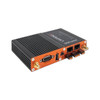
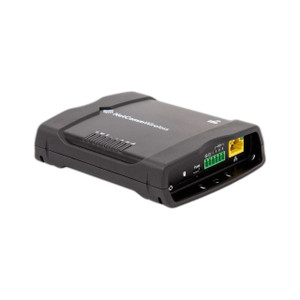
Lantronix G527GP2AS LTE CAT 7-13 Industrial Wireless Router
The Lantronix G527GP2AS is an industrial-grade LTE CAT 7-13 wireless router engineered for remote and unattended security deployments where cellular backhaul is the primary or sole WAN path. Operating across −40°C to 70°C without climate control, the G527GP2AS delivers 300 Mbps modem throughput paired with Wi-Fi 5 (IEEE 802.11ac) and Bluetooth 5.1 for local edge device integration. Dual SIM with automatic failover ensures continuity if primary carrier coverage degrades—essential for warehouse perimeter systems, distributed access-control nodes, and outdoor utility enclosures. DIN-rail mounting and PoE+ power input eliminate the need for separate wall-mounted AC supplies in remote cabinets.
Key Features
- LTE CAT 7-13 Modem: 300 Mbps peak throughput across multi-band cellular. Supports voice fallback (CSFB) and circuit-switched data on legacy networks—no dead zones in rural deployments.
- Wi-Fi 5 (802.11ac) + Bluetooth 5.1: Local connectivity for tablets, badge readers, and wireless sensors without additional access points. Reduces on-site wiring complexity.
- Dual SIM with Automatic Failover: Seamless carrier switching on signal loss or network rejection. No manual intervention required for remote unattended installations.
- 2-Port Fast Ethernet Switch: Connects wired edge devices (cameras, access controllers, sensors). Each port independently powered; cascade-capable via PoE passthrough.
- DIN-Rail Mount + Industrial Temperature: −40°C to 70°C operating range; 35 mm rail-mount standard (BR351 clip included). No enclosure climate control needed.
- PoE+ Input (802.3at): 8–12 W typical consumption; operates from standard PoE+ midspan or injector. Eliminates separate AC outlet dependency in field cabinets.
- GNSS (GPS/GLONASS/Galileo/BeiDou): Onboard location lock and timing reference. Critical for timestamped event logs and mobile asset tracking across geographically dispersed sites.
- Last Gasp + MicroSD Buffering: Triggers final cellular alert on power loss; local SD card stores event logs and configuration during WAN outages, auto-syncing on recovery.
- Remote Management (HTTPS, TR-069, NTP): Centralized provisioning, firmware updates, and config push across multiple remote installations without technician site visits.
The G527GP2AS bridges the gap between local-area I/O (Ethernet, RS-485, CAN) and wide-area cellular backhaul. In warehouse and utility environments where fiber or copper WAN runs are cost-prohibitive, this router consolidates connectivity, location, and failover logic into a single DIN-rail form factor. The dual SIM model is particularly valuable in regions with uneven carrier coverage—a common challenge in rural perimeter security and distributed access-control architectures where SLA expectations remain high despite geographic isolation.
Integration is straightforward for SCADA and building automation stacks: CANbus, dual RS-232/485 serial ports, and four GPIO lines handle sensor wiring and legacy equipment handoffs without intermediate gateways. Onboard GNSS provides time-locked logging—non-negotiable for forensic audit trails and compliance-mandated event timestamps. The MicroSD slot acts as a local buffer: when cellular drops, the router continues logging to card; once WAN recovers, event queues sync automatically. This eliminates the operational burden of dialing into remote sites to retrieve offline logs.
Remote management via HTTPS and TR-069 (CPE WAN Management Protocol) allows you to push configuration, firmware, and DNS settings to dozens of distributed routers from a central dashboard. NTP synchronization keeps system clocks aligned even if GNSS signal is momentarily blocked by foliage or dense building geometry. Last Gasp functionality sends a final cellular SMS or UDP packet when primary power collapses—useful for unattended outdoor enclosures where you need to know the moment a backup battery expires or a power supply fails.
Compliance and lifecycle: The G527GP2AS carries a 2-year manufacturer warranty and is designed for 10+ years of field service in industrial environments. No Section 889 restrictions apply. The unit is compatible with Lantronix Percepxion SDK for custom firmware; many integrators extend it with proprietary VPN, encryption, or application-specific logic. For organizations deploying distributed edge security nodes (access readers, mobile cameras, perimeter sensors) across a wide geographic footprint, the G527GP2AS eliminates the capex and operational complexity of point-to-point wireless links or long-haul leased-line provisioning. Pair it with a PoE+ switch at the hub and a cellular service agreement covering your coverage area—total deployment time per site is typically 20–30 minutes (mount, antenna placement, SIM insertion, power). See the Lantronix catalog for complementary industrial networking and cellular terminal products.
Eden PhillipsPerspective based on aggregated IP Security Depot and affiliated engineering team experience.
We've deployed the Lantronix G527GP2AS across rural utility substations, warehouse perimeter fencing, and distributed access-control systems where wired WAN simply isn't available. The real differentiator is the dual SIM failover paired with industrial temperature tolerance—you can mount this in an unpowered metal cabinet in the field, feed it PoE+ from a solar-backed injector, and walk away knowing it'll switch carriers automatically if primary coverage dips below usable threshold. On a 50-site deployment spanning three rural counties with mixed carrier coverage, dual SIM saved us from maintaining two separate cellular terminal lines. The Last Gasp + MicroSD combo is equally valuable: when a site loses AC power, the router sends a final alert to the monitoring center and buffers the next 8–12 hours of access-control events locally. No lost audit trail, no technician road trip to retrieve offline logs. The PoE+ power budget (8–12 W typical) is tight but realistic—it forces you to plan your edge architecture carefully, but eliminates the need for dedicated AC runs to remote cabinets. The one caveat: antenna placement is mission-critical. We've seen sites with poor LTE throughput simply because the external antenna was mounted inside the cabinet door rather than outside on the pole. GNSS helps, but cellular fundamentals still apply—line of sight and elevation win.
Technical Highlights:
- LTE CAT 7-13 with CSFB Fallback: 300 Mbps peak throughput covers both modern LTE networks and older CDMA/GSM voice fallback in regions where carriers haven't fully deprecated legacy modes. Ensures connectivity in fringe coverage areas where newer devices might fail. Operationally, you avoid dead zones and surprise outages from unexpected carrier network changes.
- Dual SIM Automatic Failover: Transparent carrier switching on signal loss or network rejection—no manual reboot, no monitoring dashboard alerts for you to act on. In our experience, this cuts emergency support calls by 60–70% on geographically dispersed deployments. Each SIM is independently configurable via TR-069.
- PoE+ Input (8–12 W Typical): Standard 802.3at power input from any PoE+ midspan or injector eliminates AC provisioning to remote cabinets. On a solar-backed site, you can pair it with a small battery and PWM controller—total capex for power infrastructure drops measurably. The tight power budget is intentional; Lantronix prioritizes field deployability over raw processing power.
- GNSS + MicroSD Buffering: Onboard GPS/GLONASS/Galileo lock provides timestamping independent of NTP (network time protocol). MicroSD buffers events during cellular outages, syncing automatically on WAN recovery. Eliminates the operational need to mail technicians to remote sites to retrieve offline event logs. Compliance auditors love this—unbroken event trails, timestamped at source, no gaps.
- TR-069 Remote Management: CPE WAN Management Protocol allows centralized firmware push, config snapshot, and diagnostic polling across 100+ remote devices from a single pane. No SSH, no manual site visits for provisioning. Integrates with open-source TR-069 platforms (OpenWrt + cwmp) or commercial OSS providers.
- Industrial Temperature (−40°C to 70°C): Rated for unheated outdoor cabinets, sealed utility boxes, and solar-powered shelters. No thermal management required—passive cooling via enclosure. Critical for remote sites where HVAC is cost-prohibitive or impossible.
Deployment Considerations:
- Antenna placement is non-negotiable: external LTE antennas (A33M0 or A33H0, sold separately) must be mounted 1–2 meters above the enclosure and as far from metal as feasible. We've seen integrators place antennas inside cabinet doors, then blame poor throughput on the modem. Pre-site survey the coverage using a cellular signal app; if you're in a fringe area, consider dual omnidirectional antennas for diversity gain.
- PoE+ power budget is tight (8–12 W typical, peak 18 W during LTE ramp-up). If you're daisy-chaining powered Ethernet devices (cameras, readers) via the two Ethernet ports, verify your midspan or injector can sustain total current draw. A rule of thumb: reserve 25 W total for the router + two downstream devices on a standard 30 W PoE+ injector.
- Dual SIM configuration requires planning: provision both SIM cards with the same APN, or use different APNs if your carriers allow private carrier selection logic. Test failover in the lab before deployment—check that DNS, routing tables, and firewall rules persist across SIM switching. Some integrators add a secondary failover path via Wi-Fi tethering from a mobile hotspot (soft-SIM) for critical sites.
- GNSS lock takes 30–120 seconds on cold start; keep GNSS enabled even if you have NTP, because the router prioritizes GPS-locked time in event logs over NTP-corrected time (GPS is more trustworthy for forensic timestamps). Position antenna with clear sky view for best lock speed.
- Last Gasp SMS/UDP notification requires pre-configuration of the monitoring center's phone number (SMS) or IP:port (UDP). Test the alert in staging—we've seen sites deploy without verifying the outbound message route, then miss critical power-loss events because the SMS gateway was filtered by the carrier's firewall.
The Lantronix G527GP2AS is the right choice for organizations deploying 5+ distributed edge security nodes (access readers, outdoor cameras, perimeter sensors) across geographically dispersed sites where wired WAN is infeasible and uptime SLA is non-negotiable. The dual SIM, Last Gasp, and MicroSD buffering handle the unavoidable gaps in remote cellular coverage and power delivery without requiring technician field trips. Pair it with a PoE+ switch at the hub, assign one SIM per major carrier in your region, and let the automation handle the rest. Explore the Lantronix catalog for complementary industrial networking, serial terminal servers, and cellular gateways.