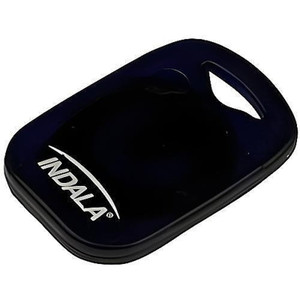
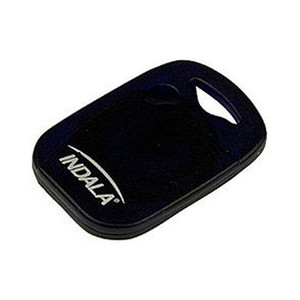
Kantech P40KEY ioProx 26-bit Wiegand Keytag
The Kantech P40KEY is a passive proximity keytag credential engineered for access control deployments where simplicity and maintenance-free operation matter. Operating on the 26-bit Wiegand protocol, the P40KEY integrates with Kantech ioProx systems and maintains compatibility with third-party readers configured for standard Wiegand format — a critical feature if your facility runs mixed-vendor hardware or plans future infrastructure changes.
Key Features
- Passive RFID technology: No batteries, no charging cycles, no replacement schedules. A passive credential responds to reader queries using electromagnetic induction alone — eliminating the single largest maintenance headache in credential programs. This matters especially in high-turnover facilities where lost or damaged active badges drive operational cost.
- 26-bit Wiegand protocol: The industry-standard format ensures compatibility across Kantech controllers and third-party readers. Wiegand is deterministic and field-proven — you avoid the black-box behavior of proprietary formats. If you swap readers or add access points later, this credential will work without reprogramming.
- ioProx technology integration: Native support for Kantech ioProx ecosystems streamlines system configuration. ioProx readers recognize the P40KEY without manual card-number entry or lookup tables — faster commissioning, fewer provisioning errors, tighter audit trails.
- Portable keytag form factor: Smaller and lighter than traditional card credentials, keytags clip to lanyards, key rings, or badge holders. Personnel carry them intuitively; replacement keytags cost less per unit than card stock when ordered in bulk.
- Broad reader compatibility: Works with any Kantech or legacy system that reads 26-bit Wiegand. If your facility uses Kantech KT-400 series controllers or ioProx readers (such as the KT-READER-P40), the P40KEY is the intended credential. Mixed environments can also deploy the P40KEY provided readers support standard Wiegand input.
- Enterprise-scale provisioning: Sold in increments of 25 units minimum. This bulk packaging aligns with typical facility rollouts — you order credentials in the quantities your security integrator or facility team actually deploys, avoiding the friction of per-unit ordering or oversupply.
Integration & Compatibility
The P40KEY pairs directly with Kantech access control systems using ioProx readers and controllers. Because it implements the standard 26-bit Wiegand format, the credential also works with non-Kantech readers that support Wiegand input — useful if your infrastructure includes readers from other manufacturers or if you plan to migrate to a different brand in the future. Consult your system integrator or your reader's documentation to confirm Wiegand support before ordering; not all modern readers default to Wiegand, and some may require firmware configuration or a card-format selection at commissioning.
When integrating the P40KEY into a Kantech deployment, work with your integrator to program facility codes, ID ranges, and cardholder records in the Kantech access control software. The keytag's Wiegand output is read-only — there is no onboard display, chip contact, or configuration interface. Once provisioned in your access control database, the credential's function is fixed.
Typical Deployment Scenarios
The P40KEY suits corporate offices, data centers, research facilities, and multi-tenant properties where personnel carry portable credentials and system simplicity is valued. Bulk provisioning makes the P40KEY cost-effective for organizations deploying credentials to 100+ users. High-turnover environments (call centers, contract workforces, temporary staff) benefit from low per-unit cost and rapid replacement if keytags are lost. Facilities that have standardized on Kantech or Wiegand-compatible infrastructure can roll out the P40KEY without additional reader hardware.
Frequently Asked Questions
Q: Does the P40KEY require a battery or charging?
A: No. The P40KEY is a passive RFID credential. It harvests power from the reader's electromagnetic field and requires no battery, charging, or maintenance.
Q: Will the P40KEY work with non-Kantech readers?
A: Yes, provided the reader supports 26-bit Wiegand format input. Confirm your reader's documentation or consult your integrator. Some readers may require configuration or firmware updates to enable Wiegand mode.
Q: What is the minimum order quantity?
A: The P40KEY is sold in increments of 25 units. Minimum order is 25 keytags.
Q: How do I program the P40KEY with employee information?
A: The keytag itself cannot be programmed. Provisioning occurs in your Kantech access control software. Your integrator will configure facility codes, ID numbers, cardholder records, and access permissions in the management system. The keytag's 26-bit Wiegand number is read by the system during enrollment.
Q: Is the P40KEY suitable for outdoor access points?
A: The keytag is passive and has no inherent environmental rating. The credential itself will function in outdoor conditions, but reader selection and weatherproofing depend on your reader hardware. Ensure your reader supports outdoor or IP-rated enclosures if outdoor access points are required.
Q: Can I reprogram the P40KEY if facility codes or access rules change?
A: No. The P40KEY's 26-bit Wiegand code is fixed and burned into the credential at manufacture. Access control changes are managed in your access control software — you cannot reprogram the keytag itself. If facility codes change fundamentally, you may need to issue new credentials.
Ted PerryPerspective based on aggregated and affiliated engineering team experience.
I've sized up access control credentials for facilities ranging from 50 to 5,000 users, and the passive versus active question always comes up. The Kantech P40KEY settles it decisively: zero maintenance overhead, no battery logistics, lower cost per unit at scale. The 26-bit Wiegand format is the right call here — it's deterministic, it's proven, and it decouples you from proprietary reader limitations. If you're running Kantech ioProx infrastructure or considering it, the P40KEY is the credential to stock.
Technical Highlights:
- Passive RFID harvesting: The keytag draws all its power from the reader's RF field — no battery replacement cycles, no disposal overhead, no supply-chain dependency. In a 500-user facility, that's 500 fewer battery change-outs per credential lifetime. Real operational savings.
- 26-bit Wiegand protocol: Standard-format credentials reduce integration risk. You're not betting on a proprietary format surviving a reader swap or a vendor migration. Wiegand is a known quantity, supported across legacy and modern access control hardware from dozens of manufacturers.
- ioProx ecosystem integration: Kantech ioProx readers commission faster with the P40KEY because credential identity is embedded in the Wiegand stream — no manual lookup tables, no card-number cross-referencing. Provisioning time per credential drops from minutes to seconds on ioProx systems.
Deployment Considerations:
- The P40KEY's Wiegand number is burned at manufacture and fixed — you cannot reprogram it. Plan your facility codes and ID ranges upfront. If you rebrand facilities or consolidate access control systems later, you may inherit credentials with mismatched codes.
- Passive credentials have no display and no onboard state — the reader and access control system own all the logic. Confirm your reader and controller support 26-bit Wiegand before placing a bulk order. Some modern readers default to higher-bit formats (e.g. 34-bit) or proprietary schemes.
- The P40KEY lacks an environmental rating; reader weatherproofing is your responsibility. If outdoor access points are required, specify IP-rated readers and ensure enclosure design accounts for temperature swings and moisture.
For corporate offices, data centers, and multi-tenant deployments standardizing on Kantech or Wiegand-compatible infrastructure, the P40KEY is the straightforward, low-friction credential choice. Bulk provisioning aligns with your integrator's workflow, and the keytag form factor suits personnel who carry their credentials on lanyards or key rings.