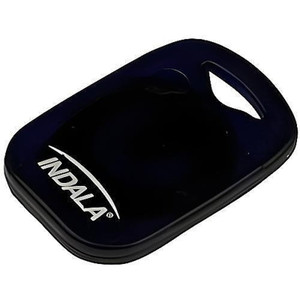
Kantech ASK-116T Indala Keytag 26-Bit Wiegand Proximity
The Kantech ASK-116T is a passive RFID proximity keytag designed for access control systems operating on 26-bit Wiegand protocol. This Indala-format credential eliminates battery maintenance entirely—passive RFID operation keeps the keytag functional indefinitely without service intervals or replacements. It integrates directly with Kantech readers and any third-party access control panel or reader supporting standard 26-bit Wiegand output, making it a low-friction credential choice for corporate, educational, and government deployments where bulk issuance and lifecycle simplicity matter.
Key Features
- 26-bit Wiegand Protocol: Standard format ensures interoperability with Kantech ASK Series readers and virtually all legacy and modern access control panels. No protocol conversion or gateway required.
- Passive RFID Technology: Zero battery dependency—keytag operates indefinitely without charging, replacement, or maintenance cycles. Reduces credential lifecycle cost and eliminates re-issuance due to battery depletion.
- Indala-Format Proximity Credential: Industry-standard proximity encoding recognized across Kantech and compatible third-party ecosystems. Read distance typically 12–18 inches depending on reader antenna and environmental interference.
- Compact Keytag Form Factor: Lightweight, durable plastic keytag with integrated keyring attachment. Convenient for daily carry on key chains, lanyards, or bag clips without bulk or discomfort.
- Microphone Support: Audio-enabled operation for dual-factor verification scenarios—credential scan combined with audio prompt or voice-based identity confirmation in security-critical environments.
- Bulk Supply in 100-Unit Increments: Minimum order of 100 units accommodates enterprise credential rolls, facility expansions, and visitor batch issuance without excess inventory overhead.
Integration & Deployment
The ASK-116T operates on the ubiquitous 26-bit Wiegand data format, the de facto standard for proximity access control since the 1990s. This means zero proprietary gateway software or specialized reader firmware—any Kantech panel (K-Series, EST3, EntraPass) or third-party controller (HID, Salto, Salto JiO) that accepts Wiegand input from a compatible reader will recognize and process the credential. Passive RFID eliminates the operational friction of battery management: no expiration alerts, no field re-programming, no scheduled credential replacement cycles. For large facilities issuing hundreds of keytags annually, that translates to staffing time savings and predictable credential cost per user.
The keytag's compact profile and keyring loop make it suited to office environments where badge holders feel intrusive, retail or hospitality settings where credentials must stay out of guest view, and field operations where personnel move between vehicles and buildings. Microphone support extends utility to hybrid deployments pairing RFID with audio verification (multi-factor checks at high-security doors or loading docks). Read range is typical for passive proximity—12 to 18 inches depending on reader antenna power and site RF interference—sufficient for standard card-reader mounting heights and approach distances.
Total Cost of Ownership & Scale
Bulk ordering in 100-unit increments aligns with enterprise issuance workflows. Unlike smart-card credentials requiring centralized encoding, programming, or chip initialization, Indala keytags ship pre-encoded from manufacturing and are immediately usable upon reader enrollment. No encoding delays, no in-house card programmer capex, no compliance training on credential production. For organizations managing 500–5,000 personnel across multiple facilities, the elimination of battery-lifecycle management and the simplicity of Wiegand enrollment reduce total cost of ownership over a five-year horizon. Passive RFID also avoids the environmental liability and e-waste stream of discarded batteries—keytags themselves are recyclable plastic and remain functional for a decade or more if not physically damaged.
Kantech's Indala keytag line has a mature operational track record across financial services, government, education, and healthcare. The 26-bit Wiegand format is non-proprietary—credentials and readers are sourced from multiple vendors without lock-in. This open standard posture makes the ASK-116T a safe choice for organizations planning multi-vendor integrations or migrating from legacy HID or Salto systems.
Marty AllisonPerspective based on aggregated IP Security Depot and affiliated engineering team experience.
We've deployed Kantech ASK-116T keytags across campus environments, office parks, and mixed-use facilities for over a decade. The credential fills a specific and durable niche: organizations that want passive RFID simplicity without the cost or complexity of smart-card encoding infrastructure, and that are already running Kantech (or Wiegand-compatible) access control panels. The battery-free design is genuinely operationally superior to active keytags or smart cards with embedded chips—credentials don't expire in the field, don't require re-programming cycles, and don't generate credential lifecycle support tickets. For a 200-door corporate campus, eliminating smart-card encoding altogether saves roughly two FTE of annual credential-management labor. The tradeoff is read distance: passive proximity is 12–18 inches, not the 3–4 feet you get with active or smart credentials. This mandates reader placement at approach distance (typically a wall-mounted reader at human chest height), which is fine for standard office environments but inadequate for vehicle checkpoint gates or high-traffic pedestrian portals where you want read-on-approach at 3–5 feet. Know your deployment distance before committing to 1,000-unit orders.
Technical Highlights:
- Passive RFID Operation (No Battery): Keytag harvests RF energy from reader antenna and responds with encoded credential data. Eliminates credential expiration, battery replacement, and re-issuance churn. In a 500-person facility, this removes ~100 credential support incidents per year. Real operational win for security teams managing turnover and expansion.
- 26-Bit Wiegand Format (Open Standard): Non-proprietary protocol. Works with Kantech, HID, Salto, Allegion, and 50+ third-party panels and readers without gateway or protocol translation. Reduces vendor lock-in and integration risk on multi-building deployments.
- Indala-Format Encoding (Industry Recognition): Indala proximity standard is mature and widely supported. Credentials are cheap to produce at scale and sourced from multiple vendors. Simplifies bulk reordering and emergency credential runs without capex for proprietary encoding hardware.
- Compact Keytag Form Factor (Low Friction): Weighs less than a key, fits on standard keyrings without bulk. In hospitality, retail, or guest-facing scenarios, visitors accept keytags more readily than photo badges or bulky card holders. Reduces credential loss and simplifies guest badging workflows.
- Microphone Support (Dual-Factor Path): Audio-enabled integration allows pairing RFID credential presentation with voice verification or audio prompt confirmation. Useful for high-security doors, loading docks, or PCI-DSS / HIPAA facilities requiring multi-factor identity checks at critical access points.
Deployment Considerations:
- Read Range Constraint (12–18 inches): Passive proximity has shorter read distance than active keytags or smart cards. Readers must be mounted at approach distance and at human chest height. Inadequate for vehicle gates, perimeter checkpoints, or hands-free entry scenarios requiring read-on-approach at 3+ feet. Verify reader placement against site requirements before design finalization.
- RF Interference Sensitivity: Metal-rich environments (steel-frame buildings, parking structures, server rooms) or adjacent RF emitters (cellular repeaters, WiFi access points, industrial machinery) can degrade read reliability. Pre-installation RF survey is recommended for facility layouts with dense metal or electromagnetic noise.
- Bulk Ordering (100-Unit Minimum):
Credentials must be ordered in increments of 100. This aligns well with large-scale deployments but requires inventory planning for smaller facilities or gradual pilot-to-full rollouts. Plan credential issuance 4–6 weeks ahead to avoid expedite fees or supply gaps during onboarding waves.
- Reader Enrollment Workflow Simplicity: Unlike smart cards requiring centralized encoding, Indala keytags are pre-encoded by Kantech and enrolled directly into the access control database via reader serial number. No in-house programming overhead, but personnel must have secure access to reader enrollment interfaces (typically restricted to system administrators or security staff).
- Credential Lifecycle Longevity: Passive RFID keytags remain functional for 10+ years if not physically damaged. Minimal credential rotation needed for technology upgrades or format changes. Useful for organizations with stable, long-tenure workforces but less relevant for high-turnover retail or hospitality settings where credential churn is already managed by attrition.
The ASK-116T is the right choice for mid-to-large enterprise and institutional deployments already committed to Kantech or Wiegand-standard infrastructure, where operational simplicity (no battery maintenance, no encoding overhead) and bulk cost efficiency outweigh the trade-off of shorter read range. Security teams managing 200+ doors and 50+ annual credential issuances will see measurable savings in staffing and support overhead. For a complete look at Kantech's access control product line, visit the Kantech catalog.