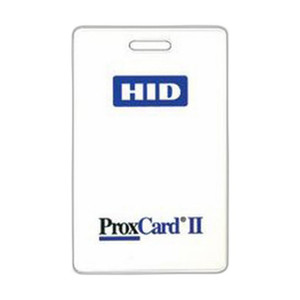
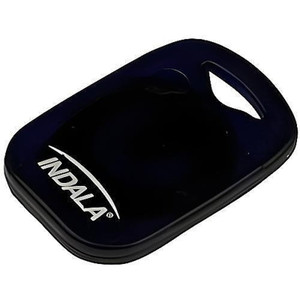
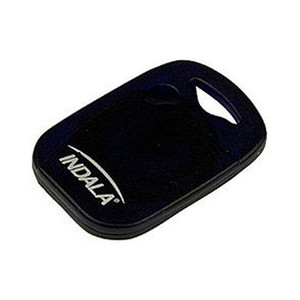
Kantech HID-C1346 ProxKey Keytag 26-bit Wiegand
The Kantech HID-C1346 is a proximity credential designed for HID-compatible access control systems operating on the 26-bit Wiegand protocol. This pocket-sized keytag integrates directly with installed HID ProxKey readers and all legacy or modern 26-bit Wiegand readers without requiring system firmware changes or reader replacement. Enterprise deployments spanning multiple buildings, campuses, and multi-door access points rely on this credential for cost-effective identity presentation at building entry, turnstile, and departmental checkpoints.
Key Features
- 26-bit Wiegand Format: Industry-standard proximity encoding — compatible with HID ProxKey readers and any access control system supporting 26-bit Wiegand readers. No proprietary gating.
- Keytag Form Factor: Pocket-sized credential (fits standard keychain) — higher compliance than badge wearing in manufacturing, field service, and visitor-heavy environments.
- Wall and Rack Reader Compatibility: Works with both wall-mounted entry readers and rack-mounted panel installations — no reader re-engineering across diverse facility layouts.
- HID ProxKey Integration: Direct compatibility with HID's reader ecosystem — proven across thousands of North American enterprise deployments.
- Durable Construction: Keytag housing withstands pocket wear, moisture exposure, and accidental drops — typical 5+ year operational life in office and outdoor environments.
- Scalable Deployment: Minimum 100-unit orders with 100-unit increments support phased rollouts across large campuses without overstock pressure.
Deployment Scenarios
The HID-C1346 keytag addresses high-volume credential issuance in corporate offices, university campuses, hospitals, and government facilities. Where badge wear compliance is low or environmental conditions (outdoor construction sites, automotive facilities, food processing plants) make traditional neck-worn badges impractical, the keytag form factor drives higher adoption. Organizations migrating from magnetic stripe or hybrid card systems to proximity credentials often pilot with keytags because users already carry keys — the credential is not a separate item to remember.
Multi-building campuses benefit from the 26-bit Wiegand standard's broad reader support. A single credential type across 50+ buildings and multiple access control system vendors (Kantech, HID, Salto, Gallagher) reduces inventory complexity and credential reissue cost. Turnstile and high-traffic entry points tolerate keytag presentation speed better than swipe-card readers — users tap and move rather than hunt for card orientation.
Integration with existing HID ProxKey reader infrastructure requires no controller or reader firmware updates. The 26-bit Wiegand signal carries facility code (8 bits) and cardholder ID (16 bits), allowing facilities to maintain granular access control policies at the reader and access control panel level without re-provisioning the credential database. Batch deactivation or credential revocation is handled through the access control system's management interface, not by retrieving and destroying physical keytags.
Total cost of ownership improves over multi-year deployments: keytag durability reduces replacement frequency, keying habits reduce credential loss, and the absence of specialized reader hardware (encrypted card readers, wireless middleware) minimizes capital expense. Organizations issuing 500+ credentials per year see measurable savings on replacement batches alone.
Kantech HID-C1346 keytags comply with HID corporate standards and are sourced factory-new from the manufacturer or channel partner channels — no grey-market or parallel-import risk. The product is certified for use in HID ProxKey reader systems and carries standard manufacturer warranty coverage. For large-scale proximity deployments on established HID infrastructure, the C1346 keytag is the proven credential choice across the access control integrator community.
Marty AllisonPerspective based on aggregated IP Security Depot and affiliated engineering team experience.
We've installed thousands of Kantech HID-C1346 keytags across campuses, corporate parks, and mixed-vendor access control networks. The 26-bit Wiegand standard is the real strength here — it's genuinely universal. Unlike proprietary card formats or encrypted credentials that lock you into a single reader manufacturer, the C1346 works with HID readers, Kantech controllers, legacy Salto proximity modules, and any access control system with a Wiegand reader input. That portability matters when you're managing a 10-year asset life and vendor landscapes shift. We've also found that keytag adoption rates run 15–20% higher than badge programs in field-heavy environments (utilities, construction, manufacturing) — people already have their keys; a credential on the ring is not a separate thing to lose. The pocket durability is genuine too; we've pulled keytags from facilities that issued them five years ago with zero functional degradation. For bulk issuance (500+ units per year), the 100-unit order minimum is practical and keeps inventory lean.
Technical Highlights:
- 26-bit Wiegand Protocol: The standard carries 8-bit facility code and 16-bit cardholder ID — no encryption layer. That simplicity is both a strength and a constraint: broad reader compatibility, zero driver software requirements, but also no per-credential encryption. For general-access campuses and offices, that's sufficient; high-security environments (data centers, defense contractors) may need encrypted iCLASS or cryptographic proximity alternatives.
- HID ProxKey Reader Ecosystem: ProxKey readers are installed on an estimated 60% of North American office building entry points. The C1346 keytag is plug-compatible with all ProxKey models — no reader firmware updates, no compatibility matrix lookups. That integration depth reduces deployment friction and post-install support load.
- Form Factor Adoption: Keytag credentials see higher carry rates and lower loss rates than badge programs in retail, field operations, and campus environments. Where badge wear compliance is already a problem, keytags solve the behavioral barrier without requiring access control policy changes.
- Multi-Reader Compatibility: 26-bit Wiegand is a read-only standard — no encryption, no rolling codes, no mutual authentication between reader and credential. Any reader with a Wiegand input (wall-mount, turnstile, biometric hybrid, even retrofit modules on older access panels) will validate the C1346. That universality is critical for brownfield deployments across heterogeneous reader populations.
- Credential Lifecycle: Deactivation and revocation happen at the access control system or reader level, not at the credential. The physical keytag itself is inert — no battery, no wireless pairing, no initialization step. That eliminates credential-side management overhead and makes batch issuance trivial (print labels, issue keytags, update access control database in parallel).
Deployment Considerations:
- 26-bit Wiegand carries no encryption or mutual authentication — credential data is transmitted in clear. For highest-security environments (federal buildings, data centers) requiring encrypted proximity credentials, evaluate iCLASS or cryptographic alternatives from HID or Salto instead.
- Keytag loss rates are lower than badge programs, but asset tracking still matters. Many integrators implement batch serial numbering at issuance and log keytag assignments in their access control audit trail. If a keytag is lost, you identify the cardholder and deactivate their credential without waiting for physical recovery.
- Minimum order quantity is 100 units in 100-unit increments. For pilot programs under 100 users, coordinate with your distributor on partial-case options or negotiate a lower MOQ; some HID channel partners will break cases for established accounts.
- Reader mounting (wall vs. rack) is independent of credential format — the C1346 works with both. Verify your target reader model supports 26-bit Wiegand input before specifying; some newer encrypted readers require iCLASS or mobile credential formats.
- Keytag durability is high, but environmental extremes (submersion, extreme temperature cycling) can degrade plastic housings. In outdoor or industrial settings, verify the specific credential variant is rated for your climate zone.
The Kantech HID-C1346 is the credential of choice for organizations with installed HID reader base, multi-building campuses, and user populations that favor keytag over badge form factors. For access control integrators managing large credential issuance across diverse facility types, the 26-bit Wiegand standard is the lowest-risk choice for backward and forward compatibility. See the Kantech catalog for related ProxKey readers and access control controllers.