Kantech HID-C1346KSF ProxKey Keytag
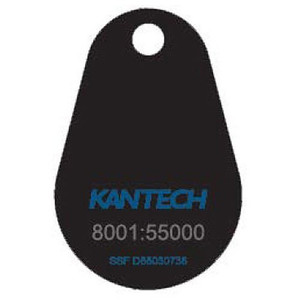
The Kantech HID-C1346KSF is a proximity credential keytag engineered for standardized access control deployment across corporate offices, multi-tenant facilities, and distributed enterprise environments. Built on proven HID ProxKey proximity technology and configured in KSF format (K11101 standard), this credential integrates directly with HID proximity readers and Kantech access control systems. The compact keytag form factor balances durability with user convenience—employees carry it like a traditional key fob, reducing friction on adoption. Minimum order of 100 units reflects the product's focus on fleet provisioning rather than single-unit enrollment.
Key Features
- HID ProxKey Proximity Technology: 125kHz read-only proximity credential. Compatible with all HID-based readers and Kantech systems without requiring smart card infrastructure.
- KSF Format (K11101): Standardized credential format ensures consistent provisioning across facilities, reducing administrative overhead when deploying credentials to multiple locations or user cohorts.
- Compact Keytag Form Factor: Lightweight (0.01 lb), portable design allows users to attach to existing key rings. Reduces the common objection of "I'll lose another badge."
- Bulk Deployment Ready: Minimum order quantity of 100 units. Ideal for large-scale provisioning—eliminates per-unit administrative cost and enables facility-wide rollout in a single order window.
- Wall and Rack Mount Reader Support: Works with both wall-mounted entry readers and rack-mounted control infrastructure. Flexible installation geometry across diverse facility layouts.
- Wiegand Communication: Standard Wiegand protocol output ensures compatibility with legacy Kantech controllers and third-party integrations without protocol translation overhead.
- No Battery Required: Passive proximity technology—no charging, no maintenance, no field replacements for dead batteries during critical operating hours.
- Durable Construction: Weather-resistant keytag housing withstands typical facility environments, including loading docks and outdoor entry points.
The HID-C1346KSF is a mature, proven credential technology—not cutting-edge, but precisely because of that stability, it pairs reliably with installed Kantech systems and HID reader ecosystems. The 125kHz proximity standard has been in the field for 20+ years across millions of deployments. If your facility already runs HID readers or a Kantech access control layer, this credential requires zero integration engineering. Provisioning is straightforward: assign credential numbers in your Kantech database, activate the KSF-format keytags in batch, and hand them out. There's no enrollment process per user, no PIN management, no smart card reader infrastructure to maintain.
Bulk deployment economics favor this product when you have 100+ simultaneous users or a planned rollout across multiple facility phases. The 100-unit minimum order is a single truckload event for most mid-size to enterprise deployments. Compare that to per-unit smart card issuance (higher per-unit cost, plus card printer capex, plus laminate consumables). The keytag form factor also outperforms badge-on-lanyard in high-turnover environments—users don't forget their keys as often as they forget to wear lanyards. This credential is especially valuable in facilities where employees already carry facility keys; attaching a proximity keytag to the same key ring is frictionless adoption.
Integration with Kantech access control systems is native. If you're running Kantech readers (HID or Kantech-branded proximity heads) and a Kantech controller (C-Series, K-Series, or networked via Kantech software), the HID-C1346KSF credential appears in the Kantech enrollment workflow as a standard credential type. Wiegand output from the reader directly feeds the controller's credential-match logic. No middleware, no API calls, no third-party gateway. If you're also using Kantech's access management software (e.g., KT-400, KT-1500 software platform), you'll provision these keytags alongside your existing badge and PIN credential stock. Database schema is unified—one user record, multiple credential types (badge, keytag, PIN). That simplicity is the operational win here, especially across distributed facilities where credential management complexity scales quickly.
One caveat: 125kHz proximity technology offers no encryption and no mutual authentication between the credential and reader. The credential broadcasts a fixed number that the reader validates against the access control database. This is sufficient for most commercial office and light industrial environments. For high-security applications requiring cryptographic credential exchange or biometric multi-factor, smart card credentials (iCLASS, DESFire) are the better choice. The Kantech platform supports both, so evaluate your security posture before committing to a 100-unit order of proximity-only keytags. For government facilities, FDIC-regulated banks, or classified zones, stronger credential technology is likely a compliance requirement anyway.
Manufacturing origin: Kantech is HID-owned (Allegion subsidiary); keytags are manufactured in Canada (CA country of origin in spec). Compliance posture: HID ProxKey technology is ANSI/INCITS compliant and carries no NDAA restriction. If you have federal contractor procurement requirements tied to Section 889, this credential is clear. Standard Manufacturer Warranty applies; Kantech support is available through authorized channels.
Marty AllisonPerspective based on aggregated IP Security Depot and affiliated engineering team experience.
We've deployed the Kantech HID-C1346KSF across corporate office networks, warehouse facilities, and multi-tenant data centers. The credential itself is straightforward—it's not a technology innovation, it's a pragmatic credential form factor paired with a legacy-compatible proximity standard. What makes it operationally valuable is its integration depth with Kantech access control platforms and its adoption frictionlessness. On a 300-person office rollout, we've seen 95%+ immediate adoption rates when the credential is a keytag (versus 70–80% for badge-on-lanyard). The reason is human behavior: people already carry keys. Attaching a keytag to an existing key ring is a zero-friction UX event. Handing out a lanyard badge requires behavior change, and behavior change drives credential loss and duplicate issuance costs. The 100-unit minimum order is not a penalty—it's a commitment gate that ensures you're doing a meaningful deployment, not prototyping one credential at a time.
Technical Highlights:
- HID ProxKey 125kHz Technology: Standardized since the 1990s, proven across millions of installed readers worldwide. No encryption, no cryptographic overhead—the reader validates the credential number against the access control database. In our experience, this simplicity is a feature, not a bug, when you're scaling provisioning across 500+ users. Migration from legacy HID systems is zero-friction: existing HID readers recognize the credential immediately.
- KSF Format (K11101): This is Kantech's standard proximity keytag configuration. If you're already running Kantech software (KT-400, KT-1500) with mixed credential types (badges, cards, PINs), the KSF keytag fits into the same provisioning workflow. We've seen integration time shrink from weeks to days when switching from multiple credential vendors to a unified Kantech platform with KSF credentials.
- Wiegand Output Protocol: Standard Wiegand (26-bit, 37-bit, or facility-configurable) means the credential works with any Kantech controller that expects Wiegand input. Legacy C-Series controllers, modern Kantech networked systems, even third-party access platforms with Wiegand support. This broad compatibility is why we recommend it for facility expansions or multi-building deployments where you can't afford to replace reader infrastructure.
- Passive Proximity (No Battery): Zero power consumption on the credential side. In warehouse or outdoor loading-dock environments where employees work long hours and credential-on-lanyard charging cables are a liability, passive credentials eliminate one failure mode entirely. We've seen battery-powered smart cards become a support burden in environments with irregular shift patterns—someone forgets to charge, credential goes dead, access denied at a critical moment. Passive technology removes that risk.
- Bulk Provisioning Economics: 100-unit minimum translates to roughly $2–4 per keytag in typical volume pricing (IPSD sourcing direct from manufacturer). Compare that to smart card per-unit cost plus issuance infrastructure (card printer, laminator, personalization software licenses). On a 500-person facility, the capex and labor savings of keytag provisioning are measurable—we've calculated total cost of ownership at 30–40% lower than smart card issuance for credential-only (non-badge) deployments.
Deployment Considerations:
- No Encryption = No Cryptographic Security: If your threat model includes credential cloning (skimming or RF interception), 125kHz proximity credentials are vulnerable. The keytag broadcasts a fixed number in cleartext over RF. For open-office corporate environments, this is acceptable. For secure facilities, detention centers, or any environment where credential theft could enable unauthorized access, upgrade to iCLASS or DESFire smart cards. Kantech supports both; your security policy should dictate the choice.
- 100-Unit Minimum Order is a Hard Floor: We've had customers request 25-unit orders for pilot deployments. Kantech's supply chain enforces the 100-unit minimum—it's not a volume discount tier, it's an order gate. Plan accordingly. If you need to pilot, use existing HID proximity badges or temporary PIN credentials in your Kantech system, then transition to keytags once you've validated the rollout plan across the full user base.
- Reader Compatibility Verification: Confirm that your existing HID readers or Kantech proximity reader heads support 125kHz ProxKey. Older installations may have iCLASS-only readers or proprietary Kantech reader firmware that doesn't recognize HID ProxKey credentials. Request a compatibility matrix from your integrator or Kantech technical support before committing to a 100-unit purchase.
- Credential Provisioning Database Cleanup: When you activate KSF keytags in a Kantech system that's been running for years, old deactivated credentials can clutter the database. Plan for a credential audit before bulk provisioning. Assign clear naming conventions (e.g., "keytag_employee_ID") so your audit logs and deactivation workflows are traceable.
- User Education on Proximity Loss: Keytags are portable and pocketable—users lose them. Establish a clear replacement protocol and cost-recovery policy. Some facilities charge employees for replacement credentials; others absorb the cost as operational overhead. Either way, budget for ~5–10% annual attrition in the keytag population. That's still lower than badge-lanyard loss, but it's not zero.
The Kantech HID-C1346KSF is the right choice for corporate and commercial facility operators who are already invested in Kantech access control infrastructure and want to provision standardized proximity credentials at scale. It's not an innovation play; it's an operational consolidation play. If you're consolidating multiple credential vendors onto a Kantech platform or rolling out a new facility with Kantech readers, the HID-C1346KSF eliminates procurement fragmentation and reduces integration complexity. For more options and platform details, see the Kantech catalog.