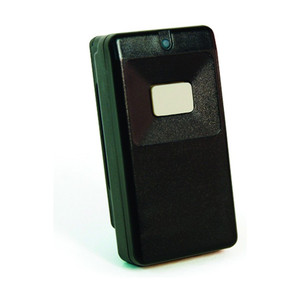
Inovonics EN1235DF Dual-Button Wireless Panic Button
Overview
The Inovonics EN1235DF is a fixed-mount wireless panic button designed for emergency notification in access control, security monitoring, and rapid-response environments. Operating on the unlicensed 902–928 MHz ISM band, the EN1235DF transmits panic and priority alerts to central monitoring stations and security control panels without requiring dedicated wireless infrastructure licensing. This eliminates regulatory complexity and works cleanly with standard wireless security networks already deployed in most enterprise environments.
The dual-button design is the critical operational difference here: each button can initiate a separate alert condition—one might trigger a silent panic, the other a duress or medical-emergency code. This reduces false-alarm noise in the dispatch center and lets security personnel signal specific threat types without fumbling or confusion during high-stress moments. The fixed-mount form factor keeps the unit stationary at reception desks, security stations, or other permanent panic-initiation points where personnel expect to find an emergency button.
Key Features
- Dual-Button Configuration: Two independent buttons allow operators to trigger different alert states or priority levels from a single device—practical benefit is faster, more specific dispatch routing and reduced false-alarm overhead in your monitoring center.
- 902–928 MHz Wireless Transmission: ISM band operation means no FCC licensing required and straightforward integration with existing wireless security receiver networks; eliminates the coordination friction you'd face with licensed frequencies.
- Fixed Installation: Permanently mounted panic point suitable for security stations, reception areas, administrative offices, and high-security zones where the button must remain accessible and stationary during normal operations.
- Low Power Consumption: Battery-powered operation extends runtime between service intervals, reducing your maintenance burden for a device that must remain available 24/7.
- Tamper-Resistant Housing: Durable construction protects internal components from accidental damage or intentional tampering, ensuring the panic button functions reliably in active, high-traffic environments where foot traffic and contact are unavoidable.
- Direct Inovonics Integration: The EN1235DF pairs with Inovonics wireless receivers and monitoring platforms; if you're already running Inovonics infrastructure, integration is plug-and-play without third-party gateways or protocol translation.
Integration and Deployment Context
The EN1235DF integrates into wireless panic button networks where speed and clarity matter. When paired with compatible Inovonics receivers, the unit transmits emergency signals to your central station, security control room, or integrated access control system—allowing rapid response coordination without manual relay or delay. The 902–928 MHz frequency band is widely supported across enterprise wireless security platforms, so you're not locked into a proprietary ecosystem.
Typical deployments place the EN1235DF at unmanned entry points, behind reception desks, in isolated administrative offices, and anywhere your security or executive staff need instant panic access. The dual-button design is particularly valuable in mixed-threat environments—one button for active-threat panics, another for medical emergencies or duress situations—enabling dispatch algorithms to route and escalate appropriately.
Because the EN1235DF is a fixed device, battery life is not a constraint compared to mobile panic buttons. Power the unit from standard batteries, and you'll see extended runtimes measured in months or years, depending on transmission frequency and alert volume. This makes the EN1235DF a low-maintenance panic point suitable for 24/7 staffed or unstaffed security stations.
Why Choose the EN1235DF
Choose this model if you need a stationary, simple panic-initiation point in an ISM-band wireless security network. The dual-button feature is a genuine operational advantage—it reduces panic ambiguity and false-alarm response cost. The fixed form factor and low power draw make it suitable for permanent installation in high-traffic zones where portability is not a requirement.
Skip the EN1235DF if you need a mobile panic button (look for wearable or handheld variants in the same family) or if your infrastructure operates on a licensed or proprietary frequency band incompatible with 902–928 MHz.
Frequently Asked Questions
Q: Does the Inovonics EN1235DF work with non-Inovonics receivers?
A: The EN1235DF operates on the 902–928 MHz ISM band, so it is compatible with any receiver or monitoring platform designed for that frequency. However, full integration features and alert acknowledgment may depend on Inovonics-native software; confirm compatibility with your existing system before deployment.
Q: What is the battery life expectancy?
A: The EN1235DF uses standard battery power with low consumption. Exact runtime depends on alert frequency and battery type; refer to the product datasheet for your specific battery configuration and expected service intervals.
Q: Can I mount the EN1235DF indoors and outdoors?
A: The EN1235DF is a fixed-mount unit; outdoor installation is possible if weather protection is adequate. However, verify environmental ratings in the full product specification to confirm whether your climate conditions match the device's operating temperature and humidity range.
Q: Does the EN1235DF require professional installation?
A: Installation is straightforward—mount the device, connect or install batteries, and pair it with your Inovonics receiver. Most integrators can handle this in under one hour; no special tools or licensing is required.
Q: What is the wireless transmission range?
A: Standard ISM-band wireless security systems achieve 100–300 feet in open air; walls, metal, and RF interference reduce range. Install your receiver within line-of-sight or near-line-of-sight distance of the EN1235DF for reliable alert delivery.
Ted PerryPerspective based on aggregated IP Security Depot and affiliated engineering team experience.
I've deployed the Inovonics EN1235DF in multiple reception-area and security-station builds where staff needed instant, unambiguous panic access. The dual-button design is the standout feature—it replaces the guesswork of 'which alert type do I press' with a clear operational model. The EN1235DF's fixed mounting and ISM-band operation (902–928 MHz) mean zero licensing friction and clean integration with standard wireless security infrastructure already on-site.
Technical Highlights:
- Dual-Button Functionality: Two independent buttons eliminate alert ambiguity and allow operators to signal specific threat conditions (panic vs. duress vs. medical) from a single mounted unit—real benefit is faster dispatch routing and lower false-alarm overhead.
- 902–928 MHz ISM Band Operation: Unlicensed frequency placement ensures compatibility with widespread wireless security platforms and avoids the coordination complexity of licensed or proprietary bands.
- Fixed-Mount Form Factor: Stationary installation keeps the panic point accessible at security stations and reception desks; low power consumption means battery runtime extends months or longer, reducing your maintenance interval.
Deployment Considerations:
- Install the receiver within 100–300 feet of the EN1235DF in open air; walls and RF interference reduce range, so conduct a site survey before finalizing receiver placement.
- Confirm that your existing monitoring platform or Inovonics receiver supports 902–928 MHz operation and can parse dual-button alert codes—mismatched frequency or firmware will break panic delivery.
The EN1235DF is the right choice for staffed security environments where the panic button remains in one place and downtime is unacceptable. If your team needs mobile panic capability or operates on a locked proprietary frequency, evaluate wearable or handheld variants from the Inovonics catalog instead.