

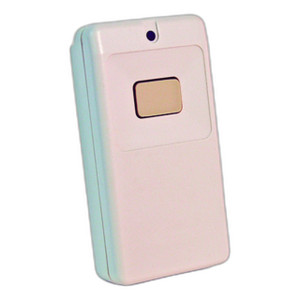


Product images are provided for reference and may not represent the exact model, configuration, or included
components.
Overview
SKU:
EN1233D
Condition:
New
Availability:
Usually ships in 24 hours
Warranty
Manufacturer Warranty
Write a Review
 39% OFF
Write a Review
Inovonics
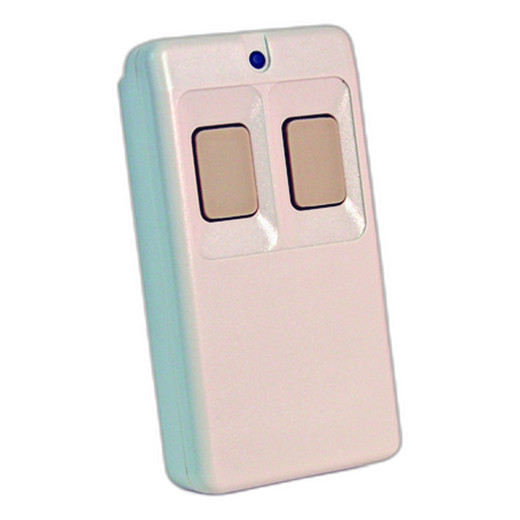
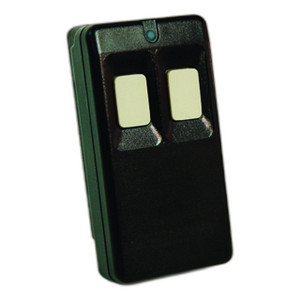
Inovonics EN1233D Double-Button Necklace Pendant 902-928 MHz
Inovonics EN1233D Double-Button Necklace Pendant 902-928 MHz
Inovonics EN1233D Double-Button Wireless Panic PendantThe Inovonics EN1233D is a dual-button wireless panic pendant designed for emergency communicati…
Inovonics EN1233D Double-Button Necklace Pendant 902-928 MHz
$179.00
$109.99
Your recommended setup
Review items below — quantities update pricing automatically.
Item
Qty
Status
Price
Optional Add-Ons recommended
Services optional
Bundle Summary
Bundle Subtotal:
$0.00
Optional Add-Ons:
$0.00
Services:
$0.00
Total:
$0.00
Overview
SKU:
EN1233D
Condition:
New
Availability:
Usually ships in 24 hours
Warranty
Manufacturer Warranty
Description

Inovonics EN1233D Double-Button Wireless Panic Pendant
The Inovonics EN1233D is a dual-button wireless panic pendant designed for emergency communication within supervised security system environments. Operating on the 902–928 MHz unlicensed frequency band, this wearable device provides rapid alerting capability for security integrations requiring personnel emergency response. The EN1233D delivers reliable wireless transmission in buildings and indoor environments where hardwired panic buttons are impractical or where mobile alerting is a core operational requirement.
Overview
Panic pendants serve as wearable emergency notification devices in security systems, typically used by personnel who need rapid access to help without proximity to fixed panic buttons. The EN1233D's dual-button design allows for distinct alert types or confirmation logic, reducing false alarms through intentional actuation patterns. The 902–928 MHz ISM band provides unlicensed operation with established coexistence standards, making frequency coordination straightforward in multi-system deployments. This frequency range supports reliable indoor range suitable for facility-wide coverage in typical commercial and institutional environments.
Key Features
- Dual-Button Configuration: Two independent buttons enable different alert profiles or require multi-step activation to prevent accidental triggering.
- 902–928 MHz Wireless Transmission: Unlicensed ISM frequency band providing established regulatory compliance and predictable RF performance.
- Wearable Form Factor: Pendant design allows personnel to carry the device continuously, ensuring immediate access during emergencies.
- Wireless Connectivity: No hardwired installation required; supports mobile alerting workflows across large facilities.
- Panic Button Classification: Purpose-built for emergency response rather than general wireless control, with appropriate operational safeguards.
- Integration Ready: Designed for connection to compatible Inovonics control panels and security system aggregators.
Integration & Compatibility
The EN1233D integrates with Inovonics-based security systems that support wireless panic input. The 902–928 MHz frequency is compatible with systems designed for this unlicensed band and properly engineered for indoor RF propagation. Installers should verify that the receiving panel or receiver module is configured to accept wireless panic signals from wearable devices and that alert routing to monitoring centers or local responders is properly provisioned.
Deployment in multi-story or large-footprint facilities may require additional wireless receivers or repeaters to ensure coverage; site RF survey is recommended prior to final installation. The dual-button design may be configured within the control panel to require both buttons or accept either button as activation, depending on operational policy.
Operational Considerations
Personnel must be trained on proper button activation to minimize false alarms. Battery life and replacement intervals should be established and documented during commissioning. The pendant is intended for indoor facility use; extended outdoor range or mobile campus applications may require additional RF planning. The EN1233D should be integrated into the facility's broader emergency communication protocol, with clear procedures for alert escalation, responder dispatch, and periodic testing.
Karl Wilson
The Inovonics EN1233D addresses a common integration requirement: portable panic notification for facilities where fixed wall buttons cannot reach all high-risk areas or where personnel mobility is essential. During deployment planning for a multi-building campus environment, the EN1233D's dual-button design proved valuable for reducing nuisance alerts—we configured one button as single-press panic and the other as a confirmation requirement, which significantly lowered false alarm rates while maintaining genuine emergency response capability.
Technical Highlights:
- Dual-Button Logic: Supports configurable activation patterns (either button or both buttons) within the control panel, enabling site-specific false-alarm reduction strategies.
- 902–928 MHz Operation: Unlicensed frequency band with well-established coexistence profiles; no FCC coordination required but RF site survey remains best practice for multi-story deployments.
Deployment Considerations:
- Verify the receiving panel or wireless module explicitly supports pendant panic inputs; not all Inovonics panels accept wearable wireless devices without additional modules.
- Conduct RF coverage mapping in facilities with significant RF obstruction (metal structures, HVAC systems, elevator shafts); budget for repeaters if coverage gaps exist.
- Establish clear personnel training on button activation and battery replacement cycles; document testing procedures for quarterly certification.
The EN1233D is a practical fit for facilities requiring mobile panic capability without the cost of hardwired infrastructure. Ensure your control panel supports wireless panic input and that monitoring center or dispatch procedures accommodate pendant-initiated alerts before final procurement.
Specifications
Product Type:
Panic Button
Communication:
Wireless 902-928 MHz
Have Questions?
Ask an Expert.
RELATED PRODUCTS
Inovonics
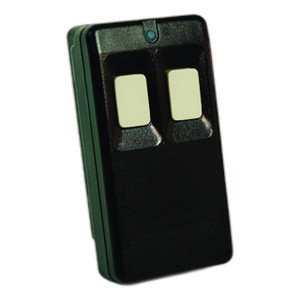
Inovonics EN1236D Double-Button 3-Condition Pendant 902-928 MHz...
$196.00
$117.99
Save $78.01

Inovonics
Inovonics EN1235D Double-Button Belt Clip Transmitter 902-928 MHz
$189.00
$116.99
Save $72.01

System Design, Deployment & Technical Support
Support services and planning resources for commercial surveillance, access control, and infrastructure deployments.
Fixed scope • Fixed price
System Design Assistance
- Get help validating product compatibility
- Coverage requirements
- Storage planning and deployment architecture before you buy.
Deployment & Configuration Support
- Access fixed-scope support for rollout planning
- User setup guidance
- Migration and system standardization across single-site or multi-site deployments
Guides, Tools & Calculators
- PoE requirements
- Storage retention
- Camera selection and deployment methodology