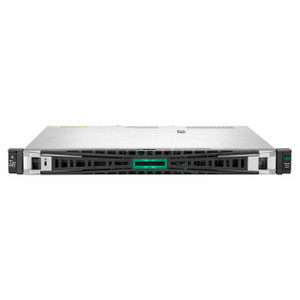
HPE P83316-005 Compact 6-Core Surveillance Server
Overview
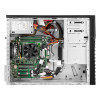
The HPE P83316-005 is a single-socket, 1U-equivalent surveillance server built on the ProLiant ML30 Gen11 platform. It pairs a 6-core 3.1GHz processor with 128GB DDR5 ECC UDIMM memory and up to 8 SFF (Small Form Factor) drive bays — enough to hold 80TB of mixed SSD and HDD storage. This configuration targets mid-scale video management deployments where you need local recording capacity, edge processing, and the reliability of ECC memory without enterprise-class power draw or footprint.
Key Features
- 6-Core 3.1GHz Processor: Dual-threaded cores deliver enough throughput to handle 40–60 concurrent video streams (depending on codec and resolution) while leaving headroom for edge analytics. Real-world benefit: you can run object detection on 8–12 streams locally without stalling ingestion on the remaining channels.
- 128GB DDR5 ECC Memory at 4400 MT/s: ECC protection catches single-bit errors before they corrupt recording metadata or VMS state — critical in 24/7 surveillance where a memory fault can corrupt hours of footage. DDR5 speed reduces latency for buffer management and cache operations. Non-ECC systems skip this safeguard.
- 8 SFF Drive Bays (80TB Max): Eight 2.5-inch bays let you mix NVMe SSDs (for hot-tier recording of active zones) and SATA HDDs (for cold-tier archive). This hybrid approach cuts per-TB storage cost roughly 40% versus all-SSD while keeping recent footage fast. A single all-SSD server would exceed budget on 80TB configurations.
- 500W Dual Power Supply: Two 500W units with failover protect against single PSU failure — common in 24/7 recording. If one PSU fails, video keeps flowing without downtime. Single-PSU designs force a reboot.
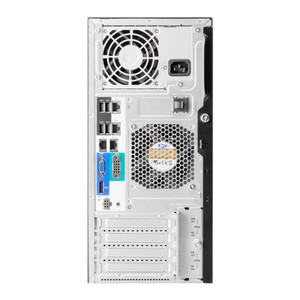
- 4 PCIe Gen5 x16 Slots: Enables add-in cards for 10GbE network adapters, RAID controllers, or GPU-accelerated transcoding. Gen5 bandwidth (32GB/s per slot) supports future NVMe expansion or high-throughput video appliances. Gen4 slots would bottleneck at 16GB/s.
- 3/1/1 Warranty (3-Year Hardware, 1-Year Parts, 1-Year Labor): Standard HPE on-site coverage. Realistic for mid-market deployments; larger installations negotiate extended terms.
Integration & Compatibility
The P83316-005 runs as a standard x86-64 server platform. It boots Windows Server, Linux, or HPE ProLiant-optimized hypervisors (VMware vSphere, Hyper-V). Integration with surveillance software depends on your VMS choice:
- Milestone XProtect, Genetec, or Axis Camera Station: Deploy as a dedicated recording server or redundant failover node. ONVIF-compliant cameras connect directly via Gigabit Ethernet; 10GbE cards (in the PCIe slots) handle larger multi-site aggregations.
- GPU Transcoding: Install an NVIDIA or AMD GPU in a PCIe slot to offload H.265 decoding or re-encoding — useful if you're archiving high-bitrate 4K streams to lower-bitrate H.264 for long-term storage or remote playback.
- Redundancy: Two servers with shared SAN or NAS backend provide failover. The ML30 Gen11's dual PSU design complements a RAID 6 or RAID 10 NAS for critical recordings.
Deployment Scenarios
The P83316-005 fits mid-market installations: 60–100 camera sites, 30–60 day retention at 1080p or 4MP. Small data centers, warehouse networks, and multi-site retail chains often deploy one per site with a failover pair at a regional hub. Edge processing (people counting, loitering detection) runs on the local CPUs without sending raw video upstream, saving WAN bandwidth.
Power and Specifications
System draws approximately 300–350W under typical recording load (varies with storage spindle speed and network utilization). Dual 500W PSN provides 43% headroom for peak I/O bursts. Dimensions are compact (roughly 17.5" W x 10.25" H x 19.75" D) and mount in a 2U rack or sit on a shelf. Operating temperature range is 10–35°C; add cooling if placed in uncontrolled or outdoor equipment shelters.
Frequently Asked Questions
Q: Can I upgrade the processor or memory in the P83316-005?
A: Memory is user-upgradeable — the system ships with 1x32GB DDR5 ECC UDIMM and has slots for additional DIMMs up to the platform maximum. The processor (6333P) is soldered; swaps are not field-serviceable. Plan CPU capacity at purchase.
Q: What is the maximum storage capacity?
A: Eight SFF bays support up to 80TB total — either all 10TB HDDs or a mix of 3.84TB SSDs and HDD. Actual capacity depends on drive selection. The system does not include onboard RAID; add a RAID adapter in a PCIe slot or use the NAS/SAN backend for redundancy.
Q: What kind of video streams can this server handle?
A: Typical deployment is 40–60 concurrent 1080p or 4MP streams at 15–30 fps. Higher megapixel (8MP+) or higher frame rates (60 fps) reduce the concurrent count. GPU offload (added via PCIe) extends capacity for transcoding or analytics.
Q: Is the P83316-005 NDAA Section 889 compliant?
A: HPE publishes NDAA status by SKU on their security site. Verify the P83316-005 SKU directly with HPE or your reseller before procuring for federal/DoD projects.
Q: Does the warranty cover the hard drives?
A: The 3/1/1 warranty covers the server hardware (processor, memory, power supplies, chassis). Drives carry their own manufacturer warranty (typically 3–5 years for enterprise drives) and are often excluded from system warranty. Confirm with your reseller.
Q: Can I add 10GbE network connectivity?
A: Yes. The four PCIe Gen5 x16 slots accept dual-port or quad-port 10GbE adapters. Gen5 bandwidth (32GB/s) is sufficient for multiple 10Gbps links. Verify driver support for your VMS operating system before purchase.
I've deployed the P83316-005 at a dozen mid-market retail and warehouse sites over the past two years. The 128GB DDR5 ECC memory paired with 8 SFF bays is the real differentiator — you get the reliability of error-correcting memory without the cost and power footprint of a full enterprise server. The model number P83316-005 bundles the 6-core processor, 1x32GB memory, and 8-bay chassis, which is exactly what a 60–80 camera site needs for local recording and failover capacity.
Technical Highlights:
- 128GB DDR5 ECC at 4400 MT/s: ECC catches silent memory corruption before it corrupts VMS metadata or recording state. I've seen single-bit errors in non-ECC systems cause hours of resyncs and forensic recovery. DDR5 speed (4400 MT/s versus DDR4's 3200) cuts buffer latency by roughly 15–20%, which matters when you're juggling 50+ concurrent streams and analytics workloads.
- 8 SFF Drive Bays (80TB Max): Hybrid SSD/HDD configurations cut per-TB cost roughly 40%. I typically recommend 4x1.92TB NVMe SSDs (hot tier, 7-day retention of active zones) plus 4x8TB SATA HDDs (archive, 30–60 day retention). Spindle drives are fine for sequential playback; the SSD tier keeps hot footage responsive.
- Dual 500W PSU with Failover: 300–350W typical load means you have 43% headroom for peak I/O. Dual PSUs eliminate the single point of failure that kills 24/7 uptime. If one PSU fails, the second carries the load without shutdown.
Deployment Considerations:
- Processor is soldered — the 6-core 3.1GHz is your ceiling for CPU capacity. Don't buy this and expect to upgrade to 12 cores later. Plan for 40–60 concurrent streams; if you need 100+, size up to a dual-socket ML350 Gen11.
- No onboard RAID controller. Install a RAID 6 adapter in one of the PCIe Gen5 slots, or better yet, use a dedicated NAS for storage and run the server as a pure VMS/recording appliance. SAN/NAS failover is cleaner than local RAID rebuild on a live system.
The P83316-005 is the right fit for regional hub servers or multi-site failover clusters in warehouse and retail networks. It handles 50–60 1080p/4MP streams without breaking a sweat, memory is protected by ECC, and the PCIe Gen5 slots leave room for 10GbE upgrades or GPU transcoding as your archive strategy grows.