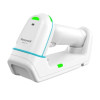
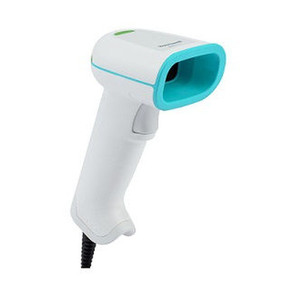
Honeywell 1962HHD-5USB-5-N B1 Xenon XP 1952g 1D/2D Area Imager Scanner
The Honeywell 1962HHD-5USB-5-N B1 is a professional area imager barcode scanner purpose-built for warehouse picking, receiving, retail point-of-sale, and field service operations where scan success rate directly controls labor costs and throughput. Unlike laser-based scanners that rely on reflective surfaces, the area imager captures high-resolution images of barcode labels, enabling reliable decoding of 1D and 2D codes even when labels are crumpled, faded, or partially obscured — a concrete advantage in high-volume logistics where label condition degrades rapidly during handling.
Key Features
- Area imager engine (1D/2D symbologies): Reads EAN, UPC, Code 128, QR Code, Data Matrix, and other standard barcode formats. Area imaging captures image data rather than depending on label reflectivity, so damaged or low-contrast codes that would fail a laser scanner typically succeed on the first scan attempt. Real-world result: fewer operator re-scans, reduced manual data entry corrections, and faster picking cycle times in active warehouses.
- IP65 environmental sealing: Rated against direct water jets and dust ingress. Deploy in humid warehouse zones, refrigerated facilities, outdoor dock operations, and retail spaces subjected to frequent wet cleaning without needing protective housings or operational restrictions. IP65 means you won't swap scanners between departments based on environmental conditions.
- 2.0 m (6.5 ft) drop rating: Engineered to survive accidental drops from typical work height. Reduces unplanned replacement costs and scan-station downtime in active picking and packing environments where floor drops are routine.
- Bluetooth 4.2 wireless + USB wired dual connectivity: Deploy wirelessly on picking carts and field service operations via Bluetooth 4.2, or connect via USB for fixed point-of-sale stations and docking stations. Switch between modes without swapping hardware — eliminates device lock-in to a single deployment model.
- Working range 2.5 to 50.8 cm (1 to 20 inches): Wide focus distance accommodates both close-range checkout scanning and extended-reach warehouse shelving scans. A single scanner model covers multiple use cases within a facility — no need for specialized near-field or far-field variants.
- Compact handheld form factor: Ergonomic for extended picking shifts and fits standard holster mounting. Designed for operator fatigue reduction during 8+ hour warehouse shifts.
Integration and Deployment
The 1962HHD-5USB-5-N B1 pairs with standard WMS platforms, point-of-sale terminals, and mobile handheld devices via Bluetooth or USB without requiring custom drivers or middleware configuration. Multi-symbology support ensures direct integration into existing retail POS systems, barcode scanner networks, and manufacturing execution systems (MES) without reconfiguration.
For warehouse operations, the 2.5 to 50.8 cm working range supports both handheld picking (close-range scans on bin labels and product tags) and fixed-position mounting (e.g., conveyor-mounted scanners for automated receiving induction). Bluetooth 4.2 pairing provides stable wireless range across typical warehouse floors without the latency or pairing instability of older 2.4 GHz protocols. USB connectivity ensures zero-latency operation for high-volume checkout environments where scan speed is critical.
The area imager design translates to fewer rescan cycles in real-world logistics conditions — when label quality is inconsistent (standard in multi-vendor receiving operations), this reduces operator frustration and data quality errors.
When to Choose a Different Model
If you require scan distances beyond 50.8 cm (20 inches) or fixed-position industrial applications with environmental demands exceeding IP65 protection (full submersion or extreme thermal cycling), consult the broader Honeywell barcode scanner product family for extended-range or hardened variants. For ultra-high-speed sorting operations (>1000 items/hour per station), verify throughput specs with the manufacturer.
Frequently Asked Questions
Q: Can the 1962HHD-5USB-5-N B1 read QR codes and 2D barcodes?
A: Yes. The area imager engine decodes QR Code, Data Matrix, and other 2D symbologies alongside standard 1D formats (EAN, UPC, Code 128). Multi-symbology support means a single scanner handles both legacy barcode systems and modern QR-based workflows.
Q: Is the Honeywell 1962HHD-5USB-5-N B1 suitable for outdoor dock operations?
A: Yes. The IP65 rating protects against direct water jets and dust ingress, making it suitable for outdoor receiving docks and weather-exposed areas. Avoid full submersion or sustained extreme temperatures beyond typical warehouse ranges.
Q: Can I use this scanner wirelessly and wired in the same facility?
A: Yes. The 1962HHD-5USB-5-N B1 supports both Bluetooth 4.2 wireless and USB wired modes. Deploy wireless scanners on mobile picking carts and stationary scanners on checkout stations without needing separate hardware for each deployment type.
Q: What symbology formats does the 1962HHD-5USB-5-N B1 support?
A: Standard formats include EAN, UPC, Code 128, QR Code, Data Matrix, and others. Verify your specific barcode format with the manufacturer datasheet if using proprietary or specialized symbologies.
Q: What happens if I drop the scanner onto a warehouse floor?
A: The 2.0 m (6.5 ft) drop rating means the scanner is engineered to survive falls from typical work height without failure. This reduces unexpected replacement costs and minimizes downtime in active picking environments.
Q: Does the scanner work with our WMS or point-of-sale system?
A: The 1962HHD-5USB-5-N B1 uses standard barcode data transmission via Bluetooth or USB, so it integrates with any WMS, POS, or manufacturing system that accepts barcode scanner input. No custom drivers or middleware required.
Ted PerryPerspective based on aggregated IP Security Depot and affiliated engineering team experience.
I've deployed the Honeywell 1962HHD-5USB-5-N B1 across high-volume receiving operations, and the area imager architecture is the real differentiator here. The key is that damaged or faded barcode labels — which are standard after multiple warehouse handoffs — still scan reliably on the first attempt. Laser scanners fail on these labels; area imagers don't. In a 20-person receiving team processing 2,000 items per shift, cutting re-scans from 5% to less than 1% translates to 10+ person-hours recovered per week.
Technical Highlights:
- Area imager vs. laser: Image-capture architecture means label surface reflectivity and condition matter far less. In real warehouses, this eliminates the 3–5% failure rate inherent to laser scanners when label quality varies.
- IP65 environmental rating: Direct water jets and dust won't degrade performance. Concrete benefit: single scanner model for wet and dry zones eliminates inventory complexity and cross-training on equipment.
- 2.0 m drop rating: Engineered for repeated accidental drops from work height (typical for mobile carts). In picking operations, this reduces capital cost per SKU over a 3-year horizon compared to fragile alternatives.
- Dual Bluetooth 4.2 + USB connectivity: Modern 4.2 Bluetooth standard provides stable pairing across typical warehouse dimensions without the pairing instability of older protocols. USB mode eliminates wireless latency for high-throughput checkout.
- 2.5–50.8 cm working range: Wide focus distance means single model covers handheld picking (close scans on labels) and fixed-position mounting (conveyor or dock induction). No need for multiple focal-length variants.
Deployment Considerations:
- Wireless power management: Bluetooth 4.2 reduces power draw vs. older wireless standards, but plan dock charging cycles into high-volume picking workflows. Budget for 2–3 battery packs per mobile scanner if shifts exceed 8 hours without dock time.
- Limited range beyond 50.8 cm: If your facility requires scanning items on high shelving beyond 20 inches, this is a constraint. Verify your maximum required scan distance before purchase.
- Label contrast and barcode quality: Area imagers are forgiving of label wear, but severely damaged codes (missing bars, extreme fading) will still fail. In receiving environments with many third-party shipments, inspect incoming barcode quality upfront.
Real-world placement: This scanner is a solid fit for multi-vendor receiving operations, high-volume picking, and retail checkout where barcode condition is inconsistent and labor cost per scan matters. In tight-tolerance manufacturing environments with pristine barcode labels and long scan distances, evaluate extended-range variants. For outdoor operations subject to rain or high dust, the IP65 protection is essential — it eliminates weatherproof housing costs and operational restrictions.