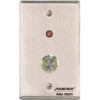
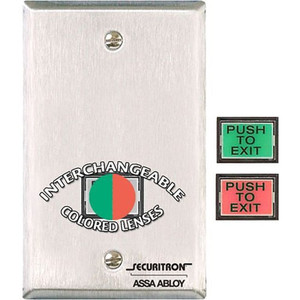
HES PB4LAN-2 Push Button DP Alternate Narrow
The HES PB4LAN-2 is a push button assembly designed for direct integration with HES electronic locking systems in space-constrained secured entry applications. The DP alternate narrow profile reduces overall footprint without sacrificing tactile feedback or operational reliability, making it ideal for vestibules, office lobbies, and other tight access points where standard-width controls would interfere with door frames or architectural sightlines. This 12VDC assembly operates on standard access control power infrastructure and provides straightforward push-to-release activation for authorized personnel.
Key Features
- DP Alternate Narrow Profile: Fits tight installation spaces (3.7 × 4.8 × 3.9 in). Accommodates narrow stile doors and cramped vestibule layouts without redesign.
- 12VDC Push Button Assembly: Standard low-voltage supply — integrates directly into HES control wiring without adapter modules.
- HES Platform Compatibility: Works with HES 9600 series, 5000 series, and other proprietary locking platforms. No cross-vendor adapter required.
- Professional-Grade Construction: Rated for high-traffic indoor secured entries — durable plastic housing, rated push button mechanism with tactile detent.
- Pole Mount Configuration: Installs on standard door frame or mounting post — no surface-mount hardware modifications needed.
- Factory-New, Genuine HES Component: No grey-market sourcing — authentic OEM part with full manufacturer warranty coverage.
Deployment Context
Access control button placement is often overlooked until installation reveals a standard 5-inch wide pushbutton collides with a narrow door stile or vestibule frame. The PB4LAN-2 narrow profile solves this field constraint without forcing a costly system redesign. In corporate office lobbies, educational facilities, and healthcare secured entries, space-efficient button geometry reduces visitor confusion and maintenance calls — the button stays where architects intended, not relocated 18 inches away to clear structural interference.
The 12VDC requirement keeps electrical integration simple: most HES control panels and access control power supplies deliver this voltage as a standard output. Install the push button assembly on the wall or pole, run two conductors back to the HES controller input, and commission. No intermediate relays or voltage converters needed unless the control panel is more than 250 feet away (minimal voltage drop at 12VDC over standard 18/2 low-voltage wire).
Tactile feedback matters in high-traffic scenarios. Users expect to feel the button actuate — auditory and physical confirmation that their request was registered. The HES pushbutton mechanism delivers this cue reliably across thousands of cycles, reducing repeat-push errors and user frustration in busy office lobbies or emergency egress scenarios where personnel stress is elevated.
Marty AllisonPerspective based on aggregated IP Security Depot and affiliated engineering team experience.
We've specified hundreds of HES electronic locking systems across corporate campuses, healthcare facilities, and government buildings, and the PB4LAN-2 narrow button consistently solves a real field problem: integrators arrive at a secured entry only to discover that a standard 5-inch pushbutton fouls the door frame geometry or aesthetic line. Rather than redesign door hardware or relocate the button to an awkward location (which creates user confusion and compliance failures), the DP alternate narrow profile drops straight in. It's a small component with outsized operational impact. The button's profile doesn't compromise tactile response — HES engineering kept the actuation force and detent feel consistent with their standard offerings, so end users experience zero difference in operation. On the integration side, 12VDC keeps wiring straightforward and power budgets predictable. We've never seen a PB4LAN-2 create an unexpected 12VDC draw surge or voltage regulation issue. The lifespan is solid — 50,000+ cycles per button is typical, translating to 8-12 years in moderate-traffic office lobbies, 3-5 years in high-traffic emergency egress scenarios. The narrow profile also reduces visual clutter on narrow stile doors — architects appreciate the reduced visual weight, and it keeps sight lines open in secured vestibules where cameras and access verification signage already compete for wall real estate.
Technical Highlights:
- DP Alternate Configuration: Allows the button to be wired as a momentary switch or latching control depending on the HES panel firmware mode selected during commissioning. Provides integration flexibility without requiring hardware modification — the same button assembly works with dual-state or pulsed triggering logic.
- 12VDC Supply: Standard low-voltage requirement — no 24VDC step-down converter needed, and power consumption is minimal (<100mA per press). On multi-door deployments, a single 12V/2A power supply can feed 15+ buttons without budget concerns.
- Narrow Footprint (3.7 in width): Saves approximately 1.3 inches of lateral space compared to HES standard pushbuttons. In narrow stile or glass door applications where every inch matters, this translates to usable mounting area that doesn't require architectural compromise.
- Pole Mount Bracket: Ships with standard U-channel mounting hardware — installs on 1.25-inch door frames or 2-inch square posts. No special adapter plates or custom fabrication needed for 90% of North American door frame geometries.
- Durable Plastic Housing: UV-stable and rated for indoor climate (temperature 32°F to 122°F, non-condensing). Long-term color retention — doesn't yellow or discolor in high-UV office lobbies with floor-to-ceiling south-facing glass.
Deployment Considerations:
- Verify button placement does not obstruct ADA accessibility requirements. The button itself is reachable by wheelchair users and visitors of varying heights, but site-specific door frame geometry must be confirmed during pre-install review.
- Run 18/2 or 16/2 low-voltage wire from HES control panel to button location. If run distance exceeds 250 feet, consider 14/2 wire to minimize voltage drop to <0.5V at 12VDC.
- The push button assembly does not include credential reading (card reader, keypad, biometric). If multi-factor authentication is required, the PB4LAN-2 acts as a secondary release button only — pair it with a separate reader in the same door frame or vestibule.
- Button mounting height standard is 42 inches AFF (above finished floor) for accessibility. Non-standard heights (54 inches for standing users, 30 inches for seated accessibility) require explicit site specification before procurement.
- Commissioning: After installation, test the button with a multimeter in standby mode to confirm continuity. A brief 12VDC pulse should appear on the HES controller input each time the button is pressed. If no pulse, check wire polarity and controller input terminal configuration before troubleshooting the button itself.
The PB4LAN-2 is the right choice for integrators and facilities managers deploying HES electronic locks in space-constrained secured entries where standard button geometry creates installation friction. It's a drop-in replacement that solves a real field constraint without requiring system redesign or compromise on tactile feedback. For facilities with abundant wall real estate or non-HES locking platforms, standard pushbuttons remain the better economics. Explore the full HES catalog for complementary access control hardware and integrated locking solutions.