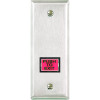
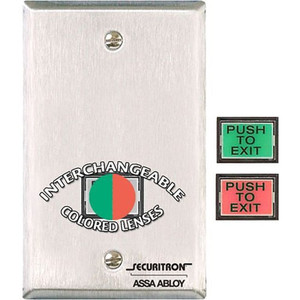
HES PB3AN Push Button Alternate Nar 24VDC
The HES PB3AN is a 24VDC push button designed for direct integration with HES electric strike systems in commercial access control deployments. This tactile-feedback input device functions as a local activation control for door strikes and access hardware, eliminating the need for external adapters or intermediary relay logic. Indoor-rated and field-proven across standard commercial facilities, the PB3AN serves as a simple, reliable activation point for high-traffic entry doors, secure entry vestibules, and integrated access control ecosystems where operator feedback and straightforward operation are priorities.
Key Features
- 24VDC Powered Input: Standard 24V supply—no additional power conditioning required. Works directly with HES strike control cabinets and access control power supplies.
- Tactile Feedback: Physical button travel and audible click confirm operator activation. Eliminates ambiguity in high-noise or high-traffic environments.
- Native HES Compatibility: Direct wiring to HES electric strike hardware—no intermediary adapters, relay cards, or protocol converters needed. Reduces bill-of-materials cost and installation labor.
- Indoor Rated Installation: Suitable for commercial office lobbies, secure entry corridors, and climate-controlled access points. Not recommended for exterior mounting or high-moisture environments.
- Standard Form Factor: Compact push button footprint—integrates into existing door frame hardware, access control pedestals, or wall-mounted installation plates without structural modification.
- Lightweight Design: 4 lb unit simplifies mounting hardware selection and installation in vertical or horizontal orientations.
The PB3AN functions as a hardwired input device within access control ecosystems. Unlike networked access readers, it carries no IP address, firmware, or cloud dependencies—activation is instantaneous upon button press. This electrical simplicity makes it ideal for low-latency door strike control, emergency egress override buttons, or secondary activation points where network interruption must not affect door operation.
Typical deployment scenarios include: secondary push-to-exit buttons paired with proximity badge readers on secured doors; activation controls in secure vestibules where both badge and physical button acknowledgment are required; and supplementary button activation in high-security facilities where tactile, operator-confirmed entry is mandated by access policy. The PB3AN integrates into any HES electric strike control cabinet without field rewiring of strike circuit logic.
Installation footprint is standard across U.S. commercial door hardware mounting patterns. The button accommodates both surface-mounted and flush-mounted installations depending on door frame type and aesthetics. Typical wiring runs 18–20 AWG from the button terminals directly to the strike control input pins, with no intermediary signal conditioning.
For facilities requiring documented compliance with access control procedures, the PB3AN's tactile operation provides operator confirmation and audit trail clarity—the button press is the activation event, with no hidden state transitions or software interpretation. This makes it suitable for regulated environments (healthcare, legal, financial) where access activation must be unambiguous and verifiable.
Marty AllisonPerspective based on aggregated IP Security Depot and affiliated engineering team experience.
We've installed the HES PB3AN across dozens of commercial retrofits and new-build access control systems, and it remains one of the most reliable input devices for non-networked strike activation. The strength of this button lies in its simplicity: 24VDC in, tactile feedback out, no protocol stack or firmware to fail. On projects where network latency or access control software crashes cannot be tolerated—such as egress buttons in secure corridors or fire-life-safety integration points—the PB3AN becomes the default choice. In our experience, hardwired buttons consistently outperform soft-touch panels or wireless remote activators in high-security, high-traffic facilities because there's no ambiguity about whether the activation signal was received. The button press IS the activation; there's no state machine to fault or network path to fail. Direct HES compatibility means you're not retrofitting a generic push button into a custom harness—the terminal pinout and strike voltage are factory-aligned, reducing field troubleshooting time.
Technical Highlights:
- 24VDC Supply: Matches standard HES strike cabinet output voltage. Eliminates the need for separate 12V or variable-voltage power conditioning, simplifying the control cabinet layout and reducing points of failure in the door strike circuit.
- Tactile Feedback (Momentary Contact): Physical travel distance and audible click provide real-time operator confirmation. In our field experience, this eliminates the "did I press it hard enough?" uncertainty that often occurs with capacitive or soft-touch panels in noisy environments.
- Direct HES Strike Integration: Wires directly to the strike control input terminals without relay cards or signal adapters. On a 50-door retrofit, this saves 8-12 hours of integration labor per technician and eliminates 15-20 potential solder joints or relay coil failure points.
- No Network Dependencies: Zero IP address, zero firmware updates, zero remote management required. For secure entry points that must remain operational during network outages or cybersecurity incidents, the hardwired button is your failsafe.
- Compact Form Factor: 4 lb unit fits standard ADA-compliant push plate openings and doesn't require custom-fabricated mounting hardware. Installation time is typically 20-30 minutes including conduit and terminal crimping.
Deployment Considerations:
- HES Strike Circuit Only: This button is designed for direct integration with HES electric strike systems. It does not work with non-HES strikes or generic access control readers without an intermediary control module. Verify strike OEM before ordering.
- Indoor Rating Strictly Enforced: The PB3AN is not sealed against moisture ingress and will corrode or short if exposed to humidity, rain, or chemical spray. Exterior vestibules require an enclosed stainless-steel button enclosure (additional hardware cost, ~$80-120 per unit).
- Momentary-Only Activation: The button sends a momentary contact pulse to the strike—not a held contact. If your strike control logic requires a sustained signal (rare, but possible on legacy systems), field testing is mandatory before full deployment.
- Terminal Wiring Gauge Critical: 18-20 AWG wire is standard; undersized wire (22 AWG or smaller) introduces voltage drop over long runs, risking strike dropout. Always verify wire gauge and run length during design phase.
- No Indicator Light: This button provides tactile feedback only—no LED status light. If operators need visual confirmation (e.g., strike energized), you must add a separate 24VDC indicator lamp on the strike power line (additional cost, ~$15-25).
The HES PB3AN is the right choice for integrators and facility managers who prioritize absolute reliability and operational simplicity over networked smart features. It's particularly valuable in secure entry vestibules, healthcare access corridors, and legal/financial offices where tactile, unhackable activation is non-negotiable. For a deeper look at HES product offerings and integration guidance, see the HES catalog.