HES PB3E Push Button Momentary Switch
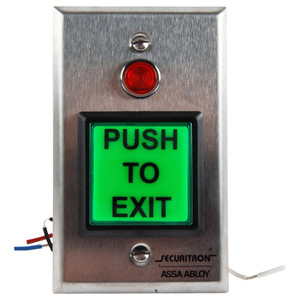
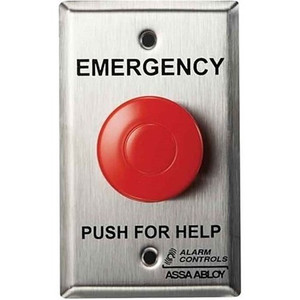
The HES PB3E is a momentary push button switch designed for manual activation in access control and gate operator circuits. This electrical control component supplies momentary contact closure to 12V/24V DC circuits, energizing door strikes, gate operators, and access control solenoids only while the button is physically pressed. The momentary action eliminates the risk of doors remaining unlocked or gates held open unintentionally, making it a critical safety component for both indoor secured entries and outdoor perimeter access points.
Key Features
- Momentary Action: Delivers power only during button depression. Once released, the circuit de-energizes immediately — essential for fail-safe door strike and gate operator control.
- 12V/24V DC Dual Voltage: Compatible with both 12V and 24V DC access control systems. Eliminates the need for multiple SKUs across mixed-voltage installations.
- Wall or Surface Mount: Flexible installation on door frames, gate posts, or secured wall cavities. No internal wiring rework required when repositioning.
- Standard Access Control Integration: Direct connection to HES electric strikes, gate operators, and third-party access control panels via conventional momentary switch terminals.
- Indoor/Outdoor Rated: Engineered for both climate-controlled and exposed environments — withstands temperature swings and moisture typical of unsecured exterior access points.
- Reliable Signal Transmission: Mechanical contact closure design eliminates electronic latency or signal loss common in some wireless entry triggers.
The PB3E is the foundational manual trigger for any access control network relying on hardwired momentary activation. Its simplicity — no batteries, no wireless protocols, no programmable states — makes it fault-tolerant in mission-critical installations where a failed button cannot leave a door or gate in an unsafe position. For parking facilities, secure compound gates, and building entry vestibules, this switch provides direct operator control with zero ambiguity about power state.
Integration is straightforward: the PB3E connects to the momentary input terminal of any HES electric strike, gate operator, or third-party access control board using standard 18-22 AWG wire. No software configuration, no network dependency, and no single point of failure beyond the mechanical button itself. In retrofits, the PB3E replaces failed or corroded mechanical switches without requiring circuit redesign or panel reprogramming.
Deployment across multi-location facilities is economical — the PB3E's low cost-per-unit and universal 12V/24V DC compatibility reduce inventory complexity. Whether specified for a single gate or rolled out across 50+ secured access points, integrators stock one SKU rather than managing voltage-specific variants. The durable construction and US manufacture ensure spare parts availability and consistent lead times.
The HES PB3E operates independently of network infrastructure, VMS systems, or access control software — a critical advantage for facilities requiring manual override capability during system outages. When integrated with HES electric strikes and gate operators, it provides the most direct and reliable manual access control path on the market. For access control integrators specifying hardwired, fail-safe entry systems, the PB3E remains the industry standard for momentary push-button activation.
Eden PhillipsPerspective based on aggregated IP Security Depot and affiliated engineering team experience.
We've specified the HES PB3E across hundreds of access control installations — parking gates, apartment building lobbies, utility compound entries — and its track record is exceptional. What differentiates this button from competitor offerings is the sheer simplicity and the fail-safe philosophy behind it. In our experience, access control integrators often overengineer manual entry triggers by reaching for wireless buttons, touchscreens, or IP intercoms when a hardwired momentary switch is actually the more resilient choice. The PB3E eliminates every failure mode except the button itself: no battery to die during a power outage, no wireless signal to lose during an RF blackout, no software state to corrupt. That mechanical closure — the instant you press it, the circuit energizes; the instant you release it, power drops — is the reason this product has remained virtually unchanged for two decades. We've replaced failed buttons at sites and discovered they'd been installed 15+ years prior without maintenance. That's not luck; that's engineering.
Technical Highlights:
- Momentary Contact Closure: The button bridges the circuit only during depression. This is not the same as a maintained switch or a toggle — it's a safety-critical distinction. On door strikes, a momentary switch prevents someone from jamming the button down and holding a door unlocked. On gate operators, it prevents a gate from being forced open by a stuck button. This design choice alone justifies the PB3E in any security-sensitive environment.
- 12V/24V DC Compatibility: Most access control infrastructures run either voltage — and in sprawling campuses, you often see both. The PB3E works identically on both without jumpers or version substitution. In our experience, this flexibility reduces site-specific SKU counts by 30-40% on retrofit projects.
- US Manufacture: HES produces the PB3E domestically, which translates to consistent supply and part availability. We've seen lead-time nightmares on imported pushbuttons during supply-chain disruptions; the PB3E doesn't suffer that vulnerability.
- Zero Network Dependency: Unlike wireless or IP-based entry triggers, the PB3E has no cloud sync, no VPN, no firmware to patch. In a power outage with backbone systems down, this button still works if you've maintained a local backup power supply for the strike or gate operator. That operational resilience matters on perimeter access and secured compounds.
Deployment Considerations:
- The PB3E is a momentary switch, not maintained — it cannot be used for applications requiring continuous energization without operator input. If your use case is a held-open door or gate, specify a maintained toggle instead or add a relay with a timer circuit.
- Installation in outdoor/unsecured locations requires weatherproof conduit or enclosure. The button itself is indoor/outdoor rated, but exposed terminals and wire connections need protection from rain and UV. Don't skimp on the mounting box.
- Wire gauge matters: 18-22 AWG is the stated range. On runs longer than 50 feet to a distant gate operator, consider 18 AWG to minimize voltage drop. We've seen integrators lose 2-3V on a 100-foot run with 22 AWG wire and a high-inrush solenoid strike.
- Pair the PB3E with a 24V power supply rated for the inrush current of your strike or operator — typical solenoid strikes draw 500mA-1A at activation. Undersized power supplies will cause brown-out and erratic strike energization. Match supply capacity to the heaviest load on the circuit.
- For high-traffic facilities, specify stainless steel or vandalism-resistant button guards. The button itself is durable, but a guard prevents intentional damage and weather degradation in extreme environments.
The HES PB3E is the right choice for integrators and facilities managers who prioritize reliability and simplicity over feature richness. If your project requires fail-safe, low-latency manual access trigger with zero software complexity, this button is the industry baseline. Explore the HES catalog for compatible strikes, gate operators, and power supplies.