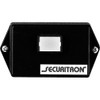
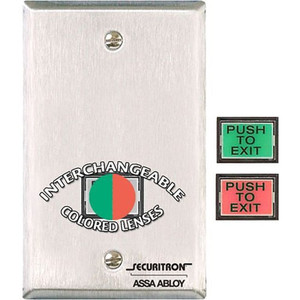
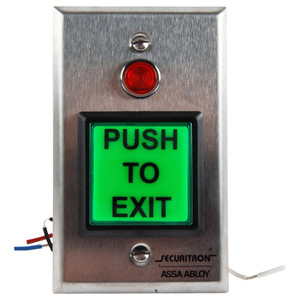
HES PB3ER Surface Mount Momentary Push Button Remote
The HES PB3ER is a surface-mounted momentary push button designed for remote activation of HES electromechanical locks and strike systems. Engineered for interior and controlled-environment access control, the PB3ER decouples manual door release from the primary strike control unit, enabling flexible placement at entry points, security vestibules, or emergency egress locations. Its momentary contact design ensures clean, repeatable switching action without latching—ideal for scenarios requiring sustained human interaction (held button = active release signal).
Key Features
- Surface Mount Form Factor: 2.7 × 1.7 in footprint fits standard electrical enclosures and security panel frames without recessed cavity requirements.
- Momentary Contact Switching: Push-and-hold activation; contact closes only while button is depressed. Ideal for door release and access triggering events.
- Remote Operation: Independent placement from primary strike or lock control unit via low-voltage wiring. Improves user accessibility and system layout flexibility.
- HES System Compatibility: Direct integration with HES 5000 Series, 7000 Series, and FS Series electromechanical locks and strikes. No adapter or intermediary relay required.
- Lightweight, Durable Construction: 0.1 lb aluminum/plastic chassis. US-manufactured for consistency and serviceability.
- Interior/Controlled-Environment Rated: Suitable for lobbies, vestibules, server rooms, and secured facilities where environmental stress is minimal.
The PB3ER's momentary-only design is a deliberate constraint—it prevents unintended latching or sustained door unlock. In multi-access-point deployments, this is a safety feature: each release event requires active button press, avoiding the liability of an inadvertently held door or a stuck relay contact.
Installation is straightforward: two low-voltage wires (typically 18/2 or 20/2 twisted pair) connect to the strike control output or a hardwired secondary input on the access control panel. No power supply is required at the button itself—the control unit provides the activation voltage. This simplifies wiring in retrofit applications where running a new circuit to a remote button location would otherwise demand conduit or rework.
For facilities with mixed-tenure lock hardware, the PB3ER bridges older HES strike installations with newer access control platforms. If your primary system supports low-voltage momentary switching (relay contact, open-collector output, or dedicated button input), the PB3ER acts as a hardwired remote extension. Multi-button configurations are common: one button for normal day-shift traffic, a second for emergency egress, all wired in parallel or series depending on access control logic.
The PB3ER is not suitable for outdoor or uncontrolled environments; moisture ingress and temperature extremes beyond standard indoor HVAC range will degrade contact reliability. For high-traffic exterior access points, consider a sealed wireless push-to-exit button or a stainless-steel hardwired option with gasket sealing. For interior applications, the PB3ER remains a cost-effective, maintenance-light choice with no batteries, no wireless interference, and decades of proven field reliability in the HES ecosystem.
Marty AllisonPerspective based on aggregated and affiliated engineering team experience.
In our experience specifying door hardware and access control integration, the PB3ER is a workhorse for retrofit and brownfield access control upgrades. We've deployed it in secure facilities where the primary strike control lives in a locked electrical closet, but day-shift staff need push-to-exit capability at the door. The momentary-only design eliminates the operational risk of a latched relay—a person cannot accidentally or maliciously hold the door open indefinitely. It's a simple product that does one job flawlessly: provide a hardwired, low-latency remote button input to a HES strike control. Where it shines is total cost of ownership: no power supply at the button, no wireless battery management, no VPN or cloud connectivity to maintain. A two-wire run and a button. Compare that to a wireless exit button (battery replacement annually, RF interference issues, wireless protocol licensing), and the PB3ER's simplicity becomes a value proposition. The real limitation is wiring distance—low-voltage twisted pair loses signal integrity beyond 500 feet in electrical noise environments, and the button must be powered by the control unit's momentary output, which is typically rated for 500mA max. In a high-traffic lobby where dozens of people press the button per minute, contact wear is predictable and replacement is a $15 part swap.
Technical Highlights:
- Momentary Contact Switching (No Latching): Unlike a maintained push button, the PB3ER closes its contact only while you press it. Release the button, the contact opens immediately. This prevents door-wedging and ensures compliance with fire code egress requirements—the door cannot remain unlocked by accident or malice.
- Low-Voltage Loop Closure: Accepts 12–24 VDC nominal from the control unit; draws minimal quiescent current (no continuous draw at idle). Compatible with both solid-state relay outputs and traditional electromechanical relay contacts on the control panel.
- Surface Mount Simplicity: Mounts to any vertical or horizontal surface with four #6-32 screws into the enclosure frame. No drilling or cutting required on finished doors or walls if you're mounting it to an electrical box or strike-mounted control panel.
- Wired Activation (Hardline, Not Wireless): Zero latency, zero RF interference, zero battery management. In a noisy industrial or high-density RF environment (hospitals with paging, factories with mobile data), hardwired momentary is more reliable than wireless.
- US Manufacturing: HES (Hiawatha Electronics) is a legacy US lock manufacturer; the PB3ER is domestic-sourced, reducing lead times and repair logistics compared to imported alternatives.
Deployment Considerations:
- Wiring Distance: Keep the button run under 300–500 feet in typical office environments. Longer runs invite voltage drop and noise pickup. Use 18/2 or 20/2 shielded if running parallel to high-voltage AC conduit.
- Control Unit Output Rating: Verify that your strike control or access panel supports low-voltage momentary output at the button's current draw (typically 50–200mA). Some access panels route button inputs through a relay module—confirm that relay closure is momentary, not latching, or you'll need a separate external relay.
- Interior Only: Do not expose the PB3ER to outdoor rain, direct sunlight, or temperature swings beyond 0–50°C. Moisture will corrode the contact spring and reduce reliability. For exterior exit buttons, specify an IP67-rated sealed unit or a stainless-steel hardwired variant.
- Emergency Egress Compliance: If this button serves as a fire exit release, confirm with your AHJ (authority having jurisdiction) and fire marshal that momentary-only activation meets local code. Most jurisdictions require exit buttons to be failsafe—button press removes power to hold-open strike, allowing the door to swing shut. The PB3ER works for that scenario if the strike control is configured as failsafe (typically a HES 5000FS or 7000FS with appropriate power supply).
- Contact Wear Over Time: Heavy-traffic locations (500+ presses per day) will see contact oxidation after 3–5 years. This is normal and expected; replacement is routine maintenance. No user repair required—swap the button assembly and rewire the terminals.
The HES PB3ER is best suited for integrators and facility managers installing or retrofitting interior access control where a simple, reliable hardwired push-to-exit button is required. It's not a substitute for a full access control system, but rather a tactical component for secondary or emergency egress scenarios. For more information on HES electromechanical strikes and integrated hardware, consult the HES catalog.