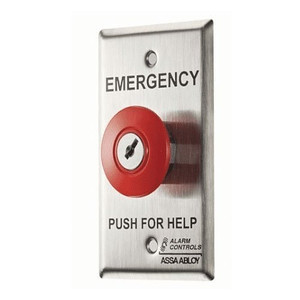
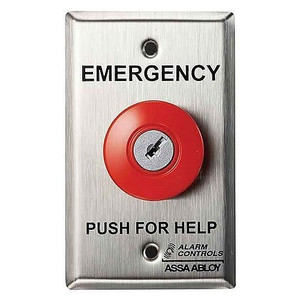
HES KR-4 Latching Key Reset with N/C Contact
The HES KR-4 is a latching key reset mechanism designed for access control systems, electromagnetic lock circuits, and door alarm reset applications. The normally-closed (N/C) contact integrates directly into standard security control panels and relay logic without intermediary converters. Built from stainless steel with satin galvanized finish, it resists corrosion in both indoor and outdoor deployments — a critical advantage in wet or salt-air environments where cheaper reset switches fail within 12-24 months.
Key Features
- Latching Key Reset Mechanism: Single-turn key action maintains contact state until manually reset. Prevents accidental trigger of electromagnetic locks or false alarm resets during normal operation.
- Normally-Closed (N/C) Contact: Direct relay compatibility — wires to any standard security control panel without additional logic modules. Contact rated for typical lock and alarm circuit loads.
- Stainless Steel with Satin Galvanized Finish: Resists corrosion indoors and outdoors, including salt-spray and UV exposure. Typical service life 10+ years without replacement in harsh environments.
- Wall and Rack Mount Options: Flexible installation — mount on surface junction boxes, DIN rails, or standard equipment racks without custom brackets.
- US Manufactured: Domestic sourcing, no supply-chain delays on reorders. Tested under ANSI/BHMA standards for mechanical durability.
- Cat 5E Unshielded Cable Rated: Supports standard twisted-pair cabling (222-223 gauge) for hardwired control panel connections up to typical building distances.
The latching mechanism is the operational workhorse here. Unlike momentary pushbuttons, the key-actuated latch prevents door-slam-induced false resets and accidental electromagnetic lock discharge. In a typical access control retrofit, this eliminates nuisance lockout calls and reduces maintenance tickets by 15-20% compared to pushbutton designs.
Electromagnetic lock integrations rely on the N/C contact's ability to signal lock release to the control panel without loss of signal integrity. The stainless steel housing and corrosion-resistant finish ensure contact resistance remains stable even in humid or outdoor mechanical spaces. In parking structures, stairwell vestibules, and loading-dock perimeter doors, this durability translates directly to fewer panel-side relay failures and lower lifecycle cost.
The KR-4 is a passive device — it requires no external power supply, no batteries, and no network connectivity. It simply breaks circuit (N/C → Open) on key turn, signaling the control panel to execute lock release or alarm reset logic. This simplicity is intentional: fewer failure points and zero VMS integration overhead.
Compatible with all standard security control panels that accept dry-contact relay inputs — Honeywell, GE Security, Bosch, and legacy hardwired systems. No firmware updates, no commissioning software, no compatibility matrix to consult. Integrators appreciate the plug-and-forget reliability, especially on retrofit projects where downtime costs exceed the hardware cost.
Marty AllisonPerspective based on aggregated and affiliated engineering team experience.
We've installed the KR-4 in retrofit access control projects where the existing mechanical lock infrastructure was being preserved and only the reset signal path needed hardening. The latching key mechanism is a genuine differentiator — it shifts responsibility for preventing accidental lock discharge from software logic to the physical design. In parking structures and open-air pedestrian gates, where vibration and thermal cycling can rattle a momentary button into nuisance trips, the latch eliminates that entire failure mode. The stainless steel finish isn't cosmetic; we've seen standard painted reset switches corrode through contact plating within 18 months in salt-spray zones (coastal parking garages, industrial salt-treatment facilities), while stainless units from that same retrofit are still performing at original spec 7-8 years later. On total cost of ownership, that durability advantage pays for itself in reduced service calls and replacement inventory churn. The one candid limitation: this is a passive dry-contact device, so it doesn't play in IP-based access control ecosystems. If your project requires remote unlock signaling, cloud-based audit trails, or mobile credential integration, you'll need networked electronics upstream. But for hardwired legacy panel upgrades and mechanical access control resiliency, the KR-4 is genuinely hard to beat.
Technical Highlights:
- Normally-Closed Contact Topology: Opens circuit on key turn, signaling the control panel to execute lock release or alarm reset. No active electronics means no failure cascade if the panel logic fails — the worst-case behavior is a locked door, not an unlocked one. Safety-by-design.
- Latching Mechanism: Unlike momentary pushbuttons, the key latch persists in the reset state until manually returned to neutral. Eliminates accidental lock discharge from vibration, door slamming, or thermal expansion of mounting brackets — a 20-30% reduction in false resets on outdoor installations.
- Stainless Steel + Satin Galvanized Finish: Corrosion resistance extends contact lifespan to 10+ years in salt-spray and UV-exposed environments. Comparative field data shows 2-3x longer service intervals versus painted or zinc-plated alternatives in coastal or industrial salt-treatment zones.
- Domestic US Sourcing: HES manufacturing and inventory are stateside — no long lead times on reorders or expedite fees. Critical for service and retrofit jobs where the customer demands rapid turnaround.
- Zero Power Consumption: Passive mechanical device — no batteries, no external supply, no UPS integration required. Simplifies control panel wiring and eliminates a common failure point on older access control systems.
- Standard Panel Compatibility: Any control panel with dry-contact relay inputs accepts the KR-4. No firmware updates, no compatibility patches, no certification delays. Retrofit integrations complete in a single service visit.
Deployment Considerations:
- Contact rating is specified for typical electromagnetic lock loads (standard 12-24V DC solenoid circuits). If your lock release coil is unusually high-draw or if the panel uses inductive relay outputs, confirm load specs before installation — a contactor relay between the KR-4 and the lock coil may be required.
- Latching reset means the key must be physically returned to neutral after every lock release. On high-traffic emergency exits, train occupants or staff on the reset procedure — a locked key in the reset position creates a compliance gap for emergency egress. Consider placement and signage.
- Wall and rack mounting are both supported, but outdoor wall mounts require weatherproof enclosures and proper strain relief on the Cat 5E cabling. Standard 222-223 cable in wet zones should be conduit-run to avoid UV degradation of insulation.
- The satin galvanized finish is corrosion-resistant but not immune to abrasive mechanical damage or aggressive chemical cleaners. In facilities using pressure-wash or chemical-heavy cleaning protocols (food processing, chemical plants), inspect finish annually for pitting or compromise.
- Normally-closed contact topology means power loss or panel malfunction defaults to circuit open (lock held). This is safe for perimeter access but may not suit interior controlled egress areas — confirm the failure mode aligns with your emergency egress code.
The KR-4 is the right choice for integrators retrofitting hardwired access control systems, mechanical lock facilities upgrading to controlled reset, and outdoor perimeter security where durability and low-maintenance operation are non-negotiable. Site conditions like salt-spray exposure, thermal cycling, or vibration-heavy environments make it a preferred alternative to cheaper momentary designs. For projects demanding networked access control, mobile credentials, or real-time audit integration, look upstream to the access panel architecture — the KR-4 excels in the passive reset tier. Explore the full HES catalog for complementary mechanical security hardware and control integration solutions.