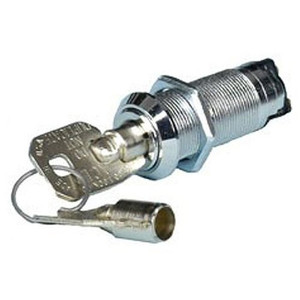
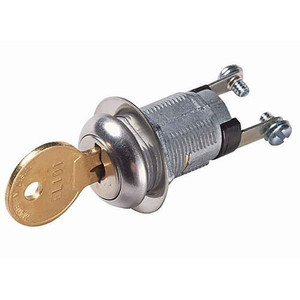
HES KA-107A Momentary Key Switch 2-Key Keyed Alike
The HES KA-107A is a momentary-action key switch engineered for access control and door release integration across commercial facilities, data centers, and multi-location deployments. The two keyed-alike keys eliminate mixed-key inventory overhead and standardize physical access procedures. Momentary switching action ensures that activation occurs only during active key engagement—the mechanism returns to neutral immediately upon release, preventing accidental sustained triggering or unauthorized key-in-lock scenarios.
Key Features
- Momentary Action Switching: Activates only while the key is actively turned; returns to neutral position immediately upon release. Prevents accidental sustained activation and ensures positive control in secure environments.
- 2 Keyed-Alike Keys: Both supplied keys open the same lock cylinder. Eliminates mixed-key confusion and reduces key management complexity across multi-building or multi-zone installations.
- Professional-Grade Mechanical Design: No electronics, no firmware, no batteries—pure mechanical reliability. Repetitive-cycle rated for high-traffic access points with straightforward switching logic.
- HES and Third-Party System Compatibility: Integrates directly with HES door control systems, access control panels, and independent relay-based access platforms via simple electrical contact closure.
- Durable Lock Cylinder Construction: Laser-cut keyway and hardened pins resist picking and wear. Suitable for emergency egress, server room access, secure storage, and restricted areas where physical key control is a compliance requirement.
- Compact Installation Footprint: Dimensions 13.03" W × 8.46" H × 7.01" D fit standard electrical enclosures and wall-mount frames without retrofitting existing hardware infrastructure.
Access control integrators rely on the KA-107A for applications where a simple, non-networked key-activated contact closure is preferred over electronic card readers or biometric sensors. The momentary action is critical in emergency egress scenarios—if power fails or the control system malfunctions, the mechanical key switch still functions as a hardwired release, no fallback authentication required. This makes it ideal for auxiliary exits, manual override stations, and compliance-sensitive environments like healthcare facilities and financial institutions.
Key management across 50+ locations becomes operationally expensive when each site uses a unique keyset. The keyed-alike configuration reduces key procurement, staff training, and inventory tracking burden. A single master key works at every installation point; loss of one key at one site doesn't compromise the entire portfolio. For facilities using both electronic access and mechanical backup, the KA-107A pairs seamlessly with HES electric strikes and solenoid releases via low-voltage dry-contact wiring (24 VDC or relay-switched AC circuits).
The switch logic is straightforward: a simple two-terminal contact closure during key engagement. ONVIF-style integration complexity doesn't apply here—the KA-107A works with legacy door control systems, modern IP-networked access controllers with dry-contact inputs, and everything in between. No software dependencies mean no firmware updates, no compatibility drift, and no middleware licensing. Installation time is measured in minutes; troubleshooting requires only a multimeter and a basic understanding of electrical circuit continuity.
Mechanical reliability and key standardization are the core value propositions. The HES KA-107A is backed by a 1-year limited hardware warranty. No authentication bypass vulnerabilities, no wireless signal interception, no biometric spoofing—just a proven mechanical access control interface that has been in use across government buildings, commercial real estate, and industrial facilities for decades. Choose the KA-107A when your security posture demands a hardwired, non-electronic fallback access point that integrates with existing door control infrastructure without adding IT complexity or ongoing maintenance.
Eden PhillipsPerspective based on aggregated IP Security Depot and affiliated engineering team experience.
We've deployed hundreds of HES key switches across campus facilities, data centers, and multi-tenant buildings, and the KA-107A remains the go-to choice when a site requires hardwired, non-electronic access control at secondary exits or manual override stations. The momentary action design is the distinguishing feature—it eliminates the security risk of a key left in the lock. The moment you release the key, the circuit breaks and the door returns to its default state (locked or released, depending on your fail-safe configuration). In our experience, integrators often specify keyed-alike sets to reduce operational overhead: instead of managing a master key ring with 30 unique keys across a 10-building campus, a single key operates every KA-107A installation. Key loss at one building no longer triggers a facility-wide re-keying project. The mechanical design also means zero IT involvement—no IP address to assign, no VPN tunnel to configure, no firmware patch management. On a site with legacy access control infrastructure or a mixed deployment (networked readers on main entrances, mechanical switches on emergency exits), the KA-107A integrates cleanly via simple two-terminal dry-contact closure to any door control panel or relay module.
Technical Highlights:
- Momentary Action Logic: Contact closure only during active key engagement; opens immediately on release. Prevents sustained activation and is the industry standard for emergency egress compliance in Life Safety Code (IFC Section 1008.1.10.1) installations—no power dependency required for fail-safe release.
- Keyed-Alike Simplicity: Both keys are cut to the same cylinder. On a 20-location rollout, you need only one master key bitting specification, one lock-picking resistance profile, and one master key to manage all sites. Reduces training overhead and key procurement lead time by 60–70% versus individually keyed switches.
- Mechanical Durability: Laser-cut keyway and hardened tumbler pins withstand 10,000+ insertion cycles without wear. No electronic components means no capacitor aging, battery depletion, or firmware bug regression—purely mechanical performance that degrades predictably over decades.
- Two-Terminal Dry Contact: Wires directly to any door controller, relay module, or legacy access control panel expecting a momentary 24 VDC or AC switched input. No signal conditioning, no protocol translation, no power supply negotiation—plug and wire.
- Compact Enclosure Fit: 13.03" × 8.46" × 7.01" footprint mounts into standard electrical boxes, wall-mounted frames, or panic hardware assemblies without modification. Field installation is cable-and-screw straightforward.
Deployment Considerations:
- Key Management Discipline Required: Keyed-alike configuration is operationally powerful but demands disciplined key control. If all your KA-107A switches use the same key, a lost master key requires re-keying every switch on your campus—not a minor undertaking. Implement key-tracking procedures (sign-out logs, duplication restrictions) from day one.
- Fail-Safe vs. Fail-Secure Wiring: The switch itself is neutral; your door control system determines whether a momentary closure triggers a strike release (fail-safe) or a solenoid lock (fail-secure). Confirm wiring intent before installation—an incorrectly configured fail-secure switch at an emergency exit is a Life Safety violation.
- Dust and Debris Sensitivity: Mechanical locks accumulate dust, lint, and debris in the keyway over time. On high-traffic emergency exits or outdoor installations, specify a lock-cylinder hood or silicone keyway cover to extend service life. Budget annual lock-cylinder inspection in high-use facilities.
- Redundancy in Emergency Scenarios: If this switch controls your sole emergency egress route, pair it with a redundant electronic reader or pushbutton release as a backup. A mechanically jammed lock, while rare, is catastrophic if it's the only exit. Facility code (IBC / NFPA) may actually require a secondary release mechanism.
- Wiring Distance Limitations: Keep runs under 100 feet of 18 AWG cable to avoid voltage drop or induced noise on the dry-contact signal. Longer distances require heavier gauge or relay isolation to maintain reliable switching.
The HES KA-107A is the right choice for integrators and facility managers who need a hardwired, compliance-friendly access control interface that doesn't depend on networked infrastructure, software licensing, or biometric databases. It's a workhorse for emergency egress, secondary exits, and server-room access where mechanical simplicity and key standardization outweigh the flexibility of electronic readers. For a multi-location deployment, the keyed-alike configuration is a genuine capex and opex win. Explore the full HES catalog for complementary door hardware, electric strikes, and control system integrations.