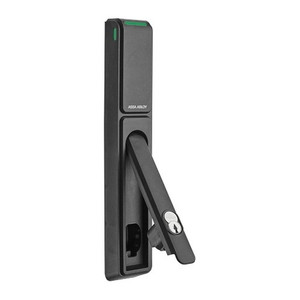
HES CY-1A Mortise Cylinder with 2 Keys Keyed Alike
Overview
The HES CY-1A is a mortise cylinder designed to bridge mechanical and electronic security in facilities that require dual-layer authentication. If your deployment combines traditional key-based locks with electronic access control infrastructure, this cylinder provides the mechanical reliability of a traditional lock while enabling integration with HES/Securitron access control systems. The CY-1A arrives with 2 keys keyed alike, simplifying initial installation and reducing key inventory complexity across your facility. This is a practical choice for environments where power loss or system outage demands a mechanical fallback.
Key Features
- Mortise Cylinder Form Factor: Fits standard mortise lock bodies used in commercial and institutional facilities — no exotic lock body substitutes needed, which means existing door hardware infrastructure often remains compatible and reduces replacement costs.
- 2 Keys Keyed Alike: Both supplied keys operate the same cylinder, eliminating the need to track multiple key profiles during commissioning and reducing staff confusion during handover — a real benefit in facilities with high key turnover or multiple entry points under the same access tier.
- HES/Securitron Integration: Full compatibility with HES and Securitron electronic access control platforms means the mechanical cylinder works alongside readers, controllers, and strike mechanisms from the same vendor ecosystem — simplifying support and reducing integration troubleshooting.
- Hybrid Access Strategy Support: Enables a facility to deploy both electronic authentication (card reader, keypad, biometric) and mechanical key backup on the same door — useful when you need a fail-safe that doesn't depend on power or network availability.
- High-Security Entry Points: Suitable for server rooms, data center access points, and secured equipment cabinets where dual authentication and mechanical redundancy reduce single-point-of-failure risk — particularly valuable in environments where facility power or IT infrastructure outages are known risks.
- Administrative and Controlled Access Areas: Common deployment in offices requiring mechanical override capability, allowing authorized personnel to bypass electronic systems if readers malfunction or credentials are temporarily revoked.
Integration and Compatibility
The CY-1A integrates directly with HES access control platforms and Securitron electronic locking systems. This vendor alignment simplifies wiring, reduces firmware compatibility risk, and enables unified key management across your access control network. Facilities combining electronic readers with mechanical key access benefit from the same technical support and spare parts pipeline. Power-loss scenarios remain covered: if your electronic strike loses power, the mechanical cylinder remains functional, allowing authorized personnel to unlock doors using the supplied keys.
What's in the Box
- 1x HES CY-1A Mortise Cylinder
- 2x Keys (Keyed Alike)
Deployment Considerations
The CY-1A is designed for facilities that have already committed to HES or Securitron infrastructure and are retrofitting or upgrading existing doors. Verify that your current mortise lock bodies accept a standard mortise cylinder profile before ordering; older institutional hardware may use non-standard bores. Key management becomes straightforward with the keyed-alike configuration, but ensure your master key system and key distribution protocol account for the additional mechanical keys in circulation. Server rooms, data centers, and secure storage areas typically benefit most from this hybrid approach because downtime risk and the cost of a sustained outage justify the redundancy overhead.
Frequently Asked Questions
Q: Is the CY-1A compatible with electronic strikeface mechanisms other than HES/Securitron?
A: The CY-1A is engineered specifically for HES and Securitron systems. Cross-compatibility with third-party electronic hardware is not documented. Verify with your system integrator before mixing vendors.
Q: What happens if I lose one of the two supplied keys?
A: The cylinder is keyed alike, meaning both keys use the same profile. If lost, you will need to order replacement keys from your HES distributor or contact HES directly for a replacement key cut to the same profile. Keep the key code documented for reordering.
Q: Can the CY-1A be rekeyed to a different profile after installation?
A: Standard mortise cylinders can typically be removed and rekeyed by a locksmith or HES service provider, but this process requires cylinder extraction and re-pinning. Plan for potential downtime on that access point during rekeying.
Q: Does the CY-1A work as a standalone mechanical lock, or does it require electronic hardware?
A: The cylinder functions as a mechanical lock independent of electronic systems. It can be installed in a standard mortise lock body and used purely mechanically if desired — the electronic integration is optional and depends on how the lock body and strike are configured.
Q: What's the physical security rating of the CY-1A cylinder?
A: The source documentation does not specify bump-resistance, pick resistance, or a formal security grading (e.g., UL 437). Contact HES directly or consult your security integrator for detailed physical security specifications if high-security pin configuration is required.
Q: Is the CY-1A suitable for outdoor access points?
A: The CY-1A is a mechanical mortise cylinder with no stated environmental rating (IP, temperature range, or weatherproofing). For outdoor doors, verify with HES that the cylinder and associated lock body are rated for your climate and exposure conditions.
Ted PerryPerspective based on aggregated IP Security Depot and affiliated engineering team experience.
The CY-1A (often searched as CY 1A) is a straightforward mechanical-to-electronic bridge piece that solves a real operational problem: how to keep doors accessible when your electronic infrastructure goes down. I've deployed these in data centers and server facilities where a sustained power outage can mean locked-out personnel unable to access critical equipment. The keyed-alike configuration keeps the mechanics simple — no tracking separate profiles during commissioning — and the integration with HES/Securitron systems means your installer doesn't have to jerry-rig compatibility between vendors.
Technical Highlights:
- Mortise Cylinder Form Factor: Fits standard commercial lock bodies without requiring special order or custom boring — reduces lead time and simplifies door hardware procurement when you're scaling across multiple entry points.
- 2 Keys Keyed Alike: Both keys use the same pin configuration, eliminating profile management overhead and reducing the risk of a key being cut to the wrong code during initial distribution to site staff.
- HES/Securitron Ecosystem Alignment: Vendor lock-in is usually a warning sign, but here it's a feature — it means your access control vendor provides support for the mechanical cylinder, spare key cuts, and re-keying coordination under one technical relationship.
Deployment Considerations:
- Verify that existing mortise lock bodies on your doors accept a standard cylinder profile before ordering. Institutional and older commercial hardware sometimes uses proprietary bores.
- Key management becomes a real operational item: track the code of the two supplied keys and store a spare set offsite. If you lose both keys and the door is locked, you'll need a locksmith and cylinder extraction — plan accordingly.
- The CY-1A has no documented environmental rating (IP, temperature, humidity). For outdoor access points or harsh industrial environments, coordinate with HES to confirm that the cylinder and its strike mechanism can handle your climate.
Deploy the CY-1A in server rooms, data centers, and secure equipment cabinets where power loss is a documented risk and mechanical fallback is worth the operational overhead. It's not a solution for every door — it's a tactical choice for critical access points in environments where downtime cost exceeds the cost of maintaining hybrid mechanical-electronic systems.