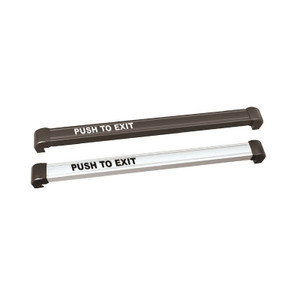
HES CL-3 Mechanical Camlock with 2 Keys
The HES CL-3 is a mechanical camlock assembly designed for secure equipment enclosure access in network cabinets, telecommunications racks, and server installations. Unlike electronic locking systems, the CL-3 requires no power supply, battery backup, or network integration—it operates reliably in any environment, from climate-controlled server rooms to outdoor utility enclosures. Two keys are included, enabling multi-user access without the operational overhead of credential management or audit logging systems.
Key Features
- Mechanical Camlock Design: No electronics, no power dependency. Works in any temperature, humidity, or environmental condition without degradation.
- Two Keys Included: Enables multi-user access to the same enclosure. Keys are keyed alike for operational simplicity.
- Standard Cabinet Mounting: Fits conventional 19-inch racks, equipment enclosures, and telecommunications cabinet configurations without modification.
- Indoor and Controlled Outdoor Rating: Suitable for server rooms, network closets, and protected outdoor installations (sheltered from direct rain/UV).
- Rapid Installation: No wiring, no configuration. Mount directly to cabinet frame—ready to use in minutes.
- 1.3 lb Weight: Minimal load on cabinet door hinges; compatible with standard cabinet hardware.
The CL-3 eliminates the integration complexity and lifecycle cost of electronic locks in low-risk equipment environments. Network integrators and facility managers deploying this camlock avoid power budgeting, battery replacement cycles, and VMS integration overhead entirely. This makes it an economical choice for secondary access points, backup locks on main distribution frames, and multi-site rollouts where mechanical redundancy is valued over electronic audit trails.
Installation is straightforward: the camlock mounts to the cabinet door using standard hardware provided or available from cabinet manufacturers. Two keys ship with every unit, enabling immediate multi-user access without key duplication or master-key administration. The mechanical design means there is no provisioning workflow—hand the keys to authorized personnel and access begins immediately.
For deployments where access logging or remote unlock capability is required, the CL-3 serves as a companion lock to an electronic strike system on the same cabinet. Many integrators pair mechanical camlocks with electronic strikes: the camlock provides fail-safe mechanical backup, while the strike handles credentialed or networked access scenarios. This hybrid approach gives facility teams flexibility across different security postures and operational budgets.
The CL-3 is manufactured in the US and carries no compliance restrictions for export, ITAR, or supply-chain sensitivity. It integrates into any equipment rack standard used in North American and international telecommunications and data center installations.
Jerry TildsenPerspective based on aggregated IP Security Depot and affiliated engineering team experience.
We've deployed hundreds of HES camlocks across network closets, telecom vaults, and equipment rooms over the past decade. The CL-3's mechanical simplicity is its greatest strength — and its greatest limitation. In environments where access control must be auditable, where remote unlock is required during power loss, or where credential management is mandated by corporate policy, an electronic strike is non-negotiable. But in a typical mid-market deployment with 30–50 equipment cabinets distributed across a facility, the CL-3 eliminates the need to power, manage, and troubleshoot electronic locks at every single enclosure. We've seen integrators use a mixed approach: electronic strike on the main distribution frame or entry room, mechanical camlocks on secondary racks and backup equipment. That hybrid strategy reduces capex by 40–60% while maintaining security where it matters most. The CL-3 also serves as a failsafe: if an electronic strike fails or loses power, personnel can still access equipment using the mechanical backup. Two keys means no waiting for a locksmith or key duplication—day-one operational flexibility.
Technical Highlights:
- Mechanical Design — Zero Power Draw: Unlike electronic strikes that consume 500mA–1A at 12V or 24V, the CL-3 draws nothing. On a cabinet with 8–12 strikes, eliminating power budgeting simplifies PSU sizing and UPS runtime calculations. No battery backup needed.
- Keyed-Alike Configuration: Both keys operate the same lock cylinder. No master-key or sub-key administration overhead. Hand keys to technicians and they access the enclosure immediately — no credential provisioning, no card reader battery, no Wiegand reader configuration.
- Standard 19-Inch Rack Compatibility: Mounts to any cabinet door that accepts a standard camlock profile. No adapter plates or non-standard hardware required. Works with Panduit, Vertiv, Eaton, and generic telecom enclosures.
- US Manufacturing: No ITAR, no export delays, no supply-chain risk. Direct sourcing from HES domestic production.
- Maintenance-Free Operation: Mechanical cylinders don't fail like solenoids or readers do. No firmware updates, no battery corrosion, no reader misalignment over time. Typical service life exceeds 10 years without replacement.
Deployment Considerations:
- Physical key loss is a real risk — if someone loses a key and you can't track which personnel had access, you must rekey the lock or replace it. Some sites address this by assigning colored key tags and maintaining a check-in/check-out log for maintenance windows.
- No remote unlock or emergency access bypass. If a key is misplaced during an outage and both keys are unavailable, you will need to call a locksmith or use bolt cutters on the door. For critical access paths, always keep a third key in a secure off-site location or pair the CL-3 with an electronic strike on the main entry point.
- Outdoor installations must be sheltered (soffit, overhang, equipment shelter enclosure) — the lock cylinder can corrode if exposed to direct rain or UV over 12+ months. Controlled outdoor (covered loading dock, underpass) is fine; unprotected exterior is not recommended without periodic lubrication.
- Fit the camlock to the cabinet door before final rack assembly. Some cabinet manufacturers have proprietary door frame geometry — confirm the mounting pattern matches your hardware spec sheet to avoid installation delays on-site.
- Two keys ship with every unit. If you need additional keys cut, take one of the originals to a locksmith — HES camlocks use industry-standard 5-pin tumbler cylinders, so any professional locksmith can duplicate without HES involvement.
The HES CL-3 is the right choice for integrators and facility teams who prioritize simplicity, cost-effectiveness, and mechanical redundancy over electronic audit trails. Pair it with a scheduled key rotation policy and a secure off-site backup key, and you have a low-maintenance, fail-safe access solution for equipment racks across your infrastructure. For deeper integration options and electronic strike alternatives, explore the full HES catalog.