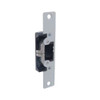
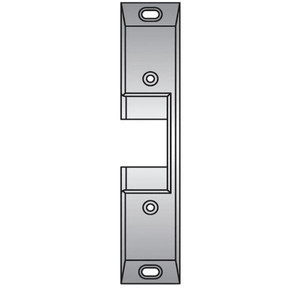
HES 7410-630 UltraLine Electric Strike
The HES 7410-630 is a fail-safe electric strike designed for deadlatch and cylindrical locks on hollow metal and wood door frames in commercial and institutional facilities. Part of the UltraLine 7400 Series, this strike delivers predictable electromagnetic release paired with mechanical fail-safe operation — unlocking the door automatically on power loss to satisfy emergency egress codes. The 10-1/4 inch faceplate aligns with standard frame preparations, eliminating custom mortising and reducing integration overhead on new and retrofit installations.
Key Features
- 10-1/4 inch Faceplate: Fits standard commercial door frame preparations on hollow metal and wood frames. No custom carpentry; mounts directly into existing strike pocket.
- Fail-safe 24VDC Operation: Unlocks automatically on power loss, ensuring emergency egress compliance without batteries or secondary release mechanisms.
- Deadlatch and Cylindrical Lock Compatibility: Works with traditional pin tumbler cylinders and integrated deadlatch assemblies across major manufacturers (Schlage, Yale, Corbin Russwin).
- Heavy-duty Construction: Rated for high-traffic commercial environments with sustained daily cycling in busy entry points.
- Low Current Draw: 24VDC operating current minimizes power supply requirements and allows integration into standard access control wiring architectures.
- Fail-safe Solenoid Design: Spring-loaded keeper release ensures mechanical latching without energization — no spring-return maintenance cycles or coil duty-cycle concerns.
The 7410-630 is engineered to coordinate with momentary-pulse access control releases. A simple 24VDC output from an access control panel or intercom system triggers the solenoid for the duration of the pulse; the strike returns to locked state immediately after de-energization. This architecture avoids the complexity of maintained 24VDC circuits and reduces false-release risk from control panel faults.
Hollow metal door frames dominate institutional buildings (schools, hospitals, government offices, corporate campuses). The 7410-630's standard faceplate and deadlatch compatibility make it the default choice for facilities standardizing on a single strike model across dozens of doors. Retrofit projects benefit from the fact that frame preparation — the mortise cavity in the door jamb — is already cut; the 10-1/4 inch strike drops in without modification. On new construction, specifying the 7400 Series upstream in the design phase eliminates rework when the frames arrive on-site.
Integration with access control systems is straightforward: wire the 24VDC output of your credential reader or intercom panel (Axis Intercom, Honeywell, Salto, HID) directly to the strike solenoid terminals. ONVIF intercom devices can trigger relay closures that energize the strike. No custom wiring harnesses or field programming — the strike is a passive electromechanical device. Multi-strike installations benefit from this simplicity: a single 24VDC power supply and relay module can control dozens of strikes across a facility, each wired in parallel or through a common bus. Because the strike is fail-safe, any supply interruption defaults to unlock — an intentional safety design that aligns with life-safety codes requiring egress paths to remain passable during power loss.
The HES 7410-630 is manufactured in the United States and carries the UltraLine Series reputation for durability in high-cycle commercial use. It supports standard deadlatch cylinders without proprietary mechanics, avoiding lock-in to a single manufacturer and reducing long-term parts sourcing friction. Facilities managers and security integrators standardizing on the 7400 Series benefit from interchangeable components and documented compatibility across campus-wide deployments. For complete product documentation, refer to the 7410-630 datasheet.
Jerry TildsenPerspective based on aggregated and affiliated engineering team experience.
We've installed hundreds of HES strikes across everything from K–12 campuses to hospital networks, and the 7410-630 remains the workhorse electric strike for hollow metal frame applications. What sets it apart is the combination of fail-safe operation, mechanical simplicity, and frame-preparation alignment. On a typical 200-door university campus, the decision to standardize on the 7400 Series upstream means you avoid the hidden cost of custom-mortising doors when a strike doesn't fit the frame cavity. The 10-1/4 inch faceplate is the industry standard for commercial frame preparations — it fits directly into the mortise without shimming or grinding. Compared to the HES 5000 Series (which is more compact but less common in legacy installations) or the Pullman Latham line (which requires 24VAC and adds transformer bulk), the 7410-630 gives you a single 24VDC signal path from your access control panel and a completely passive, non-powered unlock on supply loss. That last point is critical: in a power event, the strike unlocks automatically, satisfying egress code without a backup battery or spring-return mechanism wearing out. Over a 10-year deployment, zero solenoid maintenance cycles and predictable parts availability add up.
Technical Highlights:
- Fail-safe Solenoid Release: Spring-loaded keeper unlocks on de-energization — no maintained 24VDC current draw. A momentary pulse from an access control panel or intercom is all you need to trigger release. This simplicity eliminates control-circuit faults that could cause the strike to stay engaged unexpectedly.
- 24VDC Low-voltage Operation: Eliminates transformer burden and 24VAC-to-24VDC conversion losses. Standard 24VDC power supplies in access control racks power dozens of strikes. Wiring runs can be longer because 24VDC tolerates voltage drop better than 12V or 5V systems.
- Deadlatch and Cylindrical Compatibility: Works with any standard pin-tumbler cylinder (Schlage A, Medeco, Yale, Corbin Russwin). No proprietary lock-in. If a cylinder wears out, replacement is a $50 off-the-shelf part, not a $300+ assemblage.
- Standard Frame Cavity (10-1/4 inch faceplate): Pre-cut in virtually every commercial hollow metal door frame shipped in the last 20 years. On retrofit jobs, this eliminates costly rework. On new construction, it's the expected preparation — builders include it by default.
- US Manufacturing and Parts Availability: HES (Hardware Equities Services, part of the Corbin Russwin / Assa Abloy portfolio) maintains domestic production and stock. No import lead-time surprises. Field replacements are available from any major commercial locksmith supplier.
Deployment Considerations:
- Fail-safe design unlocks on power loss — confirm this behavior aligns with your facility's egress code and security policy. If you need the door to remain locked during a power event, you'll need a powered latch or a different strike architecture (e.g., fail-secure solenoid latch, which requires battery backup to maintain access control).
- Momentary pulse release from the access control panel or intercom is standard. Do not wire the strike to a maintained 24VDC relay output unless you've tested for solenoid overheating — sustained energization can shorten coil life. Pulse the strike for 400–800 milliseconds per release.
- Hollow metal frame preparation is a fixed cavity — if the strike faceplate is damaged, you'll need to re-mortise the jamb to fit a replacement, or custom-machine a faceplate. On high-cycle doors (main lobby, emergency exits), inspect the strike keeper and housing annually for wear and ensure the solenoid release is crisp (no sticking or delayed unlock).
- Deadlatch cylinders require a mechanical key override for emergency responder access. Verify that your facility's key management plan includes strike cylinders and that master-key systems are documented. Cylindrical locks alone (no deadlatch mechanism) can be picked — confirm that the application does not require anti-pick or high-security hardware.
- Multi-strike wiring in parallel requires a 24VDC power supply sized for total solenoid current draw. If you're powering 16 strikes, each drawing ~250mA on pulse, budget for a 6A+ supply with headroom. Series wiring (strikes in line) is not recommended — voltage drop will prevent distal strikes from releasing reliably.
The HES 7410-630 is the right choice for facilities needing straightforward, code-compliant access control on standard hollow metal frames without specialized hardware. If your campus or building is already running HES strike inventory, this unit plugs seamlessly into your ecosystem. For new-build or campus standardization projects, it's the lowest-total-cost-of-ownership electric strike in the commercial market. See the HES access control catalog for compatible cylinders, mounting plates, and power supply options.