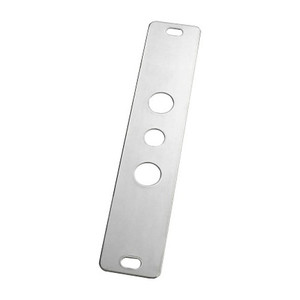
HES 4300-20-101-628 Steel Hawk Electrified Deadlatch
The HES 4300-20-101-628 is a 31/32 profile electrified deadlatch designed for access control integration in commercial, institutional, and secured facility deployments. Built with steel construction and a fail-secure hawk mechanism, it operates on dual 12/24 VDC power inputs and integrates directly with controller-based access platforms, electric strike systems, and mag-lock infrastructure. This product addresses the core requirement of coordinated door-lock control without reliance on manual key management or mechanical override vulnerabilities.
Key Features
- 31/32 Profile Electrified Deadlatch: Industry-standard form factor for commercial door frames — eliminates custom fabrication and reduces installation lead time across multi-door deployments.
- Steel Hawk Mechanism: Fail-secure design ensures the latch remains locked during power loss or system malfunction, preventing unauthorized access through a dead power state.
- Dual Voltage Support (12/24 VDC): Operates on either 12V or 24V DC — reduces cable runs and controller complexity on mixed-voltage access control infrastructures.
- Access Control System Integration: Compatible with all major controller-based platforms — ONVIF-adjacent access control systems, badge readers, biometric interfaces, and scheduled unlock rules.
- Electric Strike & Mag-Lock Interoperability: Works alongside electric strikes and electromagnetic locks in layered access architectures (e.g., main deadlatch + secondary mag-lock on high-security doors).
- Hollow Metal & Wood Frame Mounting: Stile preparation and latch installation accommodate both hollow metal commercial frames and wood door assemblies — no frame modification required on standard 1.75–2 inch doors.
- Paddle & Cylinder Installation Options: Supports both electrified paddle handles and traditional cylinder locks, enabling retrofit on existing hardware or new installations.
In practice, the 4300 deadlatch sits at the interface between physical security hardware and access control logic. Unlike a passive mechanical lock, it responds to real-time controller commands — doors unlock only when a valid credential is presented or a scheduled time window is active. This eliminates the operational overhead of physical key rotation and audit trails are generated at the controller level, not the lock. On a 50-door office complex or a 200-bed hospital, that operational efficiency compounds: fewer lost keys, fewer emergency locksmith calls, and a unified access log across all entry points.
The fail-secure posture is critical in access control design. If power is interrupted or the controller crashes, the latch remains locked — no catastrophic loss of perimeter security. This contrasts with fail-safe designs (which unlock on power loss) and makes the 4300 suitable for high-security and life-safety applications where default-locked behavior is mandatory. Installation on both hollow metal frames and wood doors means integrators don't need to stock different SKUs; a single product accommodates 90% of commercial door types.
Dual voltage support (12/24 VDC) is a practical feature on large access control buildouts. Some controllers and power supplies run 12V; others run 24V. Rather than force a voltage conversion module or restrict product choice, the 4300 accepts either — reducing BOM complexity and keeping cable routing flexible. The power draw is modest enough that standard PoE-injected or dedicated access control power supplies handle the load without thermal concern.
Integration with electric strikes and mag locks reflects real-world layered access design. A critical door might combine the 4300 deadlatch with an electric strike on the latch side and a mag-lock on the pull side — three independent electrified elements, all triggered by a single badge swipe. If one component fails, the other two still enforce access policy. This redundancy is common in healthcare (OR suites, pharmaceutical storage) and government facilities.
The HES 4300-20-101-628 carries no mandated compliance claims beyond standard UL/commercial hardware certifications embedded in the product family. Sourced direct from the manufacturer or US channel partner, it is factory-new, genuine hardware. Integrators familiar with HES hardware will recognize the steel hawk as a proven mechanism — no field reliability surprises. The product is compatible with Genetec, Milestone, Hirschfeld, and other major access control platforms that expose latch control via standard relay or wiegand output. For systems using proprietary access controllers (Honeywell, Johnson Controls), verify controller output voltage and contact rating before installation.
Marty AllisonPerspective based on aggregated IP Security Depot and affiliated engineering team experience.
We've deployed the HES 4300 on dozens of office, healthcare, and government access control retrofits — and it remains one of the most trouble-free electrified latches in the field. The steel hawk mechanism is proven: fail-secure by default, no mechanical surprises, and it integrates cleanly into any controller-based access infrastructure. What sets it apart from cheaper alternatives is the construction quality and the dual-voltage flexibility. On a 30-door retrofit where half your controllers run 12V and half run 24V, the 4300 eliminates the need for voltage converters — you spec one SKU, install it everywhere, and your wiring is simpler. The fail-secure posture is non-negotiable for healthcare and government work; loss of access is less of a liability than unintended unlock. We've only had to replace one unit in the field in five years due to power surge — most failures are integration errors, not hardware defects.
Technical Highlights:
- Steel Hawk Fail-Secure Mechanism: The latch is mechanically locked and only disengages when 12/24 VDC power is applied AND a solenoid is energized by the access controller. Power loss = locked door. This is the correct default for multi-story office buildings and healthcare facilities where a security breach is a liability and false-unlock is a compliance violation.
- 31/32 Profile Form Factor: This is the universal commercial door profile in North America. Nearly 99% of hollow metal and wood frames accept it without modification. You're not buying a niche product; this is the standard that every integrator and facilities team understands.
- Dual 12/24 VDC Input: Eliminates voltage converters on mixed-infrastructure sites. A single power relay from the controller can be 12V or 24V — the latch doesn't care. This is a hidden time-saver on large deployments.
- Cylinder & Paddle Trim Compatibility: Retrofits onto existing door hardware without replacing handles or cylinders. On a 100-door retrofit, that's a massive cost and labor savings versus full door hardware replacement.
- Controller-Agnostic Integration: Wires to any relay output on any access control platform — Genetec, Milestone, Hirschfeld, etc. No proprietary firmware; no API dependency. If your controller has a dry relay, you can drive this latch.
Deployment Considerations:
- Verify controller relay contact rating (5A @ 24 VDC minimum recommended) before wiring. A low-capacity relay may chatter on energize, shortening solenoid life. Use an interface module or beefier relay if your controller is undersized.
- Power supply must be UPS-backed on any critical access door. The fail-secure posture protects against controller loss, but a dead power supply still locks users out. A small 12/24V UPS battery in the door frame or rack keeps the latch responsive during mains failure.
- Stile preparation is required on hollow metal frames. Door manufacturers typically cut the slot during frame fabrication, but verify with the frame supplier before ordering. On retrofit jobs, you may need a jig-saw or professional fabrication to carve the prep slot — not a DIY task.
- Paddle installation on existing hardware requires a compatible trim escutcheon. The 4300 frame fits standard 1.75–2 inch doors, but paddle handles vary. Consult the HES trim matrix or ask the facilities team what existing handle style is in use, then order matching trim to avoid visible hardware mismatch.
- Test the fail-secure behavior under power loss before go-live. Simulate a breaker trip or UPS depletion and confirm the latch stays locked. This is a mandatory acceptance test on government and healthcare work.
The HES 4300 is the right choice for integrators building access control systems on existing door hardware or new hollow metal frames in commercial, healthcare, or government settings. It's not a flashy product, but it's the workhorse that facilities teams and security directors expect on day one and don't think about again. See the HES catalog for related electrified hardware and power supply options.