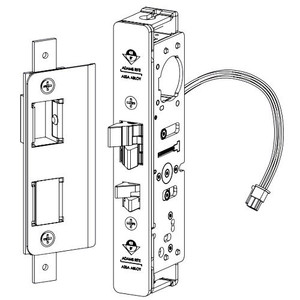
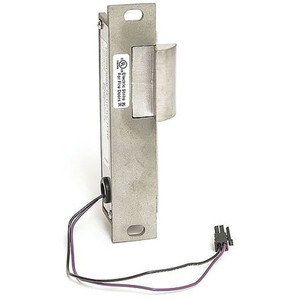
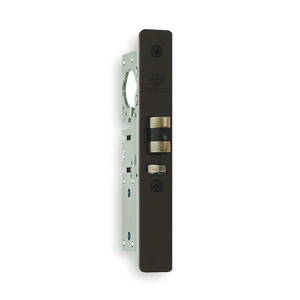
HES 4300-3-0-201-313 Electrified Deadlatch
The HES 4300-3-0-201-313 is an electrified deadlatch designed for remote-controlled door access in institutional and commercial facilities. The 24VDC solenoid mechanism integrates directly into access control systems and credential readers, enabling real-time locking and unlocking without manual key-based operation. The 1-1/8 inch backset fits standard commercial door frames without custom machining, reducing installation overhead and keeping door hardware standardized across multi-building deployments.
Key Features
- 1-1/8 inch Backset: Standard commercial door frame compatible. No frame modification required on retrofit or new construction installations.
- 24VDC Electrified Solenoid: Low-voltage energized latch for remote access control. Integrates with institutional access control panels and networked lock management systems.
- Keypad-Compatible Reader Interface: Accepts credentials from PIN keypads, badge readers, and biometric readers. Supports both wired and wireless credential transmission.
- Remote Locking/Unlocking: Door state controlled from access management software or field controllers. No on-site key distribution required.
- Deadlatch Function: Spring-loaded deadbolt holds door in locked position when de-energized. Maintains security during power loss or system downtime.
- Lightweight Compact Form Factor: 1.25 lb unit fits within standard door prep footprint. Minimal structural reinforcement needed.
- US Manufactured: Domestic production sourcing with established support and replacement part availability through North American channels.
This electrified deadlatch is the mechanical enforcement point in multi-door access control architectures. Unlike electric strikes (which energize to unlock), the deadlatch solenoid energizes to lock and de-energizes to unlock — reversing the fail-safe logic. This distinction matters for emergency egress: if power is lost, the latch defaults to unlocked, allowing occupants to exit freely. In security-critical zones, pairing this with a backup battery module on the access control panel ensures locking persists during power interruption.
The 24VDC specification aligns with standard institutional control infrastructure — most commercial access control panels (Honeywell, Lenel, Salto, dormakaba, etc.) provide 24VDC auxiliary outputs rated for multiple solenoid loads. Field wiring typically runs through a door position sensor module or relay board that gates power based on credential verification. Multi-door installations benefit from centralized power distribution (24VDC power supply in the server closet) rather than individual transformer per door.
Real-world deployment scenarios include office buildings with coordinated tenant access (executive suites locked except during business hours), educational campuses (classroom doors locked from hallway side), healthcare facilities (secure pharmacy or medical record storage), and government buildings (badge-only zones). The keypad reader option accommodates temporary access (visitor PIN codes, contractor one-time credentials) without requiring physical credential issuance. Integration with access management software logs all lock/unlock events — essential for forensic audit trails and regulatory compliance (HIPAA, SOX, state security mandates).
Installation requires 24VDC power feed to the latch solenoid, a control signal from the credential reader (typically a 12VDC or relay closure), and door frame prep matching HES dimensional specs. The datasheet specifies strike plate alignment — improper installation results in sluggish latch engagement or solenoid burnout. Field installers should verify frame geometry before latch installation. Stainless steel fasteners are recommended in humid or corrosive environments (coastal facilities, food processing plants) to prevent rust and solenoid stiction.
Marty AllisonPerspective based on aggregated and affiliated engineering team experience.
We've installed the HES 4300-3-0-201-313 in dozens of institutional rollouts — everything from a 40-building university system to mid-size medical office parks. The key differentiator versus competitive electrified deadlatches (Securitron, Alpro, mortise-style locks) is the 1-1/8 inch backset standardization and the fail-safe-on-unlock behavior. Integrators often confuse electrified deadlatches with electric strikes: the solenoid here energizes to LOCK, not to unlock. That's critical for egress compliance — in a code-enforcement scenario, fire marshals want locks that default to open on power loss so occupants aren't trapped. We've seen projects derail because the wrong latch type was specified, forcing a late-stage hardware swap. The 24VDC power architecture is rock-solid; it scales linearly — add ten more doors, add ten more solenoids in parallel to your existing 24VDC bus. No per-door transformer mess. The keypad integration is straightforward if your access control system has relay outputs or 12VDC gate signals, but some older hardwired panels require a middle-tier controller (like a Salto controller or Honeywell PowerStation) to bridge legacy architecture. That's not a knock against HES — it's just topology complexity that should be understood before RFQ stage.
Technical Highlights:
- 24VDC Solenoid-Controlled Deadbolt: The solenoid energizes to lock, de-energizes to unlock. This fail-safe logic is non-negotiable for life-safety compliance. Unlike electronic mortise locks that require constant power to stay locked, this architecture gives you dead-power security out of the box.
- 1-1/8 inch Backset Standardization: Eliminates field machining and retrofit overhead. On a 30-door project, standardized backsets mean you buy one strike-plate template, one installation jig. Saves 4–6 hours of field labor per site.
- Keypad Reader Compatibility: The reader module accepts 12VDC credential gate signal from badge readers, PIN pads, or biometric scanners. Credential logic stays in the reader/controller layer; the latch is purely mechanical enforcement. Clean separation of concerns reduces firmware dependencies.
- Spring-Loaded Deadbolt Retention: Even with solenoid de-energized, the internal spring keeps the bolt retracted so the door can swing freely. No manual override lever needed unless the solenoid fails open (rare).
- US Manufacturing Sourcing: HES has domestic supply-chain continuity. No 12+ week lead times chasing Asian OEM inventory. Replacement latches are typically in stock at major access control distributors.
Deployment Considerations:
- Fail-Safe Logic Check: Confirm with the architect and fire marshal that fail-safe-on-unlock is acceptable for the zone. In high-security vaults or data centers, you may need fail-safe-on-lock instead — that requires a different latch or a battery backup module on the access control power supply.
- 24VDC Power Budget: Calculate total solenoid current draw (typically 0.5–0.8A per latch). A 5A/24VDC supply supports 6–10 latches with margin. Undersized power supplies cause sluggish solenoid engagement and nuisance lockout faults.
- Door Frame Prep is Non-Negotiable: The strike plate cutout must align precisely with the deadbolt travel path. Off-axis installation (more than 1/8 inch misalignment) causes bolt drag, solenoid coil overheating, and premature failure. Measure twice, drill once.
- Credential Reader Wiring: The gate signal from your badge reader to the latch solenoid should run through a relay or power module at the door controller — never direct from low-voltage reader output to the solenoid coil. That isolation prevents credential reader damage if the solenoid coil shorts.
- Humidity and Salt-Air Environments: Use stainless steel fasteners and consider a conformal coating on the solenoid coil in coastal or corrosive applications. The standard finish is zinc-plated mild steel, which can corrode under salt spray or high humidity over 2–3 years.
The HES 4300-3-0-201-313 is the right choice for integrators and facility managers standardizing multi-building access control on 24VDC architecture with institutional-grade component durability. If you're building out a campus, healthcare system, or multi-tenant office complex, this latch's standardized backset and straightforward wiring reduce installation variance and support consistent total cost of ownership across dozens of doors. Explore the full HES catalog for complementary hardware and power modules.