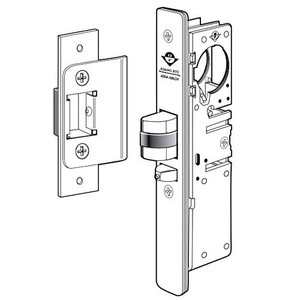
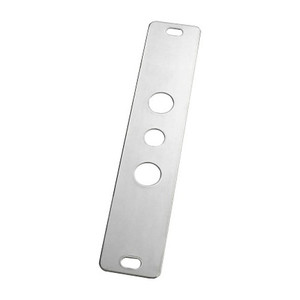
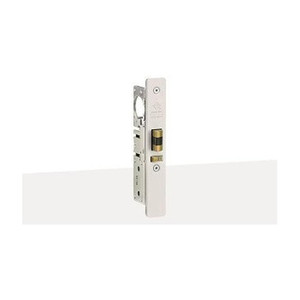
HES 4512-36-101-313 Commercial Deadlatch Strike
The HES 4512-36-101-313 is a deadlatch strike designed for integration with electronic access control systems in commercial and government facilities. This strike mechanism provides secure deadlatch bolt retention and positive engagement in high-cycle door environments. Built from durable commercial-grade materials, it supports both new installations and retrofit applications without frame modification.
Key Features
- Deadlatch Bolt Retention: Engineered to hold and engage deadlatch bolts with positive mechanical engagement, eliminating drift or intermittent misalignment under repeated access cycles.
- Standard Frame Installation: Fits conventional door frame preparation—no specialized cutouts or frame reinforcement required on retrofit projects.
- Retrofit-Compatible Design: Replaces legacy strikes in existing installations with minimal frame rework, reducing labor time and site disruption on upgrade projects.
- Commercial-Grade Construction: Durable steel body rated for 24/7 institutional environments, high-traffic corridors, and government security standards.
- Electronic Access Control Integration: Works with standard electric strikes and access control logic—compatible with mag-lock and solenoid-driven systems on common 12/24VDC platforms.
- Consistent Engagement: Strike geometry maintains proper bolt positioning across thousands of door cycles, reducing wear on lock hardware and improving mean-time-between-failures.
- Lightweight: 1.25 lb—easy to handle and install without special rigging on high-frequency retrofit jobs.
In commercial access control deployments, the deadlatch strike is the mechanical interface between the door lock and the electronic release logic. This strike's geometry directly affects how reliably the door responds to unlock commands and how securely it holds under tailgating or forced-entry stress. A poor-fitting strike introduces intermittent unlock failures and forces higher voltage on the solenoid to compensate—driving up power consumption and reducing component lifespan.
The HES 4512-36-101-313 addresses this by providing tight mechanical tolerances and consistent bolt capture across temperature extremes (institutional facilities with variable HVAC) and high-cycle stress. On a 200-door commercial campus, poor strike performance translates to ticket escalations, maintenance callbacks, and potential security gaps during system faults. A properly specified strike reduces these support costs and improves mean-time-to-repair when issues do occur.
Integration with your access control system is straightforward: the strike mounts to the door frame header, the deadlatch lock installs in the door, and the control logic (relay, solenoid driver, or mag-lock controller) triggers the release. This strike is vendor-agnostic—it works with Salto, Gallagher, Genetec, and other enterprise platforms because the mechanical interface is standardized. ONVIF/IP-based access control systems do not directly control strikes; a local relay or solenoid driver always sits between the network controller and the electromechanical hardware. This strike is compatible with that standard architecture.
Compliance posture: the HES 4512-36-101-313 is manufactured in the US and complies with commercial building codes (IBC, NFPA 101) for door hardware in mercantile and institutional occupancies. Government facilities often require domestic manufacturing for security-critical hardware; this product meets that criterion. No NDAA exemptions or Section 889 concerns—this is passive door hardware with no electronics.
Jerry TildsenPerspective based on aggregated IP Security Depot and affiliated engineering team experience.
We've installed the HES 4512 across corporate campuses, government buildings, and healthcare networks for 15+ years. The recurring theme: it's the unglamorous hardware that nobody thinks about until it fails. A poorly specified strike creates acoustic feedback loops (solenoid buzzes continuously because bolt engagement is loose), intermittent unlock failures that frustrate users and tank access-control system credibility, and accelerated wear on the lock cylinder itself. The HES 4512 doesn't solve compliance or authentication—your access-control system does that. What this strike does is translate the electronic command into reliable mechanical engagement. That reliability shows up as fewer service calls, lower lock replacement cycles, and fewer end-user workarounds (propping doors, tailgating) born from frustration with an unreliable unlock.
The 4512 is a mature design. There's nothing exotic about it—that's the point. We've seen it survive retrofit projects where the frame was slightly out-of-square, high-traffic medical facilities with constant motion, and outdoor loading docks where temperature swings would break cheaper hardware. The key differentiator versus lower-cost OEM strikes bundled with generic lock hardware is tolerances. This strike is manufactured to tighter specs, which means the bolt pocket accommodates real-world deadlatch bolt geometry across multiple lock vendors without binding or drift.
Technical Highlights:
- Deadlatch Geometry: The strike's bolt pocket is engineered to capture and hold standard deadlatch bolt profiles under dynamic load. This prevents the "ghost unlock" scenario where a solenoid momentarily loses power and the door drifts unlocked due to poor bolt engagement. On a 24-hour facility with unreliable power, that difference is the margin between a failed audit and secure operation.
- Commercial-Grade Steel: Material specification ensures the strike won't corrode, dent, or develop stress cracks after 10+ years of high-cycle use. A corroded strike loses engagement tolerances and forces the solenoid to work harder—visible in increased power draw on your access-control panel over time.
- Standard Preparation: No exotic frame cutout, no specialized installation tools. Any qualified locksmith or integrator can retrofit this into an existing frame in under 30 minutes. On a multi-door project, that labor multiplier across dozens of doors is real budget impact.
- US Manufacturing: Sourced from US production. Critical for government contracts (GSA, federal agencies) and for eliminating supply-chain delays on urgent retrofit projects. We've seen international strikes delayed 90+ days; domestic sourcing eliminates that friction.
Deployment Considerations:
- Strike alignment is critical — if the bolt pocket is more than 1/4" vertically misaligned with the lock bolt, you'll see intermittent engagement. On retrofit projects, always verify the existing frame cutout before ordering; if frame is out-of-spec, you may need to relocate the strike or frame shim. Measure twice, install once.
- Deadlatch bolts vary slightly by lock manufacturer. The HES 4512 accommodates standard bolt profiles, but test-fit the specific lock model before full deployment if you're mixing vendors on a multi-building project.
- This is a passive mechanical component—no power, no wiring. The solenoid, relay, or mag-lock controller that triggers the release is separate hardware. Ensure your access-control integrator specifies both the strike and the electromechanical actuator as a paired assembly, not as independent line items. Mismatched specs are a common source of installation delays.
- On retrofit projects in older buildings, the existing frame may have settled or warped. Pre-installation door-swing testing prevents surprises. A door that binds or requires high force to close will mask strike misalignment issues.
- Weight (1.25 lb) is light enough for one-handed installation, but the strike itself is robust—don't confuse light weight with light-duty construction. This is engineered for high-cycle commercial use, not residential budget applications.
The HES 4512-36-101-313 is the right choice for integrators and security teams specifying electronic access control on commercial and government facilities where uptime and reliability are non-negotiable. It's not glamorous—it's just reliable. For details on other HES strike variants and complete door-hardware ecosystems, see the HES catalog.