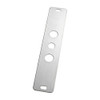
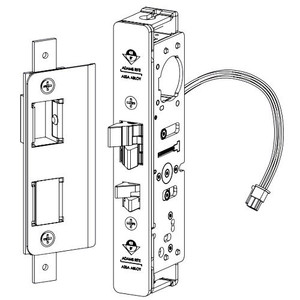
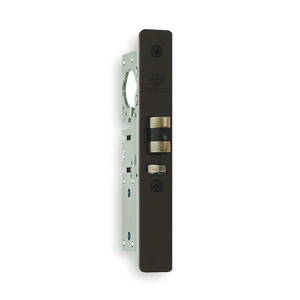
HES 4530-36-101-628 Deadlatch Assembly
The HES 4530-36-101-628 is a deadlatch assembly designed for integration into HES electric strike platforms, delivering reliable mechanical locking in professional access control installations. This component bridges manual operation and remote electronic control, enabling flexible workflows across residential, commercial, and institutional deployments. When paired with an HES electric strike, the deadlatch eliminates the operational complexity of separate mechanical and electronic locking—a single latch mechanism responds to both key operation and door-control logic.
Key Features
- HES Electric Strike Compatibility: Direct fit into HES electric strike systems. Eliminates integration delays and compatibility troubleshooting on retrofit and new-build projects.
- Dual-Mode Operation: Manual key control and remote electronic actuation from the same mechanical assembly. Supports both fail-secure and fail-safe logic depending on strike configuration.
- Standard Door Frame Mounting: 17/32" preparation deadlatch fits conventional commercial door frame cutouts. No special drilling or frame modification required.
- Professional-Grade Construction: Engineered for high-traffic environments. Rated for commercial, institutional, and residential access control deployments.
- Lightweight Integration: 1.25 lb assembly reduces installation labor on door reinforcement and frame load calculations.
- US Manufacturing: Factory-new, domestically sourced. Eliminates grey-market supply chain risk on life-safety hardware.
The deadlatch assembly is the mechanical core of access control door security. Unlike a simple bolt, the HES 4530-36-101-628 latch half automatically extends when the door closes, then retracts only when the strike solenoid energizes (remotely) or the mechanical key is turned (manual override). This behavior ensures that even during power loss or controller downtime, the door cannot be forced open without physical manipulation of the key cylinder.
Deployment scenarios range from corporate office suites with badge-reader control to healthcare facilities requiring nurse-station lockdowns, educational institutions with classroom isolation systems, and multi-tenant commercial properties where tenant isolation and emergency egress must coexist. In each case, the deadlatch is the fail-point: if it jams, sticks, or fails to retract, the entire door ceases to function. Specifying a deadlatch with known compatibility to your strike platform eliminates field surprises and warranty disputes. The HES 4530-36-101-628 is documented to fit HES electric strike bodies; cross-compatibility with third-party strikes is not supported and must be verified with the strike manufacturer before procurement.
Integration with access control systems occurs through the electric strike solenoid, not the deadlatch itself. The strike receives 12VDC or 24VDC logic from your door controller (Salto, Morse, Honeywell, or OEM platform), and mechanically retracts the latch. Manual override via key cylinder ensures life-safety compliance: occupants can always unlock the door manually from inside, meeting ADA and fire code egress requirements. Verify your strike body voltage and solenoid type before ordering; a 24VDC strike will not function correctly on a 12VDC circuit, and incorrect voltage specification is the most common field installation error on electric strike retrofits.
Total cost of ownership on a deadlatch replacement is dominated by labor, not material. A failed latch on a busy office entrance results in lost access control on that door until a technician arrives. Carrying spare HES 4530-36-101-628 deadlatches on-site—particularly in multi-building campuses or 24/7 facilities—trades low material cost for immediate recovery time. One emergency service call (often $300–$500) will exceed the cost of three spare assemblies.
Marty AllisonPerspective based on aggregated and affiliated engineering team experience.
We've installed hundreds of HES electric strike systems across office parks, hospitals, and university campuses, and the deadlatch is the one component that has the sharpest consequences when it fails. The 4530-36-101-628 is the OEM deadlatch for most HES strike bodies—if you're specifying an HES strike, this is the correct latch half to order alongside it. The dual-mode design (manual key + electronic solenoid) is mature and field-proven; what differentiates this assembly is not fancy features but reliability and compatibility assurance. In our experience, deadlatch failures are almost always due to incorrect strike body selection or mismatched voltage, not latch defect. The mechanical design itself is straightforward: a spring-loaded bolt with a retraction lever driven by the strike solenoid. As long as the strike body you've selected is genuine HES and the voltage is correct, the latch will work. The real value proposition is avoiding the surprise of ordering a latch that doesn't fit—a 17/32" preparation latch is not universal, and forcing the wrong latch into a strike body causes binding and early failure.
Technical Highlights:
- 17/32" Preparation Standard: Matches HES electric strike cavity dimensions. Non-standard latch preps (9/16", 5/8") are common on older or retrofit frames; verify frame preparation before ordering to avoid field returns.
- Manual + Remote Actuation: Key cylinder mechanical operation is independent of solenoid voltage. Loss of power does not lock out manual egress—critical for life-safety compliance and emergency scenarios.
- Professional-Grade Steel Construction: Case-hardened latch bolt resists picking and manipulation. Not rated for high-security (ASSA ABLOY Medeco-class) applications, but sufficient for standard commercial access control.
- US Manufacturing Origin: Sourced domestically from HES. Eliminates procurement delays and grey-market quality variability that plague offshore generic latch sourcing.
- Low System Load: 1.25 lb weight simplifies door frame reinforcement calculations. Important on older wood-frame installations where frame load capacity is a constraint.
Deployment Considerations:
- Do not assume cross-compatibility with non-HES strike bodies. We've seen integrators specify this latch with Securitron or Assa Abloy strikes and encounter binding during final testing. Always confirm latch dimensions against the strike body datasheet before ordering.
- Verify electric strike voltage (12VDC vs. 24VDC) during design phase. A common field mistake is wiring a 24VDC strike on a 12VDC controller loop—the solenoid will be sluggish and the latch may not retract fully under load. Check voltage at the door controller output before the strike install.
- Manual key cylinder operation requires periodic lubrication (dry PTFE-based lubricant, not oil) if the door sees heavy manual traffic during off-hours. Seized key cylinders are a common support call on older installations.
- Test fail-safe behavior during commissioning. Some door controllers default to energize-to-unlock; others energize-to-lock. Confirm your strike wiring matches your controller's output logic, or the door will behave opposite to expectation under power loss.
- Keep one spare 4530-36-101-628 per building on hand. A failed latch is a showstopper until replaced; material cost ($40–$80) is trivial compared to emergency service labor ($300+) or lost access control downtime.
The HES 4530-36-101-628 is the right spec for any integrator deploying HES electric strikes on standard door frames in commercial and institutional environments. It's not a feature product—it's a reliability choice backed by decades of field deployment. If you're designing a multi-door access control system, order this deadlatch with confidence alongside your HES strike body. For product selection and compatibility verification, consult the HES catalog.