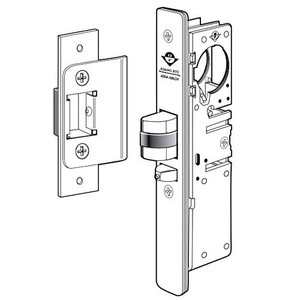
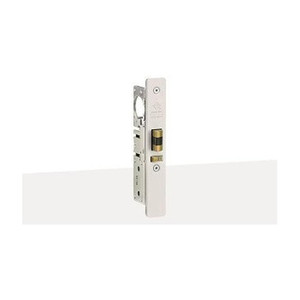
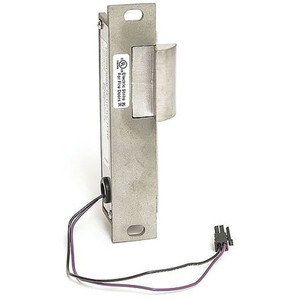
HES 4510-35-101-628 Standard Duty Deadlatch
Overview
The HES 4510-35-101-628 is a standard duty deadlatch engineered for commercial access control installations where reliable locking performance and straightforward integration matter. Designed specifically for indoor door preparations using a 1-1/8 inch backset, this deadlatch works within existing strike plate standards and electric strike systems—meaning you deploy it without custom modifications to door frames or strike hardware. This is relevant if you're retrofitting older facilities or standardizing across a campus where door prep consistency is already established. The flat faceplate design minimizes visual profile and integrates cleanly with modern strike plate geometry.
Key Features
- 1-1/8 inch backset: Matches the most common commercial door frame preparation standard in North America, reducing the risk of costly custom boring or frame modification during installation or retrofit work.
- Flat faceplate design: Sits flush with strike plate geometry, eliminating protrusions that could catch clothing or damage in high-traffic environments like warehouse corridors or institutional hallways.
- Electric strike compatibility: Works with industry-standard electric strike hardware, allowing you to automate access control without replacing the latch—critical for facilities upgrading from manual to badge-based entry.
- Standard duty rating: Rated for moderate to high-traffic commercial applications, meaning it handles frequent use in office buildings, warehouses, educational institutions, and healthcare facilities without premature wear or reliability drift.
- Industry-standard strike plate integration: Compatible with common strike hardware you likely already stock or source through existing vendors, reducing procurement complexity and lead times.
- Retrofit and new construction capability: Deploys in both greenfield builds and renovation projects where door frame specifications are fixed or standardized.
Integration & Compatibility
The 4510-35-101-628 integrates with electric strike systems used in modern access control architectures. This compatibility means you can pair it with card readers, credential controllers, and integrated lock management platforms without requiring a second latch mechanism. In warehouse or institutional settings where door access logs and audit trails matter, this latch works within that ecosystem—the electric strike handles the automated release, and the deadlatch provides the physical barrier when power is lost or the strike is de-energized.
Installation assumes standard door preparation (hollow metal or wood frame with a 1-1/8 inch backset cutout). No special tools or techniques are required beyond basic locksmith competency; this reduces commissioning time and training overhead for integration teams.
When to Choose a Different Model
If your door frames use a 2-3/8 inch or 2-3/4 inch backset (common in some institutional or older facilities), or if you need heavy-duty or fire-rated performance, consider a variant from the HES product family designed for those specifications. Similarly, if outdoor or high-moisture environments are in scope, explore housing or strike options rated for those conditions—this deadlatch is indoor-only.
Typical Deployment Context
This deadlatch fits best in enterprise environments where standardization across multiple buildings or floors drives procurement. Corporate campuses, multi-floor office blocks, hospital wings, and educational institutions benefit from the consistency: same backset, same strike compatibility, predictable installation time. Warehouse access points requiring controlled entry but not extreme environmental stress also align well with standard duty rating.
Frequently Asked Questions
Q: What is the backset, and why does it matter?
A: Backset is the distance from the door edge to the center of the latch bolt. The 1-1/8 inch backset on the 4510-35-101-628 is the most common standard in commercial North America. If your door frames are already bored for this distance, installation is plug-and-play. If not, you'll need frame modification or a different latch variant.
Q: Can the HES 4510-35-101-628 work with my existing electric strike?
A: Yes, the 4510-35-101-628 is compatible with industry-standard electric strike systems. Verify that your strike is designed for a 1-1/8 inch backset deadlatch and a flat faceplate geometry. Most commercial strikes support this combination.
Q: Is the 4510-35-101-628 suitable for outdoor use?
A: No. This deadlatch is rated for indoor installations only. Outdoor or high-moisture environments require weatherproofing and corrosion resistance beyond the specification of this model. Consult the HES product family for exterior-rated variants.
Q: Does this deadlatch require a power supply or batteries?
A: No. The 4510-35-101-628 is a passive mechanical deadlatch. It operates without power. Electric strikes paired with this latch handle all automation and control; the latch itself is purely mechanical.
Q: What's the typical installation time for a retrofit?
A: Installation time depends on door frame condition and whether the backset is already correct. If the frame is pre-bored to 1-1/8 inch, installation is 15–30 minutes per door. Non-standard frames require boring, which adds 30–60 minutes per door.
Q: Is the HES 4510-35-101-628 compliant with fire codes?
A: This is a standard duty deadlatch without specific fire-rating certification in the available evidence. For fire-rated or egress-compliant applications, consult HES fire-rated deadlatch models and verify local fire codes and ADA egress requirements before specification.
Ted PerryPerspective based on aggregated IP Security Depot and affiliated engineering team experience.
The HES 4510-35-101-628 (often searched as 4510 35 101 628) is a straightforward play for integrators standardizing on commercial indoor access control. The 1-1/8 inch backset is the North American standard, which means fewer frame modification surprises during retrofit cycles. I've seen teams underestimate backset variation in older campuses—this latch eliminates that friction if the existing frames already match the spec.
Technical Highlights:
- 1-1/8 inch backset: Eliminates custom boring on pre-drilled frames and reduces installation variance across large multi-building deployments. On a 50-door retrofit, this saves 40–60 labor hours versus non-standard backsets.
- Flat faceplate design: Reduces visual clutter and eliminates snag points—matters in high-traffic corridors where durability and aesthetic consistency are factored into the specification.
- Electric strike integration: Pairs cleanly with standard-duty electric strikes, keeping your bill-of-materials consistent and your spares inventory lean. No proprietary adapters or second-source complications.
- Standard duty rating: Suitable for moderate to high-traffic commercial use, which means office buildings, institutional hallways, and warehouse access points. Not a light-duty model, but also not over-specified for environments that don't need heavy-duty or fire-rated performance.
Deployment Considerations:
- Verify backset before specification—if frames are bored to 2-3/8 inch or 2-3/4 inch, this latch requires custom boring or a different model. Frame survey is non-negotiable on retrofit projects.
- This is a purely mechanical deadlatch; all automation logic lives in the electric strike and access control panel. Don't expect any built-in diagnostics or status feedback from the latch itself—strikes and controllers handle that.
- Indoor-only. High-moisture or outdoor door openings need a different strategy entirely. Test weather sealing assumptions before deployment near doors with seasonal condensation or splash zones.
Best deployment scenario: standardized corporate campus, educational institution, or multi-floor office building where 1-1/8 inch backset frames are already the norm and electric strike automation is already in the architecture. In those settings, this latch is a cost-effective, low-friction component that integrates without surprises.