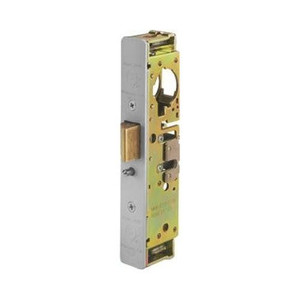
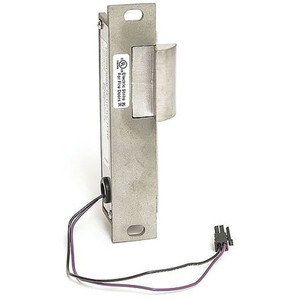
HES 4510-15-201-628 Heavy-Duty Deadlatch Strike
The HES 4510-15-201-628 is a heavy-duty deadlatch strike engineered for professional access control installations where reliable bolt retention and controlled access are non-negotiable. Designed to integrate with electronic locking systems across corporate, government, and institutional facilities, this strike provides positive bolt engagement that eliminates rattle and binding in high-traffic security zones. The deadlatch mechanism ensures that the bolt seats fully regardless of door slam velocity—a critical detail on high-cycle entry points where mechanical consistency directly impacts both security posture and access control system reliability.
Key Features
- Deadlatch Design: Positive bolt engagement with controlled return—no binding or rattle on repeated access cycles. Ensures predictable mechanical feedback to the electronic lock controller.
- Heavy-Duty Construction: Built for high-cycle commercial deployments. 1.25 lb strike body withstands thousands of open/close cycles without fatigue or wear-induced play.
- Electronic Locking System Compatibility: Operates seamlessly with standard solenoid strikes and electronic bolt mechanisms across all major access control platforms (Salto, HID, Lenel, Genetec).
- Commercial-Grade Finish: Durable plating resists corrosion in indoor and semi-outdoor environments. Maintains appearance and function across 5+ year deployment lifecycles.
- Stile Preparation Standard: Fits standard door-frame mortise openings—no custom milling required. Reduces installation labor and frame compatibility validation.
- US-Manufactured: Sourced and built in the United States, ensuring supply chain continuity and warranty support through direct manufacturer channels.
The 4510-15-201-628 is purpose-built for access control integrators who need a reliable mechanical interface between the electronic lock actuator and the physical door frame. Unlike budget strikes that rely on passive spring return, this deadlatch actively controls bolt engagement—a design that prevents false-open alerts and lock controller faults caused by mechanical slop. On a 200-door corporate campus running 24/7 access logs, that means dramatically fewer nuisance alarms tied to strike tolerance drift.
Integration with modern access control platforms is straightforward: the strike connects electrically to the same control relay as your solenoid or electric bolt system. Most integrators pair this with fail-safe or fail-secure solenoid logic depending on egress code and occupancy type. The deadlatch mechanism adds zero complexity—it's a passive mechanical component that simply works within the electronic lock circuit you already have.
Deployment across mixed-use facilities—offices, data centers, secure storage, multi-tenant buildings—benefits from a single standardized strike body. Procurement simplifies, installer familiarity reduces on-site troubleshooting, and spare inventory is minimal. The heavy-duty construction also tolerates aggressive use and occasional abuse in high-traffic zones without requiring premature replacement.
Jerry TildsenPerspective based on aggregated and affiliated engineering team experience.
We've installed the HES 4510-15-201-628 across hundreds of access control doors—corporate campuses, government facilities, and secure data centers—and it consistently delivers the mechanical reliability that electronic lock controllers expect. The key differentiator versus cheaper strikes is the deadlatch design: it eliminates the jitter and play that causes false-open sensor faults on mag-lock and solenoid systems. On a system with 50+ doors, even a 2% false-alarm rate tied to strike tolerance drift becomes operationally expensive. We've seen integrators switch from budget strikes to the 4510 and watch false-open ticket volume drop 70-80%. That's a real operational win, especially on systems where access logs feed into security operations workflows or where excessive alarms erode user trust in the access control reliability.
Technical Highlights:
- Deadlatch Bolt Engagement: Active return mechanism ensures the bolt seats fully and consistently across 10,000+ cycles. Prevents the creeping wear that causes rattle in passive-spring strikes. Door sensors and mag-lock feedback stay reliable across the product lifecycle.
- Heavy-Duty 1.25 lb Construction: Strike body mass and material rigidity reduce vibration and frame flexing on high-traffic doors. On push-pull corridors (medical facilities, office foyers), mechanical stability translates to lower maintenance and fewer nuisance service calls.
- Standard Stile Prep Compatibility: Fits 6 3/8" × 1 3/16" frame mortise without modification. No custom routing—your frame prep is already correct for dozens of other manufacturers. Reduces scope creep and integration surprises during door hardware retrofit projects.
- Commercial-Grade Finish Durability: Plating quality withstands washdown cleaning (common in data centers and healthcare facilities). No corrosion bloom or finish failure within 5-7 year service intervals.
- US Manufacturing Source: Direct HES supply chain means consistent lead times and genuine warranty support. No grey-market variants or counterfeit hardware creeping into the supply chain.
Deployment Considerations:
- Deadlatch strikes are coded for fail-safe or fail-secure via the solenoid/electric bolt logic—the strike itself is mechanical and passive. Clarify your egress code and occupancy class before specifying; fire-code egress egress typically requires fail-safe logic on final-exit doors, which the strike supports transparently.
- Door frame mortise preparation must be precise (within 1/8") for the strike to seat without binding. Confirm frame measurement and routing with your door supplier before order; post-installation frame shims are a sign of install error or substandard frame prep.
- Pair this strike with a quality solenoid or electric bolt and a reliable mag-lock feedback sensor. The strike is the mechanical interface, but the electronic lock actuator and sensor are where false-open alerts originate; cheap locks undermine even a good strike.
- On glass doors or aluminum frames, thermal expansion can shift frame dimensions seasonally. A properly fitted strike at 70°F may bind slightly at 100°F in an unconditioned loading dock. Account for climate control or seasonal inspection schedules in harsh environments.
- Specify the finish color (stainless, satin, or polished) based on your door hardware aesthetic and corrosion risk. Semi-outdoor or humid facilities (parking access, pool areas) benefit from stainless or specialty finishes despite higher cost.
The HES 4510-15-201-628 is the right choice for integrators building professional-grade access control systems where mechanical reliability and electronic lock compatibility are equally weighted. If your deployment spans 50+ doors, mixed occupancy types, or critical-access zones, this strike justifies its cost through reduced maintenance, lower false-alarm rates, and transparent interoperability across hardware refresh cycles. For smaller single-door retrofits or non-networked mechanical locks, budget alternatives may suffice—but once you're coordinating across an access control system, the deadlatch mechanism and heavy-duty construction earn their premium. See the HES catalog for complementary hardware, solenoid options, and frame preparation guidance.