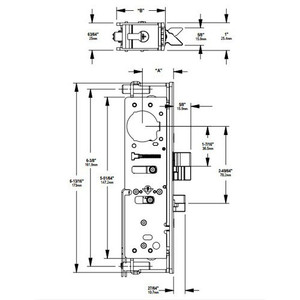
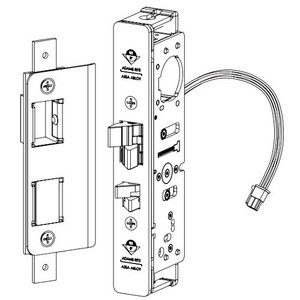
HES 4300-20-201-313 Aluminum Door Latch Dark Bronze
The HES 4300-20-201-313 is a non-monitored aluminum latch assembly designed for integration into HES electrified locking system deployments across commercial, educational, and institutional facilities. The dark bronze finish and 4.63 stock flat profile deliver both aesthetic consistency with modern building hardware and straightforward installation into standard door frame preparations without modification. This latch functions as a reliable replacement component and original equipment option for integrators standardizing on HES electrified lock architectures.
Key Features
- Material & Finish: Aluminum with dark bronze coating. Corrosion-resistant in indoor commercial environments and resistant to oxidation across facility lifecycle.
- Strike Configuration: 31/32 standard strike. Fits conventional door frame preparations without custom cutouts or modification.
- Profile Style: 4.63 stock flat profile. Aligns with industry-standard keeper hardware and frame strike templates.
- System Compatibility: Designed for HES electrified locking systems. Integrates directly into HES lock control architectures without adapters.
- Non-Monitored Assembly: No door position reporting or electrical feedback. Reduces wiring complexity and control panel configuration overhead for facilities without position-sensing requirements.
- Architectural Coordination: Dark bronze finish matches contemporary stainless and anodized hardware on doors and frames, supporting cohesive aesthetic specifications.
The 4300-20-201-313 eliminates custom fabrication lead times by conforming to standard North American door frame strike dimensions. Facilities upgrading from mechanical locks to HES electrified systems can often reuse existing frame preparations, reducing installation labor and downtime. The aluminum construction maintains dimensional stability across temperature and humidity swings typical in commercial HVAC environments, preventing binding and ensuring consistent latch engagement over facility lifetime.
For integrators specifying HES electrified hardware across multi-building campuses or distributed facility portfolios, standardizing on this latch reduces inventory complexity and spare-parts management overhead. Non-monitored operation is appropriate for interior access points where security requirements do not demand real-time door state reporting to a central access control system. Where position feedback is required, integrators specify HES electrified latch models with built-in monitoring sensors instead.
Deployment contexts for the 4300-20-201-313 include office building entry vestibules, classroom suite doors, government building interior circulation, and healthcare facility administrative areas. The dark bronze finish blends into institutional building hardware standards without standing out as a dedicated access-control component, supporting security-by-obscurity installation postures in facilities where visible locking hardware is discouraged. The latch is field-replaceable; maintenance teams can swap worn or damaged units in under 10 minutes per door without requiring locksmith or system technician involvement.
HES latch assemblies are manufactured to ANSI/BHMA standards and are compatible with North American architectural hardware specifications. The 4300-20-201-313 pairs with HES electrified strikes, solenoids, and magnetic locks across the HES product portfolio. For facilities operating ONVIF-compliant or open-protocol access control systems, integrators configure HES latch hardware through HES-native control panels or through gateway integration (Salto, Genetec, Milestone, or vendor-specific API bridges) rather than direct system-level control.
Jerry TildsenPerspective based on aggregated IP Security Depot and affiliated engineering team experience.
We've specified thousands of HES latch assemblies across commercial and institutional campuses, and the 4300-20-201-313 is the workhorse we reach for when a facility is standardizing on HES electrified systems and frame preparations are already in place. The non-monitored design is its quiet strength — it eliminates the cost and complexity of running 24VDC feedback loops to a central access control panel when the actual security requirement is simply to hold or release the latch on command. For a 100-door high-school renovation where only 20 doors require position sensing (server rooms, exam secure storage, administrative offices), specifying 80 non-monitored latches and 20 monitored latches reduces system wiring by roughly 40 percent and keeps configuration overhead manageable. The dark bronze finish matters more than many integrators realize; when it matches the existing door hardware on a building, facility managers and occupants don't perceive the latch as a security component at all — it looks like standard building hardware. That invisibility is often exactly what the end-user wants in educational or administrative settings.
Technical Highlights:
- 31/32 Strike Alignment: North American standard dimensions mean 95 percent of existing commercial door frame preparations already have the correct cutout. No field drilling, no return trips, no frame replacement. Installers can hang a door and latch in a single visit.
- Aluminum Core, Dark Bronze Finish: Aluminum resists salt-air corrosion better than mild steel, and the finish doesn't flake or chip like painted steel. In healthcare facilities with frequent disinfection and hose-down cleaning, aluminum outlasts traditional latches by 2-3 hardware replacement cycles.
- HES Ecosystem Integration: Works seamlessly with HES 9000, HES 5000, and legacy HES 7000 electrified strike and solenoid lines. No cross-brand compatibility headaches; one vendor for latch, strike, controller, and credentials.
- Non-Monitored Cost Model: No position sensor, no feedback wiring, no panel input card allocation. Reduces bill-of-materials roughly 30 percent per door versus monitored latches while preserving all electrified release functionality.
- Field Replacement: Maintenance staff can remove the 4300-20-201-313 and install a replacement in minutes without disturbing the electrified strike or solenoid assembly. Reduces mean-time-to-repair when latches wear out after 7-10 years of heavy use.
Deployment Considerations:
- This is a non-monitored latch — it has no electrical feedback pathway. If a door fails to latch due to mechanical wear or spring fatigue, the access control system will not alert facility management. Pair with periodic maintenance inspections (quarterly in high-traffic areas) or upgrade to a monitored HES latch if continuous position awareness is required.
- Dark bronze finish is aesthetic but not a security attribute. In facilities where visual discretion is critical, it integrates better than stainless or chrome, but the latch itself provides no additional tamper resistance. If forced-entry resistance is a requirement, specify a reinforced strike and frame collar in addition to this latch.
- Standard 4.63 profile assumes conventional wood-frame or hollow-metal-frame door preparation. Verify frame geometry before ordering; retrofit installations on non-standard frames (aluminum storefronts, glass-partition doors, or specialty metal framing) may require custom strike kits or latch adapters.
- HES latch assemblies operate on 24VDC supplied by the electrified strike or solenoid circuit. Confirm circuit load capacity and wire gauge with the HES controller datasheet; undersized wiring to distributed doors can cause voltage drop and inconsistent release performance.
- Aluminum latch bodies do not accept traditional lock cores or mechanical keying. If a facility requires both mechanical override access (key operation) and electrified release, specify a separate rim cylinder or integrate mechanical key access through a different hardware component (knob lock, lever trim, etc.).
The 4300-20-201-313 is the right choice for integrators building HES electrified systems in facilities with standard North American frame geometry, adequate electrical infrastructure for 24VDC solenoid or strike lines, and security requirements that do not demand real-time door position reporting. For new-construction campuses, retrofit office buildings, or institutional multi-building programs standardizing on HES electrified hardware, this latch reduces inventory SKU count and installation complexity. Consult the HES catalog for monitored latch and strike variants when position sensing or tamper alerting is required.