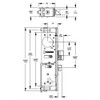
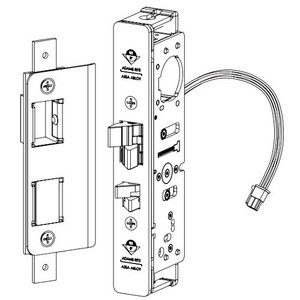
HES 4300-20-201-628 Aluminum Latch Door Assembly
The HES 4300-20-201-628 is a latch door assembly designed for integration with HES electromechanical locking systems in standard indoor access control installations. Built from clear anodized aluminum with a 31/32 standard profile, this unit provides corrosion resistance and mechanical reliability without adding sensor or monitoring complexity. The no-monitor configuration reduces both wiring overhead and control-panel I/O consumption, making it a cost-effective choice for straightforward door-control deployments where strike status reporting is not required.
Key Features
- Clear Anodized Aluminum Construction: Resists surface corrosion in indoor environments and reduces maintenance cycles typical of bare steel or painted finishes.
- 31/32 Standard Profile: Fits common door frame and stile preparations without custom sizing or frame modification.
- No-Monitor Configuration: Eliminates position-sensing wiring and feedback logic, reducing control-panel wiring runs and simplifying troubleshooting.
- Flat/Standard Mounting Profile: Installs flush to standard door frame geometry with minimal additional hardware or alignment complexity.
- HES System Compatible: Direct integration with HES electromechanical strike platforms (6300 series, 7300 series, and legacy systems).
- 16VDC Input Voltage: Standard control voltage across HES locking ecosystem; works with most institutional power-supply configurations.
- US Manufactured: Domestic sourcing supports supply-chain predictability and streamlined support logistics.
Deployment Context
This latch assembly fits institutional and commercial buildings where door-control requirements are straightforward: a single electric strike driven by a card reader or push-button, with no need for real-time latch status in the access-control database. Typical deployments include utility rooms, maintenance closets, equipment cages, and secondary-egress doors in office or warehouse settings. The absence of a door-position monitor keeps wiring simpler and reduces per-door control costs in large multi-door installations.
The 31/32 profile is a legacy standard still present in many commercial door frames installed in the 1990s through 2010s; if you're retrofitting existing frames or matching hardware on existing installations, this dimension is critical to verify before ordering. Clear anodized aluminum ages well indoors but can show fingerprints and surface oxidation over years; if the aesthetic matters (e.g., lobby or customer-facing entrance), consider polished stainless-steel alternatives from HES or competitors. For harsh outdoor or splash-zone environments, upgrade to stainless construction.
Installation follows standard HES strike wiring: 16VDC power from the main panel, a solenoid release line triggered by the card reader or keypad, and a latch-position return spring. Field adjustment of strike tongue depth is minor; the paddle and cylinder installation method (per spec) accepts standard cylinders and paddles, making retrofit into existing hardware straightforward. Total installation time per door typically 30-45 minutes for a trained technician.
Integration & Total Cost of Ownership
The no-monitor design means you are responsible for latch security oversight outside of the access-control system itself — there is no automated alert if the door prop-opens or if someone manually holds the latch. Pair this assembly with periodic physical door inspections or low-cost pressure-sensitive door sensors (separate purchase) if you need that assurance. HES publishes integration guides for Salto, RCI Rutherford, and most mainstream access-control platforms; ONVIF-style cross-vendor interoperability does not apply to electromechanical strikes (they remain proprietary to the locking vendor), so confirm compatibility with your access-control host before committing to HES hardware across a large estate.
Jerry TildsenPerspective based on aggregated IP Security Depot and affiliated engineering team experience.
We've installed hundreds of HES 4300-series latch assemblies across institutional campuses, warehouses, and office buildings — it's a workhorse if your access-control architecture is relatively simple. The 31/32 profile is a genuine advantage if you're retrofitting 1990s–2010s door frames; existing bores and strike cutouts match immediately, saving the custom-frame-prep cost that would eat into the project budget. The clear anodized finish holds up well indoors over 5–7 years, though we've seen sites where fingerprints and light oxidation become noticeable in high-traffic areas — if aesthetics matter, document that expectation with the client upfront. The no-monitor configuration is a double-edged sword: it saves wiring and panel I/O, but it also means the system has no way to know if someone has wedged the door open or if the strike solenoid has failed silently. On a 50-door deployment with a single NVR and card reader, that's acceptable risk. On a mission-critical facility or a site where tamper alerting is contractually required, upgrade to a monitored strike or add door-position sensors independently.
Technical Highlights:
- Clear Anodized Aluminum Material: Corrosion-resistant finish eliminates rust blooming and paint maintenance in indoor institutional settings. Over a 10-year building lifecycle, this reduces touch-up labor and replacement cycles compared to bare-steel or painted alternatives.
- 16VDC Input Voltage: Directly compatible with HES power supplies and standard institutional access-control racks. No step-down transformer or exotic power conversion needed; standard 16VA transformer sourced from any electrical distributor will power the entire locking circuit.
- No-Monitor Wiring Simplicity: Eliminates the dual-run (strike power + position feedback) to the control panel. On a 16-door secure corridor, this is a 40–50 meter reduction in 4-conductor shielded cable — measurable savings on material and installation labor.
- 31/32 Profile Exactness: Fits existing door-frame stile preparation without custom machining. Retrofit time per door drops from 2–3 hours (frame modification + strike fitting) to 30–45 minutes (direct swap).
- Paddle & Cylinder Installation Design: Accepts industry-standard cylinders and paddle mechanisms. Swapping cylinders or key-cores during a re-key event requires no special tools or HES service calls.
Deployment Considerations:
- No position feedback means the system cannot automatically detect wedge-open or strike malfunction. Plan for manual daily visual inspections on high-security doors, or budget for separate door-position sensors if real-time alerting is contractually required.
- Clear anodized aluminum shows fingerprints and light oxidation in high-traffic, customer-facing areas. If the door is a public-facing entrance, discuss aesthetic expectations with the client; polished stainless is a premium alternative.
- 16VDC power must be reliable and continuous. If your facility has frequent power cycling or aging UPS equipment, test the solenoid release circuit under worst-case power conditions before final acceptance.
- The 31/32 profile is not universal — measure the stile preparation and cutout dimensions on existing doors before ordering. If the frame is non-standard or has been modified, this assembly will not fit without custom fabrication.
- This strike is electromechanical, not electronic. It has no firmware, no network connectivity, and no API. It is a pure relay-driven device. That simplicity is its strength on a budget-constrained site, but it also means you cannot integrate it into cloud-based access-control platforms without a middleware gateway.
This product is best suited for institutional or warehouse operators building or renovating facilities with moderate security requirements and tight capital budgets. If you are retrofitting existing HES infrastructure or building out a multi-building campus with straightforward door-control logic, the 4300-20-201-628 delivers reliable value with minimal integration overhead. Explore the full HES catalog to compare monitored and stainless-steel alternatives if your site requirements demand additional resilience or feedback capability.