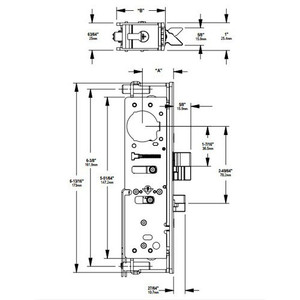
HES 4300-30-201-628 Aluminum Door Latch
The HES 4300-30-201-628 is a mechanical door latch engineered for standard commercial access control deployments where straightforward, non-monitored latching meets security requirements. Finished in clear anodized aluminum, this 1-1/8 inch latch integrates directly into HES electric strike systems and access control panel architectures across office buildings, corporate facilities, and institutional settings.
Key Features
- 1-1/8 inch form factor: Standard door frame preparation without custom modification. Reduces procurement lead time and minimizes field engineering variance — installers don't need to adapt the frame or strike cutout for typical commercial doorways.
- Clear anodized aluminum construction: Corrosion resistance without additional maintenance coating. Aluminum resists moisture and salt-air exposure better than raw steel, meaningful in facilities with humidity or coastal environments. The material also weighs less than steel, reducing hinge wear and door closure strain over time.
- Mechanical (non-monitored) operation: No integrated position sensor or electronic feedback loop. This simplifies wiring and panel configuration when visual or audible confirmation at the door point satisfies your access policy. Skip this model if your security requirements demand real-time latch state reporting back to a central access control system.
- HES system compatibility: Engineered for direct integration into existing HES access control installations. Works without compatibility testing or extended commissioning — the latch mechanical interface aligns with HES strike cutout specifications.
- Electric strike pairing: Offloads latching responsibility from the electric strike mechanism itself. The strike retracts the bolt; the mechanical latch re-engages as the bolt returns. This division of labor extends strike lifespan and reduces nuisance lockouts caused by mechanical wear on the strike's latching solenoid.
- Repeatable field deployment specifications: Tested across multiple facility types and installation scenarios. Reduces installation variance and minimizes callbacks related to latch binding or misalignment.
Integration & Compatibility
The 4300-30-201-628 (often searched as 4300 30 201 628) pairs with HES electric strike systems to provide centralized access control without latch position monitoring. Configure the latch mechanical throw and spring tension during commissioning — no field adjustments required if installation follows manufacturer tolerances.
Deploy alongside your access control panel and reader infrastructure. The reader authorizes access; the panel energizes the strike; the latch handles the mechanical latching cycle. If your architecture requires integration with third-party access control vendors (Salto, Philips, Honeywell, etc.), confirm mechanical compatibility with your control system integrator before procurement — cross-brand fit cannot be assumed without field measurement.
Deployment Context
Suitable for secured office suites, server rooms, utility closets, and institutional access points where traffic is moderate and mechanical reliability is non-negotiable. Common in environments where door access is controlled at the reader/panel level and latch position feedback is not required by policy or audit standards. Not recommended for high-security applications demanding auditable latch state, extreme-traffic environments without supervised maintenance intervals, or exterior doors subject to freeze-thaw cycling without environmental testing confirmation.
Frequently Asked Questions
Q: Is the HES 4300-30-201-628 suitable for outdoor doors?
A: The clear anodized aluminum finish resists corrosion, but outdoor exposure over extended periods—salt air, freeze-thaw cycling, direct UV—may degrade seals and internal springs. For exterior applications, confirm with your integrator that environmental conditions align with manufacturer durability testing. Consider environmental stress testing before large-scale outdoor deployment.
Q: Does the 4300-30-201-628 work with non-HES electric strikes?
A: This latch is engineered for HES system architectures and strike cutout specifications. Compatibility with third-party strikes (Anixter, Dormakaba, etc.) requires field measurement and validation. Do not assume mechanical fit across brands without confirming strike bolt retraction depth and latch catch geometry.
Q: What maintenance interval does the mechanical latch require?
A: Mechanical latches benefit from periodic inspection—listen for binding during operation, visually confirm the catch is not deformed, and check spring tension annually. In high-traffic environments, service intervals may need to shorten. Consult your integrator or facilities team for your specific traffic load.
Q: Can the 4300-30-201-628 be retrofitted into an existing strike installation?
A: If your current strike matches HES cutout specifications, the latch should install without frame modification. Measure the existing strike's bolt pocket depth and catch alignment before procurement to confirm fit.
Q: Does this latch support monitored (sensor-based) feedback?
A: No. The 4300-30-201-628 is purely mechanical. If latch position reporting is required, you will need a separate door position sensor (magnetic switch, proximity sensor) wired to your access control panel, independent of the latch itself.
Q: What is the warranty on the HES 4300-30-201-628?
A: Warranty details are not specified in the available product documentation. Contact your authorized HES distributor or integrator for specific warranty coverage and claim procedures.
Ted PerryPerspective based on aggregated IP Security Depot and affiliated engineering team experience.
The HES 4300-30-201-628 represents a straightforward mechanical latch choice for access control deployments where the architecture doesn't demand real-time position reporting. The 1-1/8 inch form factor fits standard commercial door frames, and the clear anodized aluminum finish handles humidity and moderate environmental stress without coating maintenance—a real consideration if you're rolling out across a facility with climate variance.
Technical Highlights:
- Clear anodized aluminum: Corrosion resistance without ongoing maintenance. Lighter than steel, so hinge wear is minimized over the latch's operational life. Meaningful in coastal or high-humidity facilities where untreated steel would degrade in 18–36 months.
- Mechanical operation with no electronic feedback: Simplifies panel wiring and configuration—no additional sensor circuits to monitor or troubleshoot. The tradeoff: you cannot audit latch state remotely. If compliance or audit trails require proof that the latch engaged, this model is insufficient alone; you'll need a separate door position sensor.
- HES system integration: Direct compatibility with HES electric strikes means no cross-vendor testing or field validation delays. Strike and latch work as a unit by design, extending strike solenoid life by offloading the latching burden onto the mechanical latch spring.
Deployment Considerations:
- Outdoor exposure (salt air, freeze-thaw) can degrade seals and springs beyond manufacturer testing boundaries. Confirm environmental conditions with your integrator if exterior deployment is required.
- This is purely mechanical—no position feedback. High-security or audit-sensitive deployments will need an independent magnetic or proximity sensor to report latch state to the access control panel. Budget separately for that sensor and wiring.
- Retrofit scenarios require field measurement. Don't assume the 4300-30-201-628 fits an existing strike cutout without confirming bolt pocket depth and catch alignment first.
Deploy the 4300-30-201-628 in moderate-traffic office, server, or utility closet deployments where access control lives at the reader and panel level, mechanical reliability is non-negotiable, and remote latch state monitoring is not a policy requirement. For high-security or extreme-environment applications, escalate to your integrator for environmental testing or a monitored latch variant.