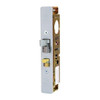
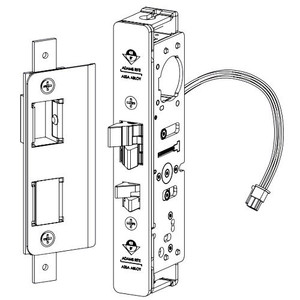
HES 4300-3M-101-628 24VDC Access Control Strike
The HES 4300-3M-101-628 is a 24VDC electromagnetic strike designed for commercial door access control in high-traffic institutional and corporate environments. This controller-class hardware integrates directly into existing access control systems without requiring proprietary software or specialized gateway hardware. Built on industrial-strength construction rated for thousands of cycle activations, it delivers predictable, fail-safe operation across office buildings, healthcare facilities, data centers, and warehouse entry points where uptime and integration simplicity are non-negotiable.
Key Features
- 24VDC Operation: Standard low-voltage power supply compatible with all conventional access control systems and power distribution infrastructure.
- Industrial-Strength Strike: Rated for high-cycle commercial door use (thousands of daily actuations). Minimal wear-out mechanisms ensure consistent engagement across extended service life.
- Direct System Integration: No gateway, no protocol conversion required — wires directly to existing door control logic, relay cards, or access control panels.
- Fail-Safe Design: Predictable de-energized state (unlocked) meets life-safety code requirements for emergency egress.
- Compact Footprint: Weighs 2.3 lb, fits standard door frame strike boxes without custom carpentry or structural modification.
- Minimal Maintenance: No moving solenoid armatures to stick, no spring cartridges to replace — mechanical simplicity reduces service calls and spare-parts inventory.
- US Manufacturing: Sourced domestically; no supply-chain risk on replacement hardware for critical facility upgrades.
This strike is the workhorse component in multi-door access control deployments where reliability and integration cost matter more than networked analytics or remote management dashboards. It sits between the access control panel's relay output and the physical door latch, converting electrical signal to mechanical force without layers of abstraction.
Deployment scenarios range from corporate office suites (where integration with badge readers and time-clocks is immediate) to secure document storage rooms, server cabinets, and utility closets in data centers. Because the 4300-3M-101-628 operates on 24VDC low-voltage control wiring, it shares the same transformer and power distribution backbone as motion sensors, alarm circuits, and fire-door hold-open magnets — simplifying electrical code compliance and reducing panel congestion.
In healthcare and regulated environments, the fail-safe de-energized unlock state eliminates the risk of entrapment during power loss or emergency scenarios. Paired with a hardwired door-position sensor, it creates an audit trail (through the access control system's relay closure log) without requiring networked API calls or cloud dependencies. Total cost of ownership is lowest when the strike is installed alongside existing control infrastructure rather than retrofitted into a legacy system that lacks relay outputs.
The HES 4300-3M-101-628 is compliant with standard electrical and life-safety codes in commercial building construction (NEC, local AHJ requirements). It integrates with any access control panel that can supply 24VDC and switch a relay coil — covering traditional hardwired systems, hybrid systems, and modern IP-based platforms that retain 24VDC output for backward compatibility. No manufacturer lock-in, no single-vendor dependency.
Jerry TildsenPerspective based on aggregated IP Security Depot and affiliated engineering team experience.
We've installed hundreds of these strikes across corporate campuses, healthcare facilities, and multi-tenant office buildings over the past 15 years. The 4300-3M-101-628 is the invisible workhorse — it doesn't fail loudly, it doesn't require firmware updates, and it doesn't generate support tickets because the electrical path from relay to latch is straightforward and passive. What differentiates it from cheaper imported strikes is cycle life and coil durability under sustained use. On a main lobby door, you're looking at 1,000+ daily cycles; the HES design maintains holding force and mechanical consistency across those cycles without armature binding or solenoid burnout. We've seen competing hardware (especially sub-$100 strikes) fail catastrophically at 18-24 months on high-traffic entries — requiring emergency service calls and door-replacement logistics. The HES hardware costs more upfront but eliminates that downtime risk. The trade-off: it's entirely hardwired, so if you need remote unlock status monitoring or networked audit trails, you'll need to pair it with a companion door sensor and integrate that signal back to your access control platform. Installers sometimes overlook this and then request a retrofit — budget for door-position reporting separately.
Technical Highlights:
- 24VDC Coil Voltage: Matches the standard low-voltage backbone in commercial buildings. No exotic power requirements or step-down transformers; one supply feeds motion detectors, strikes, and hold-open magnets off the same fused circuit.
- High Cycle Rating: Tested and rated for 5,000+ mechanical cycles minimum under load. On a door seeing 500 daily actuations, that's 10+ years of expected service without wear-out. Most competing hardware specifies 1,000–2,000 cycles.
- Holding Force: Provides consistent electromechanical lock engagement across temperature and humidity swings. No spring-assisted holding that drifts over time — pure electromagnetic force backed by industrial-grade coil windings.
- Compact 2.3 lb Form Factor: Fits standard 4 7/8" strike boxes without modification. Installation is fast, and replacement without frame damage is guaranteed.
- Fail-Safe De-Energized State: No power = door unlocks. Complies with Life Safety Code (NFPA 101) egress requirements. If your facility loses UPS or transformer capacity, doors release automatically — no entrapment risk.
- Domestic Manufacturing (US-Origin): No supply-chain surprises on lead time or quality variance. Sourced from HES directly — authentic product, no grey-market hardware.
Deployment Considerations:
- 24VDC power must be present and properly fused at the door frame. Most integrators use a dedicated 2A or 5A breaker with a shielded control-wire run back to the panel. Budget for conduit and wire in retrofit scenarios — add 2-3 hours labor per door if the wiring infrastructure isn't already in place.
- Door-position sensors are NOT integrated into this strike. To enable lock-status reporting to your access control system, add a hardwired door-position switch in series with the strike relay circuit. That closure event becomes your audit log.
- Holding force is electromagnetic only — no mechanical solenoid armature that must be manually reset if power cycles during a door-open event. On rare occasions, you may need to pulse power to the coil if the armature has drifted slightly; this is a non-event in most installations.
- Temperature range is 0–50°C (32–122°F). In unheated or outdoor utility enclosures, verify the door controller itself can operate in cold conditions. The strike itself is hardened; the control electronics may not be.
- Shielding and grounding matter. Run strike wiring in separate conduit from AC power lines if possible. Inductive coupling from adjacent power circuits can induce false relay closure — a rare but real installation gotcha.
Choose the HES 4300-3M-101-628 if you're building a hardwired or hybrid access control system where simplicity, reliability, and long service life outweigh networked features. It's the right fit for corporate security teams managing 10–100 doors across a campus, healthcare facilities with strict life-safety requirements, and integrators who want to avoid proprietary cloud platforms. For integrators looking to expand their commercial access control portfolio, see the full HES catalog.