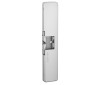
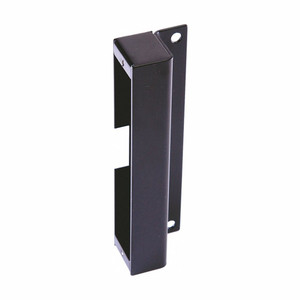
HES 10-262 Surface 4 Ball Contact Device
The HES 10-262 is a surface-mounted 4-ball contact closure device designed for integration with HES electric strike systems and access control platforms. Built for retrofit installations where recessed mounting is impractical, the 10-262 provides reliable door status feedback without requiring structural modification to door frames or strike mounting surfaces. The device operates on standard 24VDC supplied by compatible access control controllers, making it a drop-in addition to existing Wiegand-based keypad reader systems and strike installations.
Key Features
- Surface-Mount Design: No recessed cavity required — installs directly to door frame or strike mounting surface, eliminating retrofit labor and structural damage.
- 4-Ball Contact Closure: Mechanical contact signaling provides reliable door status confirmation (open/closed) without electronic intermediaries.
- 24VDC Operation: Operates on standard access control voltage — integrates with any HES strike power supply or multi-strike controller.
- Wiegand Protocol Support: Direct communication with keypad readers and access control panels using industry-standard Wiegand output format.
- HES System Compatibility: OEM integration with HES electric strike families simplifies wiring and eliminates third-party gateway requirements.
- 2 lb Lightweight Form Factor: Compact package reduces installation footprint on metal door frames and strike boxes.
- US Manufacturing: Domestically sourced and assembled — supports supply-chain continuity and NDAA compliance requirements.
The 10-262 addresses a common retrofit challenge: monitoring door strike status in facilities where recessed contact installation conflicts with existing frame geometry or where access control was retrofitted post-construction. Unlike recessed magnetically-coupled sensors, the ball contact device requires no power to the sensor itself—the contact closure is purely mechanical, reducing wiring complexity and eliminating sensor power draws from the strike controller budget.
In multi-door installations (facilities deploying 30+ controlled doors), the contact closure feedback enables real-time door status logging within the access control platform. This visibility drives operational efficiency: integrators can detect propped doors, verify strike solenoid release timing, and audit access events tied to physical door position. Event logs capture both keypad input and strike activation, creating an audit trail suitable for government facilities, financial institutions, and healthcare deployments where access accountability is mandated.
The 4-ball contact mechanism is rated for standard commercial duty cycles (typical 10,000+ closure cycles)—sufficient for most facilities where average door use runs 50-150 transits per day. In high-traffic environments (main lobbies, shipping areas), lifecycle planning should account for periodic contact inspection; HES offers replacement contact cartridges for continued use of the same surface-mount housing.
Wiegand integration means the 10-262 works with any access control platform that supports standard Wiegand keypad readers (Salto, Gallagher, Honeywell ProWatch, etc.). The device does not require proprietary software or gateway licensing—contact closure data flows directly to the access control panel's I/O module, keeping total system cost low and deployment timeline short. For NDAA-regulated facilities, this direct integration eliminates the need for cloud-based contact monitoring services or third-party device management platforms.
Marty AllisonPerspective based on aggregated IP Security Depot and affiliated engineering team experience.
The HES 10-262 is a niche but essential product—and we've seen it solve real retrofit headaches where recessed contact installation simply isn't viable. In our experience, integrators often discover too late that the door frame geometry, strike box depth, or existing cabling routing makes a recessed magnetic switch impossible to retrofit. The 10-262's surface mount eliminates that constraint entirely. What differentiates it from generic aftermarket contact closures is HES OEM integration—no custom wiring harnesses, no voltage-matching debates with the strike controller, no firmware surprises. It's a straight 24VDC supply + Wiegand signal, and it works. That said, the device isn't appropriate for high-moisture or outdoor environments; it's designed for interior commercial applications. The contact closure mechanism is mechanical and reliable, but in facilities with extreme humidity or temperature cycling (uninsulated warehouse doors, exterior vestibules), consider environmental housing or sealed contact alternatives. Lifecycle-wise, the ball contacts are wear items—in very high-traffic doors (100+ transits/day), you'll be inspecting contact resistance annually and planning for cartridge replacement every 3-5 years depending on utilization.
Technical Highlights:
- 4-Ball Mechanical Closure: No electronic sensor, no battery, no signal conditioning—the contact opens and closes with the strike latch position. Failure modes are deterministic: contact either opens/closes or it doesn't. No false positives from sensor drift or voltage transients.
- 24VDC Supply Architecture: Powered by the strike controller's 24VDC rail — integrators do not pull a separate power line. Simplifies retrofit wiring on dense door installations and reduces NVR/controller power budget overhead.
- Wiegand Native Output: Speaks directly to keypad reader ports on access control panels. No gateway, no IP translation, no latency. Door status arrives at the panel within milliseconds of strike activation.
- US Manufacturing Footprint: Addresses NDAA Section 889 compliance for federal building upgrades and government contractor sites — domestic sourcing eliminates supply-chain risk and foreign-origin scrutiny.
- Surface Mount Retrofit Profile: Installation footprint ~2 in. × 1.5 in., weighs 2 lb — fits in tight spaces on existing strike boxes and door frames without material rework.
Deployment Considerations:
- Contact closure circuits expect dry contact signals (no embedded electronics). Verify the receiving access control panel has a dedicated input module or spare keypad port—do not daisy-chain multiple 10-262 units on a single reader input without a current-limiting interface.
- Surface mounting means the device is exposed to incidental impact and dust. On high-traffic doors or warehouse environments, consider protective shrouding or stainless-steel strike boxes to shield the contact assembly from debris accumulation.
- Ball contact wear increases contact resistance over time; in facilities exceeding 100 transits/day per door, plan preventive maintenance inspections every 18-24 months. HES sells replacement contact cartridges as field-serviceable parts—labor is minimal (5-10 minutes), but spare inventory should be stocked for critical facilities.
- Wiegand signal integrity degrades over long cable runs (>300 ft unshielded). For multi-building campuses with strikes remote from the access control panel, verify cable gauge and use twisted-pair shielded Wiegand harnesses to prevent signal attenuation.
- The 10-262 does not integrate with cloud-based access platforms or mobile credentialing systems. If the facility roadmap includes smartphone access or cloud VMS integration, the contact closure data will need to be bridged via a local access control panel—there is no direct cloud API.
The HES 10-262 is the right choice for integrators speccing retrofit electric strike systems into existing facilities where door frame geometry prevents recessed contact installation, and for government/NDAA-regulated projects requiring domestically sourced components. Its simplicity—mechanical closure, no electronics, direct Wiegand output—makes it reliable and cost-effective for facilities with 10-100 controlled doors. Explore the complete HES catalog for compatible strike families and multi-door controller options.