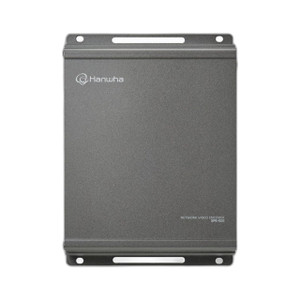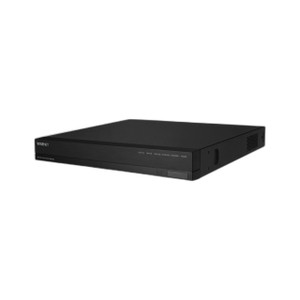

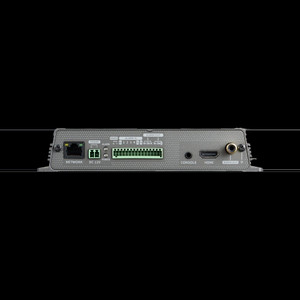
Product images are provided for reference and may not represent the exact model, configuration, or included components.

Overview

SKU: SPE-420
UPC: 8801089207593
Condition: New
Availability: Usually Ships Same Business Day
Write a Review 25% OFF

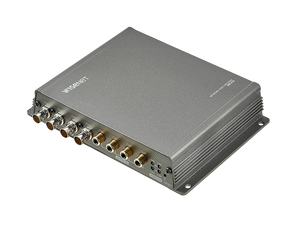
Hanwha SPE-420 4-Channel Video Encoder

4-channel analog-to-IP encoder with H.265 and auto-detection for legacy camera integration

$535.00 $400.99 SAVE $134
Ships same business day
In stock

Quantity:

Adding to cart… The item has been added
Compatibility guidance available for your deployment
Senior specialists for pre and post-sales support
Authorized sourcing and documentation support
Shipping and lead-time confirmation before install

Laura Bennett, IPSD Senior Specialist

Talk to Laura

200+ hrs training • U.S - based

Senior Specialist • 877-277-7147

Hanwha SPE-420 4-Channel Video Encoder

$535.00
$400.99

Overview

SKU: SPE-420
UPC: 8801089207593
Condition: New
Availability: Usually Ships Same Business Day

No Bots, Just Experts

Questions about this product? Free pre-sales support from a senior specialist — product questions, compatibility checks, BOM quotes, price confirmation — typically answered within one business day. Need camera placement or system design work? Engineering time is $175 per hour (qty 1 = 1 hour). Hardware buyers get up to one hour ($175) credited back on their order.

Description

Hanwha SPE-420 4-Channel Video Encoder

The SPE-420 is a bridge device for organizations running legacy analog surveillance systems who need IP capabilities without replacing working cameras. It converts composite NTSC/PAL signals from up to 4 analog cameras into standards-based IP video streams, unlocking remote access, cloud integration, and modern NVR compatibility. Auto-detection of AHD, CVI, and TVI formats means you don't need to manually configure each input — a significant time-saver when integrating mixed analog populations.

Key Features

  • 4-Channel Composite Input (1.0 Vp-p / 75Ω): Accepts standard BNC NTSC/PAL signals from analog cameras. Each channel can be encoded independently, so you're not locked into uniform framerate or resolution across all four streams.
  • Auto-Format Detection (AHD/CVI/TVI, 1MP–5MP): Recognizes and adapts to different analog standards without manual intervention. Reduces configuration overhead and accommodates camera upgrades within the same analog family.
  • H.265 and H.264 Compression: H.265 cuts bitrate roughly in half versus H.264 at equivalent quality — meaningful on bandwidth-constrained networks or when recording multiple channels 24/7. H.264 (Main, Baseline, High profiles) and MJPEG are also available for compatibility with older archival systems.
  • Dual Streaming Profiles (2 per channel) with CBR/VBR Control: Encode high-bitrate streams for local NVR storage while simultaneously pushing lower-resolution streams to remote clients or cloud — no redundant transcoding needed.
  • Resolution up to 2560×1920; 30 fps @ 1080p, 12 fps @ 5MP: Practical framerates for surveillance; 5MP support from analog is useful if you have high-megapixel analog cameras, though framerate drops at peak resolution.
  • 4 Alarm Inputs / 2 Relay Outputs: Connects external sensors (door contacts, motion detectors, panic buttons) and triggers actions — FTP uploads, email notifications, or relay-controlled devices — on alarm events. Integrates with existing security control logic.
  • 4-Zone Privacy Masking and Motion Detection: Masks sensitive areas in-stream (reduces storage if motion-triggered recording is used). Tampering alerts notify operators if the camera is moved or covered.
  • Dual Control (RS-485 + Coaxial): Supports SAMSUNG-T, PELCO-P/D (serial) and Pelco-C (coaxial) protocols. Allows control over existing coax runs without rewiring.
  • HDMI Multi-Image Output (4 Windows @ 1920×1080): Local monitoring on a display without network dependency — useful in control rooms or as a fallback if IP fails.
  • 4 Audio Line Inputs / 1 Output with G.711 u-law: Integrates audio from analog mics or intercoms. G.711 compression keeps audio payload modest within the overall bitrate budget.

Integration & Compatibility

The SPE-420 supports ONVIF Profile S, TCP/IP, UDP/IP, RTSP, HTTP/HTTPS, and SUNAPI HTTP APIs. This breadth ensures compatibility with Hanwha NVR series (P/X/Q/L) and most third-party NVRs (Milestone, Genetec, etc.) without vendor lock-in. Security includes SSL/TLS encryption, 802.1X authentication (EAP-TLS/EAP-LEAP), IP filtering, and user access logging — table-stakes for enterprise deployments.

Web viewer (non-plugin, HTML5) runs on Windows 10+, macOS 10.13+, and modern browsers (Chrome, Edge, Firefox, Safari). Supports up to 16 concurrent users (4 per channel) in unicast mode; multicast is also available to reduce bandwidth if your network supports it. Multi-language UI (16 variants including English, Simplified/Traditional Chinese, Japanese, Korean, Russian, and European languages) suits global operations teams.

Power & Installation

Runs on DC 12V or IEEE 802.3af PoE with 5W max consumption — low enough that a single PoE injector can power multiple encoders without oversizing your switch. Compact 178 × 34 × 127.8 mm metal chassis (520 g) fits easily in a control room rack, server closet, or wall-mounted near analog DVRs. Operating range 0°C to +50°C handles most indoor facilities; confirm temperature before deploying in uncontrolled spaces.

When to Choose a Different Model

If your analog cameras are already HD-SDI or IP, the SPE-420 is not required. If you need to encode more than 4 channels, consider a larger Hanwha encoder variant or dedicated NVR with analog inputs. If your network has strict latency or jitter limits (e.g., real-time tactical operations), test RTSP unicast streaming end-to-end before deployment.

Frequently Asked Questions

Q: Does the SPE-420 work with Milestone XProtect or Genetec Security Center?

A: Yes. ONVIF Profile S compliance and REST API support enable integration with both platforms. Confirm driver availability in your VMS release notes before purchase.

Q: What's the maximum latency on the RTSP stream?

A: Latency depends on framerate and network conditions. At 30 fps (1080p), expect 80–150 ms under stable LAN. Higher latency on internet or congested WAN; not suitable for real-time tactical applications.

Q: Can I use a single PoE injector for multiple SPE-420 units?

A: Yes. At 5W max per unit, a single 90W injector can power up to 15 encoders (with overhead for device boot and transient spikes). Use managed PoE switches for better visibility and fallback control.

Q: Do I need to replace my BNC coax runs to the encoder?

A: No. The SPE-420 accepts standard BNC connections. IP output requires Ethernet, so you'll add network cabling (CAT5e minimum) from the encoder to your switch or NVR.

Q: What's the warranty on the SPE-420?

A: Standard 3-year manufacturer warranty. Confirm coverage with your specialty retailer for any extended or on-site options.

Q: Can the SPE-420 handle mixed analog camera types (AHD, CVI, TVI) on different channels?

A: Yes. Auto-detection lets each channel recognize its input format independently. Common in retrofit deployments where camera populations are heterogeneous.
Eden Phillips
Eden Phillips
Perspective based on aggregated IP Security Depot and affiliated engineering team experience.

The SPE-420 solves a genuine problem: legacy analog infrastructure that works but doesn't integrate with modern IP ecosystems. Rather than rip-and-replace (a capital and labor burden), this encoder preserves your camera investment while unlocking IP benefits. The auto-detection of AHD, CVI, and TVI formats is particularly valuable because real deployments rarely have uniform analog camera populations — you'll often find a mix of standards from different upgrade cycles. H.265 compression is the standout spec here: it cuts bandwidth roughly 40–60% compared to H.264 at equivalent quality, a meaningful reduction when you're streaming 4 channels simultaneously or managing 24/7 recording on a modest storage budget.

Technical Highlights:

  • Dual Streaming Profiles (2 per channel): Encode once, stream twice — send high-bitrate (H.265) to your local NVR for archive and lower-bitrate (H.264 or MJPEG) to remote clients or cloud gateways without transcoding penalty. Reduces CPU load and storage overhead.
  • 4-Zone Privacy Masking + Motion Detection: Masks cover sensitive areas in-stream before compression, shrinking file sizes if you're using motion-triggered recording. Tampering alerts catch physical interference in real time.
  • Dual Control (RS-485 + Coaxial): Existing Pelco-C coax infrastructure carries control signals without network dependency. Useful in facilities where you can't immediately rewire all cameras to IP-capable runs.
  • 5W Max Power (PoE or 12VDC): Insignificant draw — a managed PoE switch can easily handle multiple units. No separate power supply clutter in the rack.
  • ONVIF Profile S + SUNAPI: Broad VMS compatibility (Milestone, Genetec, Hanwha, others) and vendor flexibility. Not locked into a single ecosystem.

Deployment Considerations:

  • Framerate drops at 5MP: 12 fps @ 5MP is acceptable for perimeter and parking monitoring but not fast enough for facial recognition or vehicle plate reading at distance. Test with your actual analog camera output before committing.
  • Latency on Internet Streams: At 30 fps (1080p) over LAN, expect 80–150 ms via RTSP unicast. Congested WAN or multicast networks will push this higher. Not suitable for real-time tactical PTZ control; suitable for monitoring and event review.
  • Audio Bandwidth: G.711 u-law adds minimal overhead, but confirm your network and NVR can handle audio payload if intercoms are critical to your use case.

Best fit: retail, office, airport, or warehouse environments with functional analog cameras and a working DVR that needs to join an IP-based monitoring and archival system without forklift upgrade. Sites with 1–3 encoding devices (4–12 cameras total) where CapEx is tight but operational integration is the priority.

Specifications
Input Channel: 4CH BNC, 1.0 Vp-p / 75Ω composite NTSC/PAL
Input Signal & Resolution: CVBS, AHD/CVI/TVI (1, 2, 4, 5MP) Auto Detection
Video Out: 1 HDMI OUT (4 multi Image, 1920x1080)
Motion Detection: Off / On
Privacy Masking: Off / On (4ea rectangular zones)
De-Interlacing: support
Alarm Inputs/Outputs: 4 Input / 2 Output(1 NO/COM/NC, 1 NO/COM)
Alarm Trigger: Motion Detection, Alarm Input, Video Loss, Tampering
Alarm Events: File Upload Via FTP, E-mail
Audio I/O: 4 Line Input / 1 Line Output
OSD: Title
Remote Control Interface: 1ea RS-485(Half Duplex)
RS-485 Protocol: SAMSUNG-T, PELCO-P/D
Coaxial Control: CVBS(Pelco-C) AHD, TVI, CVI
Ethernet: 1 RJ-45 10/100 Base-T
Video Compression Format: H.265, H.264, MJPEG
Resolution: 2560×1920
Max. Framerate: 30fps @ 5MP
Bitrate Control Method: H.265, H.264 : CBR or VBR
Streaming Capability: Multiple Streaming (Up to 2 Profiles per channel)
Audio Compression: G.711 u-law
IP: IPv4, IPv6
Protocol: TCP/IP, UDP/IP, RTP(UDP), RTP(TCP), RTCP,RTSP, NTP, HTTP, HTTPS, SSL/TLS, DHCP, FTP, SMTP, ICMP, IGMP, SNMPv1/v2c/v3(MIB-2), ARP, DNS, DDNS, QoS, UPnP, ONVIF, Bonjour
Security: HTTPS (SSL) Login Authentication, Digest Login Authentication IP Address Filtering, User Access Log, 802.1X Authentication (EAP-TLS, EAP-LEAP)
Streaming Method: Unicast / Multicast
Max. User Access: max. 16 users(4 Users/CH) at Unicast Mode
Webpage Languages: 16 languages
Web Viewer: Supported OS : Windows 10 or later, Mac OS X 10.13 or later Non-plugin WebViewer Supported Browser : Google Chrome 80 or later,, MS Edge 83 or later, Mozilla Firefox 72 or later, Apple Safari 11.0.1 or later
Application Programming Interface: ONVIF profile S, SUNAPI (HTTP API)
Compatabile Software & Recoder: SmartViewer, SSM, NVR(Hanwha Techwin, P/X/Q/L series)
Operating Temperature / Humidity: 0°C ~ +50°C / 20% ~ 80% RH
Input Voltage / Current: DC12V, PoE(IEEE 802.3af)
Power (Max: MAX : 5W (12V, 0.417A)
Color / Material: Dark Gray / Metal
Dimension (WxHxD: (W) 178.0 × (H) 34.0 × (D)127.8(include Connector 148.7)mm
Weight: 520g(1.15lb)
Type: Encoder
Product Type: Encoder
Max Resolution: 5MP
Housing Color: White
Poe Power: PoE (802.3af)
Compression: H.265; H.264; MJPEG
Onvif: Yes
Audio: I/O 4 Line Input / 1 Line Output
Operating System: D Title
Ethernet Rate: 1 RJ-45 10/100 Base-T
Application: Programming Interface ONVIF profile S, SUNAPI (HTTP API)
Operating Temp: / Humidity 0°C ~ +50°C / 20% ~ 80% RH
Input Voltage: / Current DC12V, PoE(IEEE 802.3af)
Q&A
Reviews
Have Questions?

Videos Hide Videos Show Videos

RELATED PRODUCTS

Hanwha SPE-1630 16-Channel Video Encoder
Add to Cart The item has been added

Hanwha

SKU: SPE-1630

Hanwha SPE-1630 16-Channel Video Encoder

16-channel analog-to-IP encoder; migrate CVBS/AHD/CVI/TVI to H.265
  • Auto-detects CVBS, AHD, CVI, TVI up to 5MP; 16 BNC inputs, no manual config
  • H.265 codec cuts bandwidth ~50% vs H.264; 3 streaming profiles per channel
  • Up to 48 concurrent RTP/RTSP users (4 per channel); Gigabit Ethernet, ONVIF
In stock · Ships same business day
$1,375.00 $1,029.99 Save $345.01
The item has been added
Free shipping over $499
$1,375.00 $1,029.99 Save $345.01
Add to cart Add to quote

System Design, Deployment & Technical Support

Support services and planning resources for commercial surveillance, access control, and infrastructure deployments.

Fixed scope • Fixed price

System Design Assistance

  • Get help validating product compatibility
  • Coverage requirements
  • Storage planning and deployment architecture before you buy.
Request Design Help

Deployment & Configuration Support

  • Access fixed-scope support for rollout planning
  • User setup guidance
  • Migration and system standardization across single-site or multi-site deployments
View Support Services

Guides, Tools & Calculators

  • PoE requirements
  • Storage retention
  • Camera selection and deployment methodology
Open Technical Resources