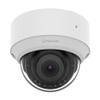
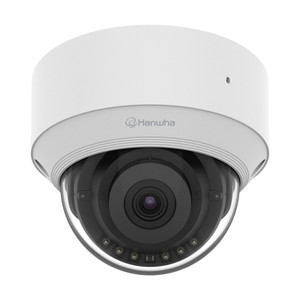
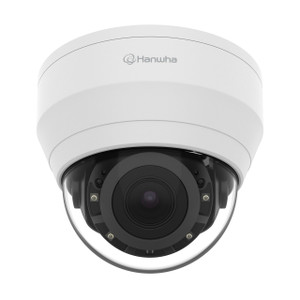
Hanwha QND-C8023R 5MP Indoor AI IR Dome Camera
The Hanwha QND-C8023R is a 5-megapixel indoor dome built for commercial and enterprise surveillance where intelligent analytics and reliable low-light performance reduce operational overhead. It combines on-camera AI object detection with advanced compression and noise reduction—meaning you process alerts closer to the edge and reduce storage strain without sacrificing identification-quality imagery.
Key Features
- 5MP resolution at 30fps with 4.0mm fixed lens — delivers 2592 × 1944 pixel imagery across an 80° horizontal field of view. Fixed focal length suits corridor monitoring and moderate-distance interior surveillance; if you need broader coverage across larger open areas like warehouses or retail floors, evaluate wider-angle alternatives in the Hanwha dome family.
- H.265 primary codec with H.264 and MJPEG fallback — H.265 cuts bandwidth and storage requirements roughly 40–50% versus H.264 on typical indoor scenes. Matters significantly on 24/7 multi-camera systems where storage retention drives infrastructure cost.
- WiseStream III intelligent compression engine — adapts bitrate dynamically to scene complexity, allocating more bits to motion and detail, fewer to static backgrounds. Reduces archive footprint without dropping frame rate or resolution.
- WiseNR II advanced noise reduction — maintains clarity in dim lighting (corridors, back offices, parking areas) by filtering sensor noise while preserving fine detail. Pairs with the 30-meter IR range to extend usable low-light performance.
- 120dB Wide Dynamic Range (WDR) — handles extreme lighting contrasts (bright windows + shadowed interiors, office transitions). Keeps faces and vehicle plates readable across a single frame without requiring separate high/low exposure modes.
- IR illumination effective to 30 meters — extends 24/7 surveillance into completely dark spaces without external lighting infrastructure. Practical for interior perimeter corridors, stairwells, and unlit storage zones.
- Built-in AI object classification — on-camera detection of persons and vehicles eliminates false alarms from small animals, shadows, or reflections. Feeds intelligent rule-based recording and real-time alerting; reduces analyst alert fatigue on large deployments.
- Intelligent video analytics: virtual line crossing, area intrusion, defocus detection — virtual line crossing triggers alerts when objects cross a defined boundary (entry/exit monitoring). Area intrusion flags unauthorized presence in restricted zones. Defocus detection catches lens obstruction before footage becomes unusable.
- Hallway view mode — rotates image 90° for vertical mounting (narrow corridors, stairwells, entrance vestibules)—saves mounting angle compromise and simplifies installation in tall, narrow spaces.
- Built-in microphone for two-way audio — enables remote communication without separate audio hardware; useful for intercom or emergency communication in office and retail deployments.
- Power over Ethernet (PoE) — single network cable for both power and video. Draws under 13W via standard 802.3af PoE, so it won't strain typical switch power budgets. Simplifies cabling runs and eliminates wall-outlet dependency.
- 256GB microSD card slot for edge recording — local backup independent of centralized NVR. Protects against network interruptions and provides forensic replay if the NVR is compromised or unavailable.
- USB port for configuration and firmware updates — streamlines initial setup and updates without requiring network connectivity during provisioning.
Integration and Compatibility
The QND-C8023R integrates with Hanwha IP cameras ecosystems and ONVIF-compliant third-party network video management systems. Its edge analytics reduce VMS processing load, making it a good fit for distributed surveillance where centralized servers may be bandwidth-limited or geographically distant. Consult your VMS vendor's ONVIF compliance matrix to confirm codec and metadata support before deployment.
Operating Environment
Rated for –10°C to +45°C (–14°F to +113°F), the camera operates reliably in temperature-controlled indoor facilities: offices, retail locations, warehouses, and institutional buildings. Not intended for outdoor or uncontrolled temperature environments.
Frequently Asked Questions
Q: What is the effective field of view with the 4.0mm fixed lens?
A: 80° horizontal, 59° vertical. This horizontal angle suits corridor runs and face-recognition setups at 10–20 feet; for wider coverage of open floor plans, consider evaluating alternative lens options in the Hanwha dome line.
Q: Does the QND-C8023R support ONVIF?
A: Yes. It complies with ONVIF Profile S and T, enabling integration with standards-based VMS platforms. Verify your VMS documentation for specific codec and metadata support.
Q: What is the maximum IR range in total darkness?
A: 30 meters (98 feet). Sufficient for interior corridors and enclosed spaces; outdoor or long-distance surveillance requires higher-power external illumination or specialized thermal imaging.
Q: Can the QND-C8023R record locally without a centralized NVR?
A: Yes. The 256GB microSD card slot supports edge recording independent of an NVR, providing local backup and failover in case of network interruption.
Q: How much bandwidth does the QND-C8023R require when streaming H.265?
A: Bandwidth varies by scene complexity and WiseStream III settings, but H.265 typically reduces bitrate 40–50% versus H.264 on the same frame rate and resolution. Consult the datasheet for specific bitrate tables under your deployment lighting conditions.
Q: Is the QND-C8023R suitable for 24/7 recording across multiple cameras?
A: Yes. The combination of H.265 compression, WiseStream III bandwidth optimization, and edge analytics makes it cost-effective for continuous recording. Storage and network sizing depend on your retention policy and NVR/storage architecture—refer to IP camera buying guides for storage planning methodology.
Marty AllisonPerspective based on aggregated IP Security Depot and affiliated engineering team experience.
The QND-C8023R delivers solid value for mid-range indoor surveillance where both AI intelligence and reliable low-light performance matter. The combination of WiseStream III H.265 compression and on-camera analytics reduces backend infrastructure costs—your NVR handles fewer bitstreams, your storage archive shrinks 40–50%, and your security team sees fewer false positives from the built-in person/vehicle classifier. The fixed 4.0mm lens and 80° horizontal FOV are its primary constraint: corridor and moderate-distance monitoring, yes; expansive retail or warehouse floors, no.
Technical Highlights:
- WiseStream III + H.265: Reduces bitrate 40–50% versus H.264 without dropping frame rate or resolution—measurable savings on 24/7 multi-camera systems where storage cost scales with retention days.
- WiseNR II noise reduction: Maintains face and text readability in dim corridors and back offices by filtering sensor grain while preserving fine detail—avoids the false-sharpening artifacts of aggressive post-processing.
- 30m IR range + 120dB WDR: Covers interior 24/7 without external lighting; WDR handles day/night transitions and mixed windows/shadows in a single image—reduces the need for separate exposure presets.
- On-camera AI object detection: Eliminates small-animal and shadow noise before it reaches the NVR, cutting analyst alert fatigue on large deployments—meaningful on 50+ camera sites.
- 256GB edge recording via microSD: Acts as a network-outage buffer and forensic backup independent of the NVR—essential if your NVR is remote or your site has spotty connectivity.
Deployment Considerations:
- The 4.0mm fixed lens delivers an 80° horizontal field of view—measure your corridor or coverage zone carefully. If you need broader angles, compare the QND-C8023R to wider-angle alternatives in the Hanwha dome line rather than retrofitting with fisheye post-processing.
- H.265 support is codec-dependent on your NVR and VMS. Verify ONVIF Profile T compliance in your video management system before deployment; if your NVR or VMS lacks H.265, it will fall back to H.264, losing the bandwidth savings.
- The 256GB microSD limit is sufficient for 24–48 hours of continuous 5MP H.265 recording at typical bitrates. If you need longer local retention, plan for NVR-side storage instead—microSD is a failover buffer, not a primary archive.
Best fit: office buildings, retail locations, and institutional facilities where you need 24/7 coverage in corridors, entrances, and moderate-distance interior zones, plus the operational simplicity of on-camera analytics and edge recording. Skip this if your facility requires panoramic indoor coverage or sub-zero outdoor operation.