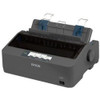
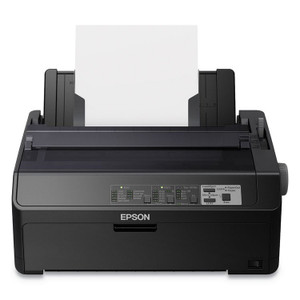
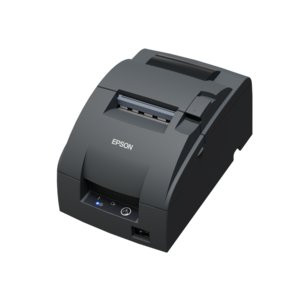
Epson C11CC24001 LX-350 Impact Dot-Matrix Printer
Overview
The Epson C11CC24001 is a 9-pin impact dot-matrix printer engineered for high-volume transactional printing in warehouse, logistics, and point-of-sale environments. Rated at 357 characters per second (CPS) in draft mode, this monochrome impact printer handles continuous forms, labels, envelopes, and plain paper without thermal consumables. The LX-350 supports multi-part form printing up to 5 sheets, making it ideal for receipt generation, shipping labels, and inventory documentation in demanding warehouse operations. If you operate legacy warehouse management systems or require simultaneous carbon-form copies for carrier and customer documentation, the C11CC24001 delivers throughput and multi-part capability that thermal printers cannot match.
Key Features
- 357 CPS Print Speed in Draft Mode: Delivers sufficient throughput for moderate-to-high-volume transactional and label printing without bottlenecking warehouse workflows. At this speed, you can print roughly 2,145 lines per minute, reducing waiting time for receipt and shipping-label batches in busy fulfillment operations.
- 9-Pin Printhead: Proven dot-matrix technology produces legible text and basic graphics on multi-part carbon forms. The 9-pin configuration balances print quality with speed—adequate for logistics labels and receipts where OCR readability matters more than photograph-grade rendering.
- Multi-Part Form Capability Up to 5 Sheets: Prints simultaneous copies on 5-sheet carbon-form stacks without relay equipment or separate pass-through printing. This is critical in warehouse operations where you need warehouse, carrier, and customer copies from a single print job, eliminating manual transcription or second-pass printing.
- Multiple Connectivity Options: Parallel (Centronics), serial (DB-9 RS-232), and USB interfaces enable flexible integration into mixed legacy and contemporary IT infrastructure. If your WMS runs on aging hardware with parallel ports, the C11CC24001 connects directly without protocol converters or additional controllers.
- Monochrome Black-on-White Output: Delivers sharp, consistent printing on all receipt, label, and form types. No color capability, but impact printing produces high-contrast output that survives rough handling in shipping and warehouse environments.
- Wide Media Support: Accepts continuous forms from 4 to 10 inches in width, roll media at 8.5 and 10 inches, plus custom sizes up to 10 inches × 22 inches. This flexibility allows one printer to handle receipts, 4×6 shipping labels, larger warehouse forms, and specialized inventory documents without media conversion or separate devices.
- ESC/P Emulation: Native EPSON ESC/P command-language support ensures compatibility with existing warehouse management systems, point-of-sale platforms, and shipping software written for legacy EPSON printers. No driver customization required; command strings are interpreted natively.
- Legacy Operating System Support: Drivers available for Windows 2000, XP, Vista, Windows 7, and Windows 8 (both 32-bit and 64-bit), allowing deployment in warehouses where OS upgrades are infrequent or not feasible. If your warehouse PC is running Windows XP, this printer will provision without compatibility headaches.
- Robust Metal-Frame Construction: Impact mechanism and structural frame rated for continuous operation in warehouse and shipping environments. Durability in this context means lower unplanned downtime compared to thermal or inkjet devices that fail under dust, temperature swings, and vibration.
- 2-Year Limited Warranty: OEM-backed coverage for production environments, providing manufacturer support for printheads, drive mechanisms, and electronics during the critical first two years of deployment.
Integration and Compatibility
The C11CC24001 connects via parallel, serial, or USB, allowing deployment in mixed legacy and contemporary IT infrastructure without protocol conversion. The printer natively emulates EPSON ESC/P command language, ensuring out-of-the-box compatibility with warehouse management systems, point-of-sale platforms, and shipping software that pre-date thermal printing adoption. Drivers ship for Windows 2000 through Windows 8 (both 32-bit and 64-bit environments), and no additional controller hardware is required for parallel or serial installations. If your WMS has been stable on an older Windows OS and parallel-port architecture, this printer integrates directly into that existing topology without forcing a system redesign.
When to Choose a Different Model
If your operation has migrated entirely to thermal label printers and no longer requires multi-part carbon forms, consider a thermal alternative—they offer lower per-label cost, quieter operation, and faster print speeds. The C11CC24001 is specifically engineered for environments that still depend on impact printing and simultaneous multi-copy forms; if that requirement is absent, thermal or inkjet devices may be more cost-effective. Additionally, if your warehouse has already standardized on modern Windows 10+ systems and you need driver support beyond Windows 8, verify driver availability before committing.
What's in the Box
The Epson C11CC24001 ships with a power cable, parallel (Centronics) interface cable, and quick-start documentation. Serial (RS-232) and USB cables are available as optional accessories if you require connectivity types other than parallel.
Frequently Asked Questions
Q: Can the C11CC24001 print on 4×6 shipping labels?
A: Yes. The printer supports continuous forms and roll media from 4 to 10 inches in width, including standard 4×6 shipping label rolls. You will need roll-feed or friction-feed hardware appropriate for your label stock; consult the quick-start guide or contact the manufacturer for recommended accessories.
Q: Is the C11CC24001 compatible with modern Windows 10 or Windows 11?
A: Drivers are officially available for Windows 2000 through Windows 8. Windows 10 and later compatibility is not documented in the evidence. Before deploying to a Windows 10+ environment, verify driver support with the manufacturer or test compatibility in a non-production setting.
Q: What is the typical lifespan of the 9-pin printhead?
A: The evidence does not specify printhead lifespan or service intervals. Contact the manufacturer or refer to the full user manual for expected head life, replacement costs, and maintenance schedules.
Q: Can I connect the C11CC24001 to a modern USB system without a parallel port?
A: Yes. The printer supports USB connectivity natively. However, USB cable is sold separately; verify that you have the correct USB cable type (USB Type-B or equivalent) before ordering.
Q: Does the C11CC24001 support automatic media detection or cutting?
A: The evidence confirms multi-part form capability and media-width support but does not detail automatic cutting or media detection features. Consult the manufacturer's specification sheet for details on form-feed and cutting options.
Q: What is the noise level during printing?
A: The evidence does not include decibel specifications. Impact printing is inherently louder than thermal or inkjet printing; if noise is a critical deployment concern, contact the manufacturer for decibel ratings or acoustic testing data.
Ted PerryPerspective based on aggregated and affiliated engineering team experience.
I've specified the Epson C11CC24001 in several warehouse and retail environments where multi-part form printing remains a compliance or operational requirement. The 357 CPS throughput is sufficient for moderate-to-high-volume receipt and label printing, and the 9-pin impact mechanism is proven in noisy warehouse conditions where thermal printers would struggle with dust and temperature swings.
Technical Highlights:
- Multi-Part Form Printing to 5 Sheets: The ability to print simultaneous warehouse, carrier, and customer copies without relay or second-pass printing is invaluable in logistics operations. This eliminates manual transcription risk and speeds fulfillment cycles—a real operational win when your WMS requires signed multi-copy proof of shipment.
- 357 CPS Draft Speed: At roughly 2,145 lines per minute, throughput is adequate for batched receipt and label printing without queuing delays. In fulfillment centers processing hundreds of shipments daily, this speed keeps operations flowing without bottlenecking at the printer.
- ESC/P Native Emulation and Legacy OS Support: Direct compatibility with Windows 2000–8 and EPSON command language means minimal integration work if your WMS is already running stable on older infrastructure. This is a genuine deployment advantage if you're in a regulated environment where OS upgrades are infrequent or contractually restricted.
Deployment Considerations:
- Windows 10+ Compatibility Unverified: If your warehouse has already migrated to Windows 10 or 11, confirm driver support directly with Epson before committing. Legacy OS driver stacks do not always port cleanly, and you don't want to discover a driver gap mid-deployment.
- Impact Printing Is Loud: The 9-pin mechanism produces inherent mechanical noise—significantly louder than thermal devices. In open warehouse floors, this is usually acceptable; in quiet office environments, it can be disruptive. Measure ambient conditions and operator acceptance before finalizing placement.
- Printhead Replacement Cost and Lifespan Unknown: The evidence does not detail expected printhead life or replacement pricing. Impact printheads do eventually wear; get a replacement cost and MTBF estimate from the manufacturer before budgeting for multi-year operations.
The C11CC24001 is the right choice for warehouse and logistics operations that have not migrated entirely to thermal printing and still require simultaneous multi-part carbon forms—particularly where WMS software is locked to older Windows and parallel-port infrastructure. If your operation has already gone thermal and parallel ports are gone, this is legacy equipment; choose a modern thermal alternative instead.