ELK Products ELK-9244 Sensitive Relay DPDT
Overview
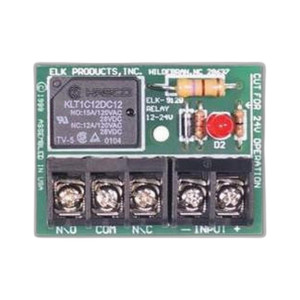
The ELK-9244 is a dual-pole, double-throw (DPDT) sensitive relay engineered for low-voltage switching control in security and access control installations. Operating at either 12 VDC or 24 VDC, the ELK-9244 delivers the flexibility to integrate into mixed-voltage control architectures—a practical requirement when upgrading legacy alarm systems or deploying across multiple facility zones with different power topologies. The DPDT configuration means one relay coil controls two independent switching circuits simultaneously, cutting component count and enclosure real estate compared to deploying separate single-throw relays.
Key Features
- Dual-Pole, Double-Throw (DPDT) Configuration: Two independent switching circuits from a single coil—useful when you need to trigger a door strike and simultaneously cut power to an access reader, or activate a siren while energizing a strobe light. Reduces wiring runs and panel footprint.
- 12 or 24 VDC Operation: Jumper-selectable voltage means one part number works across installations running either standard, removing the need to stock separate SKUs and simplifying procurement for integrators managing multiple customer sites.
- Sensitive Relay Design: Lower coil resistance and pickup current reduce strain on alarm panel outputs and solid-state switching circuits. Matters when you're daisy-chaining multiple relays or running through high-impedance trigger lines on legacy panels where current budget is tight.
- Industry-Standard Pinout: Pin configuration aligns with common relay socket standards, making substitution or emergency field replacement straightforward without custom harness fabrication.
- Compact Form Factor: Fits standard DIN-rail enclosures and control panel cabinets without requiring dedicated mounting rails or oversized chassis modifications.
- Suitable for ELK Alarm Systems: Certified compatible with ELK Products alarm control panels and compatible third-party systems that accept low-voltage relay modules, supporting integration into broader security ecosystems.
Integration & Compatibility
The ELK-9244 integrates into access control and alarm panel architectures as an auxiliary switching device. Common deployment scenarios include triggering door strike locks from alarm outputs, energizing buzzer/horn circuits on panel zones, or switching 24 VDC auxiliary loads (card readers, request-to-exit buttons) via alarm relay outputs. Standard terminal configuration supports direct screw-terminal wiring or industry-standard relay socket connection, depending on your panel layout. Confirm your alarm panel output voltage and current rating matches the relay's coil specification before deployment—undersized panel outputs may not reliably pick the relay, while oversized coils can damage sensitive panel trigger circuits.
When to Choose a Different Model
If your installation requires a single-throw relay (only one load to switch), consider a simpler single-pole, single-throw (SPST) relay from the same manufacturer—less complex, lower cost. If you need higher switching current capacity (above typical 5–10 A contact ratings on sensitive relays), investigate heavy-duty industrial relays with higher coil wattage. If your application requires DC/AC dual-voltage operation or surge suppression, check whether your panel's relay socket includes built-in diode protection or if external varistor modules are needed.
Frequently Asked Questions
Q: Can the ELK-9244 switch AC loads, or is it DC-only?
A: The ELK-9244 is a DC-coil relay (energized by 12 or 24 VDC). The contact output can switch both AC and DC loads, but confirm your load current and voltage are within the relay's contact rating (typically 5–10 A at 30 VDC max, lower for AC). Check the datasheet for exact contact specifications.
Q: How do I set the relay for 24 VDC instead of 12 VDC?
A: The ELK-9244 is jumper-selectable for 12 or 24 VDC operation. Refer to the datasheet for jumper location and configuration. Incorrect jumper position will result in no pickup or relay failure.
Q: Is the ELK-9244 suitable for door strike control on a single-door or multi-door installation?
A: Yes. The DPDT configuration can trigger one door strike and simultaneously activate an access request indicator or disable a reader—both from one relay. For multi-door systems, deploy one ELK-9244 per door or use the two independent circuits to control two separate strikes or auxiliary devices per relay.
Q: What is the coil current draw, and will it overload a typical alarm panel output?
A: Sensitive relays draw lower current than standard relays—typically 50–100 mA, though exact values are on the datasheet. Most modern alarm panels can source 200+ mA per output, but verify your panel specifications to avoid nuisance dropout or false triggers under high load.
Q: Can I use the ELK-9244 in extreme temperatures or outdoor enclosures?
A: The relay itself is suitable for standard industrial environments (typically -20°C to 60°C). If deploying in outdoor cabinets or extreme cold, verify operating temperature on the datasheet and ensure the enclosure provides thermal protection. The relay coil's resistance changes with temperature, potentially affecting pickup behavior at extremes.
Ted PerryPerspective based on aggregated IP Security Depot and affiliated engineering team experience.
The ELK-9244 is a straightforward, reliable workhorse for mixed-voltage control environments where you need two independent switching circuits without bulky stacked relays. The sensitive design—lower coil current and faster response time—matters in retrofit scenarios where legacy alarm panels have weak or unstable outputs. This is especially valuable when integrating older DSC or GE panels with modern strike controllers or IP-based access devices that expect clean, decisive relay switching.
Technical Highlights:
- DPDT Contact Configuration: One coil, two independent circuits—cuts enclosure footprint by ~40% versus two single-throw relays. Real benefit in space-constrained cabinet retrofits.
- Jumper-Selectable 12/24 VDC: Single SKU across installations eliminates procurement fragmentation and field stocking overhead. Standardize your spares inventory.
- Sensitive Coil Specification: Draws ~50–100 mA typical (exact value on datasheet), making it compatible with high-impedance panel outputs and solid-state trigger circuits that can't reliably drive industrial-grade relays.
Deployment Considerations:
- Confirm your alarm panel's output voltage and current capacity before wiring. Undersized outputs may not reliably energize the coil; oversized coils can damage sensitive panel trigger circuits. Always check the datasheet for coil wattage and hold current.
- If deploying in a cabinet with significant temperature swings (outdoor enclosure, unheated warehouse), verify the relay's operating range. Coil resistance drifts with temperature, potentially causing pickup delays or nuisance operation at extremes.
Best suited for access control retrofits, auxiliary device switching in alarm systems, and integrations where you need flexible dual-circuit control from a single relay without stacking hardware. Not a substitute for high-current industrial relays or for applications requiring DC-to-AC or AC-to-DC coil operation—stick with purpose-built devices for those scenarios.