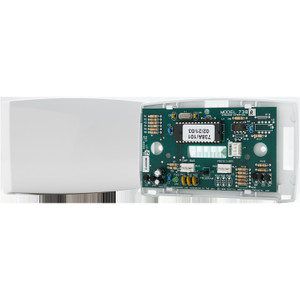
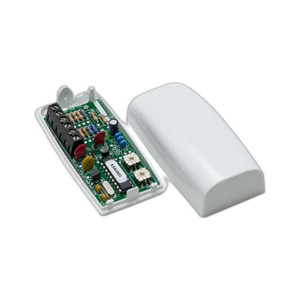
DMP 716 Output Expansion Module
Overview
The DMP 716 is an output expansion module designed to extend the relay and solenoid control capacity of compatible DMP security control systems. Operating at 15VDC, the 716 mounts into a modular expansion slot architecture, allowing you to add discrete output control for door locks, electronic strikes, magnetic latches, and auxiliary switching devices across multi-door access control installations without replacing the main control panel.
Key Features
- 15VDC Operation: Runs on the DMP platform's native 15-volt supply, eliminating the need for separate auxiliary power conditioning. This simplifies wiring and reduces the number of power distribution points in your electrical closet.
- Modular Expansion Slot Integration: The 716 plugs directly into a vacant expansion slot on compatible DMP control boards. No external mounting or additional enclosure space required — density matters when you're managing a 12-door, 20-door, or larger facility from a single cabinet.
- Discrete Output Relays: Each 716 module adds relay outputs for individual control of door strikes, solenoids, and auxiliary devices. Typical deployments use one module per 4–8 doors, depending on door hardware configuration.
- Scalable Architecture: Stack multiple 716 modules in available expansion slots to grow your output capacity as your facility expands or as you retrofit additional secured entry points without hardware redesign.
- Direct Integration with DMP Readers and Logic: The 716 works within the DMP ecosystem — outputs are addressed and triggered by card readers, keypads, scheduling logic, and alarm conditions configured on the main DMP panel. No secondary controller or middleware required.
- Cost-Effective Expansion: Adding output capacity via modular 716 cards is typically less expensive than replacing the entire control platform, making it an economical upgrade path for growing multi-site operators.
Integration and Deployment Context
The DMP 716 is intended for access control integrators and facility managers deploying multi-door systems where output control requirements exceed the main panel's built-in relay count. Common scenarios include:
- Warehouse or distribution center expansions requiring control of additional dock doors, personnel gates, or emergency exits.
- Multi-tenant office or mixed-use buildings where each lease space or security zone needs independent door lock relay outputs.
- Retrofit or modernization projects where legacy hard-wired relay cabinets are being consolidated into a centralized DMP architecture.
- Large-scale manufacturing facilities with multiple access zones (production floor, chemical storage, server room) requiring discrete, independently addressable outputs per zone.
Integration relies on the main DMP control panel's configuration interface — you assign outputs to readers, keypads, and logic rules using the DMP's native programming or management software. No additional VMS, middleware, or third-party API layer is needed.
Deciding if the 716 Is Right for Your Project
Choose the DMP 716 if:
- You're already committed to a DMP control platform and need to expand output capacity.
- Your facility requires independent, addressable relay outputs for each door or zone (not shared multi-door relays).
- You want to avoid purchasing and integrating a separate relay module from a third-party vendor.
- Power simplicity matters — your DMP already provides 15VDC to other modules, so one power rail eliminates complexity.
Skip the 716 if:
- Your DMP panel's built-in output count already covers your door count and you have no planned expansion.
- Your door hardware is primarily IP-native (network-enabled locks, electronic strikes with built-in controllers) that don't require discrete 15VDC relay switching.
- You're evaluating a completely new access control platform and haven't yet committed to the DMP ecosystem.
Frequently Asked Questions
Q: How many outputs does a single DMP 716 module provide?
A: The standard 716 module provides discrete relay outputs; the exact count per module is defined in the DMP 716 datasheet. Consult your DMP system documentation or contact the integrator setting up your panel for the specific relay count per module.
Q: Can I use the 716 with older DMP panel models?
A: The 716 is designed for DMP control platforms that support modular expansion slots. Not all DMP models have expansion capability. Verify your panel's slot availability and firmware version before ordering.
Q: Does the 716 require separate firmware or software updates?
A: The 716 is a passive relay expansion module; it operates within the main DMP panel's firmware and configuration environment. No separate driver or firmware upload is required once the module is installed and configured in the panel's output map.
Q: What's the maximum number of 716 modules I can install in a single DMP panel?
A: Expansion capacity is determined by the number of available slots on your DMP control board. Check your panel's specification or contact your integrator for slot availability.
Q: Is the DMP 716 compatible with IP-based door locks?
A: The 716 provides discrete 15VDC relay outputs for traditional electromagnetic locks, strikes, and solenoids. Modern networked locks may use Ethernet or wireless protocols and may not require 15VDC relay control. Confirm your door hardware's power and control requirements before assuming 716 compatibility.
Q: What kind of warranty does the 716 include?
A: Warranty terms are provided with your DMP panel purchase and typically cover all integrated modules under a single contract. Consult your DMP system documentation or specialty retailer for specific terms.
Ted PerryPerspective based on aggregated IP Security Depot and affiliated engineering team experience.
The DMP 716 is a straightforward expansion play — you're adding output relay capacity to an existing DMP control ecosystem without touching the main panel. At 15VDC operation, the 716 sits cleanly on the platform's native supply architecture, which eliminates a common pain point: multiple power rails and auxiliary supplies scattered across the cabinet. If you're running a 12-door facility and your main DMP panel shipped with 4 relay outputs, buying a second 716 module is faster and cheaper than forklift-upgrading the entire control platform.
Technical Highlights:
- 15VDC Supply: Uses the DMP platform's native voltage — no auxiliary conditioning or separate 12VDC supply needed. One power distribution point instead of two simplifies installation and troubleshooting.
- Modular Slot Architecture: The 716 plugs into an available expansion slot on compatible DMP boards. Density and future-proofing matter — if your cabinet has three empty slots, you can add three 716 modules without any external hardware or rewiring.
- Discrete Output Relays for Individual Door Control: Each 716 output is independently addressable and triggered by the main panel's configuration logic — readers, schedules, alarm conditions, and manual override all work the same as the panel's built-in relays.
Deployment Considerations:
- Verify your DMP panel model has available expansion slots before purchasing. Not all DMP variants support modular expansion — a quick check of your panel's spec sheet prevents a return.
- The 716 is a relay module only. It does NOT provide network connectivity, IP-native lock control, or wireless communication. If your door hardware is modern IP-based or networked, confirm that your lock can accept 15VDC relay trigger input; many new smart locks cannot.
- Installation is straightforward — seat the 716 into an empty slot, configure output assignments in the DMP's setup interface, and wire your door hardware to the relay terminals. Integration testing on a test lock before commissioning the entire set is standard practice.
Best fit: mid-sized warehouses, multi-tenant office buildings, and manufacturing sites expanding access control incrementally. You're not redesigning; you're scaling horizontally on an existing platform. If you're running a DMP panel and your relay count is the bottleneck, the 716 is the right lever.