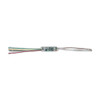
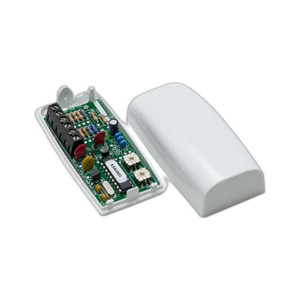
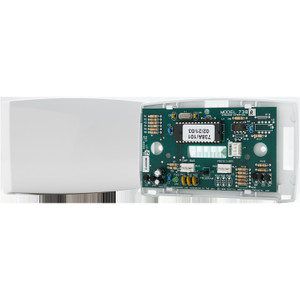
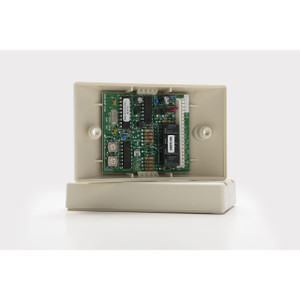
DMP 711S Zone Expansion Module
The DMP 711S is a flying-lead, single-zone addressable expansion module engineered to increase zone capacity on DMP XT and XR Series security panels. When base panel zones reach capacity and additional reporting inputs are required, the 711S provides a cost-effective alternative to panel replacement. TCP/IP networking allows distributed zone supervision across multi-site deployments while maintaining addressable reporting integrity. The module arrives with a 1k ohm resistor included for immediate installation into any qualified expansion slot.
Key Features
- Addressable Zone Expansion: Single zone with flying-lead connection. Adds reporting capacity without replacing the host panel, extending system lifecycle and reducing downtime.
- TCP/IP Protocol: Network-native communication enables multi-site zone supervision and remote reporting integration with DMP management software and third-party VMS platforms.
- Plug-and-Play Installation: Designed for available expansion module slots on XT and XR Series hosts. Includes 1k ohm resistor; no additional termination hardware required.
- UL/ULC Listing: ANSI/UL 365, 609, 864, 985, 1023, 1076, 1610, 1635 and ULC S304, S545, C1023, C1076 certifications approved for residential, commercial, and institutional use.
- CSFM and FDNY Approval: California State Fire Marshall (0134 Household, 0135 Commercial) and New York City Fire Department listing validate suitability for fire-rated and high-compliance deployments.
- Backward Compatible: Works with existing XT and XR Series infrastructure — no firmware updates or control panel reprogramming required for integration.
The 711S addresses a common lifecycle challenge: panel zones exhaust before other hardware reaches end-of-life. Rather than decommission a functioning control unit, installers can insert one or more 711S modules into available slots, deferring replacement capex by 3–5 years. TCP/IP reporting means zones expand at the network layer, eliminating the wiring complexity of hardline serial zone busses. On multi-site accounts, centralized monitoring software reports all zones from all panels through a single IP connection, simplifying back-end provisioning and reducing NOC operator training burden.
Deployment scenarios include retail chains adding door sensors at new checkout lanes without touching the main panel, apartment buildings extending intercom and access-control zones across newly leased units, and enterprise campuses integrating temporary event perimeters (trade shows, construction zones) without permanent infrastructure changes. The 1k ohm terminator is pre-supplied, eliminating a common installation stumbling block and reducing first-call failure rates on retrofit jobs.
The 711S is not a standalone device — it requires an available expansion module slot on a qualified DMP XT or XR Series control unit to function. Verify host panel documentation before specifying. Once installed, the module reports via the same TCP/IP link as the parent panel, so no separate network configuration is necessary. All addressable reporting and event codes flow through the host's central processing and are logged identically to native panel zones.
Full UL, ULC, CSFM, and FDNY certification ensures the 711S meets fire and security code requirements in North America's most stringent jurisdictions. For integrators working in California, New York, and Canada, this pre-approval eliminates authority-having-jurisdiction (AHJ) flag-backs and accelerates project closeout. The addressable protocol maintains audit-trail integrity and supports silent-zone configurations, dead-zone masking, and multi-level access control required by institutional and banking security policies.
Marty AllisonPerspective based on aggregated IP Security Depot and affiliated engineering team experience.
We've seen the 711S solve a specific but recurring problem on retrofit and refresh jobs: a DMP XT or XR Series panel is performing well, security operations trust the interface and reporting workflow, but the zone count has crept up against the panel's native ceiling over 5–7 years. Rather than rip-and-replace the entire control unit (which triggers reprogramming, stakeholder retraining, and downtime), a single 711S insertion adds a reporting path at marginal cost. The TCP/IP transport is the real win here — it keeps expansion zones on the same network backbone as the panel, so your NMS monitoring, remote access, and automated failover all treat expansion zones identically to native zones. No separate serial loops to terminate, no junction boxes to mount in mechanical spaces. From an operational standpoint, the zone just appears in the host panel's event log as if it were native. That parity eliminates the support burden of maintaining two different reporting chains.
One hard lesson we learned early: the 711S is a expansion slot consumer, not a general-purpose module. If your XT or XR panel is already maxed out on expansion modules, or if the datasheet doesn't explicitly call out "expansion module slots," the 711S won't fit. We've fielded calls from integrators who assumed any DMP XT board would take any DMP peripheral — not true. Verify the host panel BOM against the 711S compatibility list before submitting a quote. The 1k ohm resistor inclusion is a thoughtful touch; it's often the forgotten line-item on retrofit kits, and pre-supply eliminates a reorder delay.
Technical Highlights:
- Addressable Reporting: Each 711S zone reports with full addressability to the host panel's communication controller. Event codes, timestamps, and metadata flow through the same TCP/IP channel as the parent panel — no secondary reporting infrastructure required. Simplifies NMS integration and reduces SLA complexity on multi-site contracts.
- Flying-Lead Design: Direct wired connection to the host panel's expansion slot. Enables field termination flexibility — installers can run the lead through existing conduit or run new drops without retrofit plumbing. No proprietary connectors or daughterboards to source.
- Thermistor Termination Included: The 1k ohm resistor is the proper load terminator for addressable zone circuits in DMP systems. Pre-supply eliminates a procurement step and reduces first-visit failure. Integrators should confirm resistor value against their specific panel revision — most modern XT and XR boards use 1k ohm, but legacy variants may differ.
- Multi-Site Scalability: TCP/IP transport supports unlimited 711S modules across unlimited DMP panels on the same IP network. A 50-location enterprise can supervise 300+ zones across all sites from a single central station or cloud-based monitoring platform — provided the management software supports it. Confirm VMS or central-station software compatibility before large-scale rollout.
- Certification Breadth: UL 365, 609, 864, 985, 1023, 1076, 1610, 1635 coverage + CSFM approval means the module qualifies for residential, commercial, fire-alarm-integrated, and banking deployments without further testing or AHJ variance requests. New York and California projects benefit from pre-listing status.
Deployment Considerations:
- Verify expansion-module slot availability on your target host panel before procurement. XT and XR datasheets explicitly list "expansion module slots." If the panel BOM doesn't mention them, the 711S will not install. Contact DMP or your distributor technical team if unsure.
- Flying-lead termination requires field wiring; plan for conduit runs and termination hardware (terminal blocks, wirenuts, or solder joints depending on site practice). The 711S itself is passive until wired to a loop device (door contact, PIR, glass break, etc.); confirm the zone circuit can accommodate the loop resistance of your intended sensor.
- TCP/IP reporting assumes a robust network path to the host panel. If your installation site has WiFi-only connectivity or unreliable Ethernet, consider hardline PoE or cellular backup for the panel itself. The 711S module has no standalone power or comms — all data flows through the host.
- Expansion zones are reported through the same event stream as native zones; if your central station or VMS expects a specific event format or channel assignment for "expansion" zones, coordinate with your software vendor before go-live. Most modern platforms treat all addressable zones identically, but legacy systems may require custom mapping.
- For multi-site deployments, verify that your central-station monitoring contract and software license explicitly permit unlimited expansion zones. Some legacy agreements cap total supervised zones regardless of source; adding 711S modules without updating the contract can trigger invoice adjustments or service-level downtime.
The 711S is purpose-built for integrators and enterprise security teams managing XT and XR Series deployments that need to extend zone capacity without full panel replacement. It's a pragmatic lifecycle-extension play, not a shiny new capability. If you're already running DMP and have exhausted native zones, the 711S eliminates a disruptive and expensive control-unit swap. Pair it with your existing TCP/IP infrastructure and monitoring software, and you've bought 3–5 more years of service from hardware your team already understands. Explore the DMP catalog for compatible panels and complementary modules.