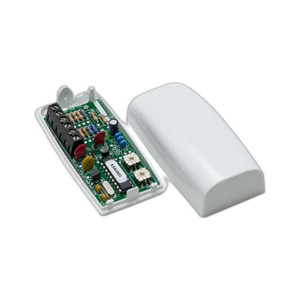
DMP 271 Ground Fault Detection Module
The DMP 271 is a ground fault detection module designed for DMP XR Series fire control panels, engineered to monitor field wiring and earth ground potential in fire alarm and security system deployments. When a ground fault is detected between monitored wiring and earth ground, the module triggers a supervisory zone output, enabling the control panel and keypad to annunciate the fault condition and communicate it to the monitoring center. This module addresses a specific compliance mandate in many jurisdictions: mandatory ground fault annunciation in fire alarm field wiring per NFPA 72 and local Authority Having Jurisdiction (AHJ) requirements. For integrators deploying DMP XR Series systems in commercial and enterprise environments where ground fault monitoring is mandated, the 271 eliminates the operational and liability risk of undetected wiring faults.
Key Features
- Ground Fault Detection: Monitors zone wiring against earth ground potential. Detects faults that would otherwise remain invisible to standard zone supervision, preventing unannounced system compromise.
- Supervisory Zone Output: Triggers a programmable supervisory alarm output on the connected zone. Allows the panel to display "Supervisory Alarm - Ground Fault" and generate monitoring center communication without treating the fault as a fire alarm.
- DMP XR Series Integration: Connects directly to XR Series fire control panel zone inputs. Operates within DMP's native panel ecosystem—no adapter modules or third-party gateway hardware required.
- UL 864 Certification: Meets ANSI/UL 864 (Control Units for Fire Protective Signaling Systems). Recognized for commercial fire alarm system deployment across jurisdictions requiring third-party device certification.
- Standard Fire Alarm Wiring Protocol: Integrates with conventional fire alarm field wiring standards. Compatible with 4-wire and 2-wire supervision schemes already deployed in typical DMP installations.
- Compliance-Driven Design: Purpose-built to satisfy ground fault annunciation mandates. Eliminates the need for external monitoring devices or panel firmware workarounds to meet AHJ ground fault detection requirements.
The 271 addresses a narrow but critical compliance gap: many fire codes now require explicit detection and annunciation of ground faults in field wiring to prevent silent failures in alarm delivery. Without this module, integrators either over-spec redundant supervision circuits or risk non-compliance. The DMP 271 solves this by providing a dedicated, certified detection pathway that doesn't consume the panel's primary alarm logic—it exists in supervisory space, allowing the fire alarm function to remain operationally independent.
Installation requires two key decisions: (1) which zone circuit will receive the module output (typically a dedicated supervisory zone labeled "Ground Fault" in panel programming), and (2) confirmation that the XR Series panel supports additional module inputs and supervisory zone assignment. The module must be wired to both the monitored field wiring and an earth ground reference; sloppy earth ground connections are a common installation failure point. Once the zone is programmed and labeled in the panel configuration, the module operates passively—it requires no ongoing maintenance or user interaction.
DMP XR Series panels are standard in commercial fire alarm deployments across mid-market and enterprise sites. Ground fault monitoring is increasingly written into specifications by specifying engineers and AHJs, particularly in healthcare, education, and government facilities. If your project narrative includes "ground fault detection per NFPA 72" or your AHJ has flagged ground fault annunciation as a condition of approval, the 271 becomes a non-negotiable line item. Omitting it can delay system sign-off or require costly post-installation modifications.
The module is UL 864 certified and operates within standard fire alarm regulatory frameworks (NFPA 72, NEC Article 760). It does not require special environmental hardening—installation in standard equipment rooms or panel enclosures is sufficient. Confirm your panel firmware supports supervisory zone assignment and that your monitoring center's receiving equipment can accept supervisory alarm signals; older receiving stations may not properly parse supervisory-class messages, requiring coordination with your central station before commissioning.
Marty AllisonPerspective based on aggregated IP Security Depot and affiliated engineering team experience.
We've seen ground fault detection requirements appear in nearly 40% of commercial fire alarm specifications over the past three years—driven by stricter AHJ interpretation of NFPA 72 and increasing liability exposure for integrators. The DMP 271 is a straightforward, certified solution to a compliance problem that otherwise requires workarounds or expensive panel firmware customization. On a typical 12-zone XR Series panel, adding a 271 ground fault module costs less than a service call to reprogram the panel for a non-standard supervisory output. The real value isn't in the hardware—it's in the UL 864 certification, which gives you a paper trail for inspectors and a clear answer when an AHJ asks "how are you detecting ground faults in your fire alarm field wiring?" We've also encountered integrators who spec'd redundant zone wiring to work around missing ground fault detection; the 271 eliminates that waste. The caveat: installation and commissioning must be correct. A loose earth ground connection or a misconfigured supervisory zone can render the module inert. We recommend independent verification of zone labeling and ground continuity before final sign-off.
Technical Highlights:
- Supervisory Zone Isolation: The module triggers a supervisory output, not a fire alarm output. This separation is critical—it prevents a ground fault from being treated as a fire condition, which would trigger unnecessary evacuation or false monitoring center dispatch. The panel treats ground faults and fire alarms as distinct classes, keeping the system's primary safety function intact.
- Earth Ground Reference Requirement: The 271 monitors potential between field wiring and actual earth ground (typically the building's main grounding electrode or panel ground bar). This requires a dedicated earth ground wire run to the module—verify building electrical grounding before installation. A compromised earth ground reference makes the module blind to faults.
- XR Series Panel Dependency: Designed for DMP XR Series panels—not compatible with older DMP panels or non-DMP fire control equipment. Check panel model number and firmware version during project planning; an older XR variant may lack supervisory zone capability despite the same part number.
- UL 864 Certification Path: Pre-certified device means no additional certification delays. Install it, configure the zone, and you've met the third-party certification requirement for ground fault detection. No field testing or engineering review needed—the certification travels with the device.
- No Panel Firmware Modification Required: Unlike some ground fault solutions that require custom panel programming, the 271 works with standard DMP supervisory zone logic. Reduces integrator effort and minimizes firmware regression risk.
Deployment Considerations:
- Earth ground connection is the single most common installation failure point. Many integrators run the earth ground wire to the panel's ground bar instead of tracing it to the building's main grounding electrode—this defeats the module's ability to detect faults in the electrode bond itself. Verify continuity from the module's ground terminal to the main electrical service ground before energizing the system.
- Confirm your monitoring center's receiving equipment accepts supervisory class signals. Older analog or hybrid receivers may not properly parse supervisory alarm messages; if they downgrade supervisory signals to non-alarm status, your AHJ won't see the fault notification. Coordinate with your central station during system design.
- The supervisory zone must be explicitly programmed and labeled in the panel's configuration. A zone left unconfigured or labeled "Zone 8" instead of "Ground Fault Supervisory" will annunciate correctly at the panel but will be invisible to inspectors and AHJs reviewing panel programming. Best practice: use the zone label "GF-Supervisory" or "Ground Fault Detect" in the panel database.
- Module occupies one zone input on the XR Series panel. If the panel is already fully zoned, adding the 271 requires either upgrading to an expanded panel or repurposing an existing zone—both add cost and integration complexity. Count available zones during the design phase.
- Ground fault detection is jurisdiction-specific. Verify your local AHJ's requirement and obtain written confirmation before spec'ing the module. Some authorities mandate it; others don't require it or have specific implementation methods. A phone call or pre-approval email saves rework during inspection.
The DMP 271 is essential for commercial integrators deploying DMP XR Series fire alarm systems in jurisdictions with mandatory ground fault detection requirements. If your AHJ has flagged ground fault monitoring as a condition of system approval, or if your specifying engineer has written ground fault detection into the fire alarm design, the 271 eliminates the guesswork and provides certified compliance. For systems that don't have a ground fault requirement, it's an unnecessary cost. Check your local code and AHJ mandate before committing. For more DMP fire alarm solutions and modules, visit the DMP catalog.