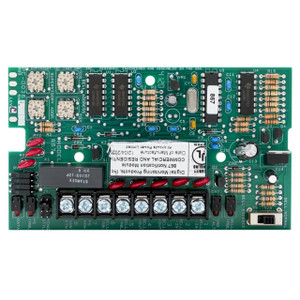
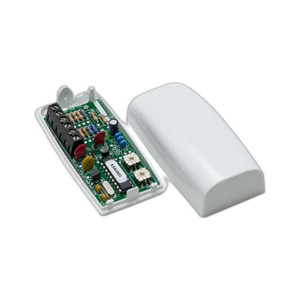
DMP 866 Notification Module
The DMP 866 is a notification module designed as an auxiliary expansion unit for access control and security system environments. Operating at 12VDC, this auxiliary module integrates into existing DMP system architectures to extend notification and signaling capabilities across multi-door and multi-reader deployments without requiring core infrastructure replacement.
Overview
This module functions as a dedicated expansion unit within the access control ecosystem. The 866 is engineered to complement existing reader, credential, and communication configurations in DMP control panel environments. Its role is to add notification and auxiliary signaling endpoints to a deployed system — useful when you're scaling a facility or adding new zones without re-engineering the entire control backbone.
Key Specifications & Benefits
- 12VDC Power Requirement: Operates on standard 12VDC supply, integrating easily into existing power infrastructure. No specialized voltage conversion or high-current supply needed. Pairs with standard industrial power supplies already present in most access control cabinets.
- Auxiliary Module Architecture: Designed as an expansion unit, not a replacement device. This means you install it alongside your existing DMP panel without disrupting active access control or reader configurations. Downtime is minimal — typically just integration and firmware configuration.
- Multi-Door / Multi-Reader Support: Extends notification capabilities across multiple door points and reader types. Useful for larger deployments where a single control panel would otherwise bottleneck signaling or auxiliary output capacity.
- Standard Integration Interface: Connects via the modules-expanders/auxiliary-modules interface category standard, meaning compatibility is predictable and integration follows documented DMP patterns. Installation requires standard cabinet wiring and control panel configuration.
Integration & Compatibility
The DMP 866 integrates into DMP control panel environments and is compatible with existing reader, credential, and communication configurations. Installation requires 12VDC power supply integration and connects via standard auxiliary module interfaces. Before commissioning, confirm your DMP panel firmware version supports auxiliary expansion — older firmware revisions may require updates.
For facilities running multiple DMP panels or hybrid vendor ecosystems, verify that your integration layer (VMS, access management platform, or automation controller) supports auxiliary notification signaling from DMP expansion units. If you're planning a large-scale deployment across multiple buildings, consult the access control planning guide to understand scaling and redundancy implications.
When to Choose a Different Model
If your deployment requires integrated video intercom, badge readers with on-device logic, or wireless credential support, investigate other DMP modules in the auxiliary lineup. The 866 is notification-focused — it does not contain video, reader logic, or credential management itself. If you need those capabilities, a different auxiliary module or controller may be more appropriate.
Installation Considerations
Install the 866 in a secure cabinet environment — 12VDC power and data lines should be routed through conduit in multi-tenant or high-security facilities. Grounding and surge protection are standard best practices. Commission the module via the DMP control panel configuration interface; default settings are typically notification-pass-through, so plan your signaling logic (door unlock delays, alarm output routing, etc.) before powering up.
Frequently Asked Questions
Q: Can I install the DMP 866 in an outdoor enclosure?
A: The 866 itself is designed for cabinet installation. If outdoor notification is required, house the 866 in a weatherproof cabinet with adequate ventilation and surge protection for the 12VDC supply and any wiring runs exposed to the environment.
Q: Does the DMP 866 support two-way communication with the main panel?
A: The 866 integrates via standard auxiliary module interfaces. Communication is managed by your DMP control panel firmware. Confirm your panel firmware version supports bidirectional auxiliary signaling if you require real-time status feedback from the module.
Q: What happens if the 12VDC supply to the 866 is interrupted?
A: The module will lose power and cease signaling. Include the 866 on a UPS-backed circuit if notification availability is critical during power loss — standard practice for access control systems requiring 24/7 operation.
Q: Can I daisy-chain multiple DMP 866 modules?
A: The 866 connects to your DMP panel via the auxiliary module interface. Daisy-chaining is governed by your panel's port capacity and firmware. Consult the DMP panel documentation or your integrator for maximum auxiliary unit count on a single panel.
Q: Is the DMP 866 compatible with third-party VMS platforms?
A: The 866 is a notification module — its role is system-internal signaling. VMS compatibility depends on whether your DMP panel integrates with your VMS via ONVIF, APIs, or other protocols. The 866 does not communicate directly with third-party systems; it operates within the DMP ecosystem.
Ted PerryPerspective based on aggregated IP Security Depot and affiliated engineering team experience.
The DMP 866 is a straightforward auxiliary notification module — no surprises, but also no flashy feature set. It does one job: extend signaling and auxiliary output capacity in a DMP ecosystem. That simplicity is actually valuable if you're expanding a system incrementally. The 12VDC requirement is standard industrial voltage, so power supply integration is predictable.
Technical Highlights:
- 12VDC Operation: Standard cabinet power — no exotic supply requirements. Integrates cleanly into existing DMP infrastructure without adding power conditioning complexity.
- Auxiliary Module Interface: Connects via documented expansion port standard. Installation is configuration, not hardware redesign. Firmware updates may be needed on older panels to unlock full feature support.
- Multi-Door Expansion: Scaling notification capacity is the core use case — useful for campuses or multi-floor facilities adding new zones without replacing the main control panel.
Deployment Considerations:
- The 866 is cabinet-resident — environmental hardening (IP rating, operating temperature range) is NOT published in the available datasheet. If your cabinet is in a harsh or outdoor-adjacent environment, confirm thermal and moisture tolerances with the manufacturer or your integrator before installation.
- Power loss is a gotcha: the module requires constant 12VDC. If notification availability is mission-critical during power anomalies, ensure the 866 is on a UPS-backed supply branch. Standard practice, but easy to overlook in a retrofit scenario.
- Firmware version matching between the main DMP panel and the 866 is typically required. Version mismatch can lead to intermittent signaling or initialization failures. Plan firmware updates as a bundle during commissioning.
The DMP 866 is the right choice for integrators doing incremental expansion of an existing DMP deployment — especially in multi-building campuses or facilities where adding a second control panel is not yet justified. It's not a feature showcase, but it does reliable auxiliary work at a predictable cost, which is exactly what you want from an expansion module.