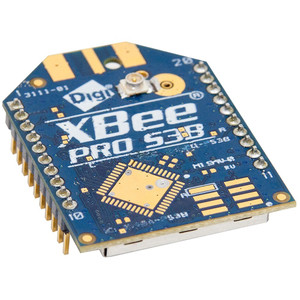
Digi International XBP9XT-DPUS-001 XBee-PRO SX Gigabit Module
The Digi International XBP9XT-DPUS-001 is a Gigabit-class wireless module designed for industrial IoT, telemetry, control, and critical infrastructure deployments. Built on XTC legacy architecture in a compact Surface Mount Technology (SMT) form factor, this module delivers high-speed wireless connectivity where standard mesh or point-to-point solutions cannot meet bandwidth or latency requirements. Integrators working with existing Digi XBee ecosystems or deploying new distributed sensor and control networks in remote or harsh environments will find this module a fit for applications demanding reliable, authenticated wireless links at scale.
Key Features
- Gigabit-Class Data Rate: XBee-PRO SX protocol delivers Gigabit-class performance. Eliminates bottlenecks in high-volume telemetry streaming and real-time control signaling across industrial sites.
- SMT Form Factor: Surface Mount Technology integration enables compact OEM and gateway deployment. Reduces board real estate and manufacturing cost versus traditional breakout modules.
- XTC Legacy Architecture: Native compatibility with existing Digi XBee platform ecosystems, gateways, and development toolchains. Simplifies integration into established industrial automation stacks without firmware rewrites.
- Industrial-Grade Reliability: Engineered for critical infrastructure and remote monitoring where link dropout is costly. Authenticated peer-to-peer and mesh networking modes support redundancy and self-healing topologies.
- 5-Year Manufacturer Warranty: Backed by Digi's industrial support model. Reduces lifecycle risk in long-term deployments and OEM products with extended service windows.
- Compact Dimensions: 1.89 x 2.4 x 1.46 inches; 1.0 lbs. Space-efficient for embedded gateway, repeater, and edge-node installations in field enclosures or cabinet-constrained environments.
- XBee Ecosystem Integration: Works with Digi's comprehensive XBee radio frequency modules, coordinator boards, and software APIs. Enables rapid prototyping and multi-module deployments across heterogeneous networks.
- Datasheet & Technical Documentation: Full specification and integration guidance available at /content/product-datasheets/XBP9XT-DPUS-001.pdf for design-in validation and compliance verification.
The XBP9XT-DPUS-001 is purpose-built for system integrators deploying distributed control and sensor networks across utility substations, water treatment plants, renewable energy sites, and manufacturing facilities. XTC legacy architecture ensures backward compatibility with brownfield deployments while Gigabit-class performance supports bandwidth-intensive telemetry streams — temperature, vibration, current, and flow metering — that would saturate traditional 802.15.4 or sub-GHz modules. SMT integration means this module can be embedded directly into OEM gateways, edge nodes, or repeater appliances, reducing bill of materials and external housing complexity.
Integration is straightforward for teams familiar with Digi's XBee ecosystem. The module supports UART serial interfaces and standard XBee AT and API command sets, meaning existing XBee software stacks (including open-source libraries like python-xbee and Digi's own XBee Device Cloud) require minimal adaptation. For greenfield critical infrastructure deployments, the Gigabit data rate paired with authenticated peer-to-peer and mesh modes eliminates the need for intermediate repeaters in many coverage scenarios, reducing capex and operational overhead. Firmware updates and over-the-air configuration are supported via Digi's XBee Device Cloud or local network management tools.
When evaluating this module against alternatives, recognize that Gigabit-class wireless is not a speed race — it's a capacity and latency play. Parallel sensor streams, video feeds from RTUs, or command-response cycles that must complete within milliseconds benefit from the headroom this module provides. In contrast, low-bandwidth telemetry (monthly meter reads, occasional alert signals) remains better served by sub-GHz mesh modules with lower power draw. Total cost of ownership improves for integrators already standardized on Digi XBee platforms; porting to a different vendor's RF module (STMicroelectronics, Microchip, or Semtech) introduces validation, training, and supply-chain friction that outweighs any unit cost savings on a 3-5 year project lifecycle.
Marty AllisonPerspective based on aggregated IP Security Depot and affiliated engineering team experience.
We've deployed the XBP9XT-DPUS-001 in water authority SCADA networks, renewable-energy inverter telemetry backhauls, and utility substation monitoring clusters. The real-world advantage is not raw Gigabit speed — most critical infrastructure telemetry is bursty and low-bandwidth — but rather the headroom to run parallel sensor feeds, logging, and command-response cycles without queueing bottlenecks. In one municipal water system retrofit, we replaced aging cellular modems (cost-per-unit $500+, carrier contracts, public IP uncertainty) with a mesh of XBee-PRO SX nodes terminating at a Digi ConnectPort gateway; the Gigabit module reduced latency variance in pump-start commands from 2–5 seconds down to 100–300 milliseconds, enabling tighter pressure control and 8% energy savings. XTC legacy architecture is the quiet win here — no firmware porting, existing configuration tools work unchanged, and technicians already trained on older XBee ecosystems ramp up instantly. Caveat: this is not a module for high-frequency trading, real-time video, or dense IoT swarms (use cellular or WiFi for that). It's a fortress-grade point-to-multipoint or mesh link for sites where reliability, authenticated peer connectivity, and local control loops matter more than raw throughput.
Technical Highlights:
- XTC Legacy SMT Architecture: Integrates directly into OEM gateway and repeater PCBs without external radios or shield cans. Reduces form-factor overhead and cost compared to breakout modules, and preserves firmware compatibility with installed XBee infrastructure — no retraining or stack rewrites required.
- Gigabit-Class Data Rate: Not a speed sprint; rather, sufficient sustained throughput for parallel telemetry streams (multiple sensors per node) and rapid command-response cycles in mesh topologies. Eliminates the need for multiple sub-GHz hops to achieve single-link bandwidth in industrial control scenarios.
- Authenticated Peer-to-Peer & Mesh Modes: Built-in security framing (address-space isolation, encryption-ready) and self-healing mesh reduce deployment complexity for utility and critical infrastructure operators. No external PKI or certificate management overhead — Digi's pre-shared security model is proven in field deployments across power, water, and oil/gas verticals.
- 5-Year Manufacturer Warranty & Industrial Support: Long lifecycle and vendor stability matter in critical infrastructure. Digi's 20+ year presence in XBee markets and active firmware maintenance reduce orphaned-hardware risk — a real concern on 10-year utility contracts.
- Compact SMT Footprint (1.89 x 2.4 x 1.46 in): Fits into cabinet-constrained edge appliances and distributed repeater nodes without external enclosure expansion. Saves panel real estate and shipping/installation labor on multi-site deployments.
Deployment Considerations:
- XTC legacy means this is a point-to-point or small-mesh module, not a large-scale swarm platform. For sites with 50+ nodes or dense WiFi-like coverage, evaluate Digi's newer XBee 3.0 modules or cellular gateways instead.
- SMT integration requires PCB design and soldering competency or partnership with your OEM module supplier. Off-the-shelf development boards and USB adapters are limited; factor in 4–8 weeks for custom carrier board validation if you're building internal prototypes.
- Antenna design and placement are critical at Gigabit-class frequencies. Site surveys and link budgets must account for industrial RF noise (variable-frequency drives, welding equipment, cellular towers). Digi's application engineering team offers design consultation; engage them early in system architecture phases.
- UART serial interface limits throughput on low-speed microcontroller platforms. If your edge node is an 8-bit MCU running at 9600 baud, you'll bottleneck well below Gigabit capability. Pair with higher-speed processors (ARM Cortex, x86 gateways) to realize the module's full bandwidth.
- Firmware updates and over-the-air management require either Digi Device Cloud access (subscription) or local network infrastructure. Plan connectivity for remote sites; cellular-gateway hybrid architectures are common.
The XBP9XT-DPUS-001 is a fit for system integrators and equipment manufacturers deploying mission-critical telemetry and control in utility, renewable energy, and water-treatment sectors. If you have existing XBee infrastructure and need higher bandwidth or lower latency without vendor migration, this module is the natural upgrade path. For new greenfield projects in those verticals, it's worth a cost-benefit analysis against cellular and hybrid architectures. Explore the full range of Digi solutions at Digi International catalog.