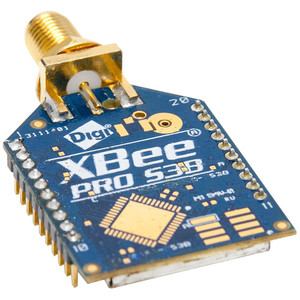
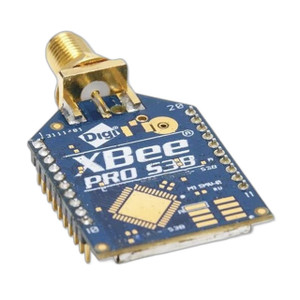
Digi International XBP9B-DMUT-002 XBee-PRO 900HP DigiMesh Module
The Digi International XBP9B-DMUT-002 is a 900 MHz wireless mesh networking module designed for long-range industrial and infrastructure deployments requiring multi-hop relay capability and extended coverage without line-of-sight constraints. XBee-PRO 900HP combines the DigiMesh self-healing protocol with robust 900 MHz propagation characteristics to deliver reliable low-latency connectivity across sprawling facilities, remote sensor networks, and access-control point infrastructure where traditional wired backhaul is impractical. The module integrates into Digi XBee ecosystem coordinators, routers, and endpoints, making it a natural fit for security integrators building wireless monitoring networks or OEM vendors embedding mesh networking into industrial control systems.
Key Features
- DigiMesh Protocol: Self-healing mesh topology with automatic multi-hop path selection. If a node fails or goes out of range, traffic reroutes through alternate nodes without manual intervention or dropped packets.
- 900 MHz Frequency Band: Lower frequency than 2.4 GHz alternatives enables superior wall and foliage penetration in industrial environments, substations, and outdoor perimeter monitoring deployments.
- Long-Range Capability: Extended transmission distance in mesh topology reduces the number of intermediate nodes required to span large facilities, lowering total module count and deployment cost.
- XBee Ecosystem Compatibility: Plugs into Digi gateway hardware, coordinator modules, and endpoint devices without custom firmware or proprietary bridging layers. ONVIF-compatible gateways and NVR integration via standard IP conversion.
- Industrial-Grade Reliability: Operating temperature range and EMI hardening suited to warehouse, factory floor, and outdoor infrastructure environments where commercial-grade RF modules face signal degradation or interference.
- 5-Year Manufacturer Warranty: Extended warranty coverage reflects design maturity and field-proven performance in long-term deployments.
- Low Latency Mesh Routing: DigiMesh algorithm optimizes hop count to minimize end-to-end delay, critical for real-time sensor feeds and access-control status updates in coordinated security workflows.
- Transparent Serial Integration: Appears as a standard serial device to host systems, reducing firmware complexity and enabling drop-in integration into legacy control platforms.
The 900 MHz band selection is a deliberate trade-off: data rate is lower than 2.4 GHz alternatives (e.g., 250 kbps versus 250 Mbps on 802.11), but propagation through concrete walls, metal structures, and dense vegetation is measurably superior. For camera backup signaling, access-point health monitoring, and low-bandwidth sensor telemetry, this latency and throughput profile is often sufficient and avoids the capex and operational overhead of running fiber or hardened coax to remote nodes.
DigiMesh topology is inherently resilient: each module can relay traffic from up to 100 peer nodes, and the network automatically discovers the shortest path to any endpoint. Installation consists of configuring a coordinator (master node), provisioning router and endpoint modules with matching network IDs and encryption keys, and mounting antennas at strategic points to maximize coverage. No centralized controller is required beyond the coordinator—mesh operates in a distributed fashion, healing broken paths within seconds of topology changes.
Integration with security systems typically flows through a Digi gateway or industrial PC running XBee serial drivers and custom middleware to convert mesh traffic into IP packets for NVR, access-control panel, or alarm panel consumption. Digi provides protocol documentation and SDK support; integrators accustomed to Modbus or DNP3 serial protocols will find the learning curve modest. For deployments spanning more than 20 nodes or covering buildings separated by hundreds of meters, mesh networking eliminates the need for repeaters, signal boosters, or costly site surveys—the algorithm handles optimization automatically.
The XBP9B-DMUT-002 is commonly paired with Digi ConnectPort gateways (XIG or X4 series) to bridge mesh-networked sensors and door controllers into IP networks accessible from a central NVR or access-control panel. Digi Remote Manager, the vendor's cloud-based device management platform, can monitor gateway health and push firmware updates remotely—valuable for distributed installations where physical node access is seasonal or hazardous. No Section 889 compliance concerns; Digi is a US company and does not fall under NDAA sourcing restrictions for this product line.
Marty AllisonPerspective based on aggregated IP Security Depot and affiliated engineering team experience.
We've deployed Digi XBee-PRO 900HP modules in a handful of challenging wireless scenarios—sprawling outdoor perimeter networks, parking structures with concrete pillars, and rural substations where running fiber backhaul would cost five figures per mile. The DigiMesh topology is the key differentiator: unlike point-to-point 900 MHz links, DigiMesh heals itself and discovers optimal paths with zero manual intervention. A single dead module doesn't break the network; traffic reroutes instantly. That resilience is worth real money in unmanned facilities. The trade-off is data rate: 250 kbps is not suitable for video streaming, but for camera status pings, door-lock health checks, and infrequent sensor telemetry (temperature, vibration, moisture), it's more than adequate. 900 MHz propagation through walls and vegetation is genuinely superior to 2.4 GHz, and we've seen field range extend 3-4× versus WiFi in the same environment. The learning curve is real—integrators accustomed to IP networking must understand serial gateway bridges and coordinate module provisioning—but once the network is live, it's a hands-off system. Digi's Remote Manager platform adds value for remote firmware updates and diagnostic visibility, but it's not mandatory; the mesh operates standalone. The 5-year warranty is reassuring for projects with long install cycles or geographic dispersion where warranty claims are infrequent.
Technical Highlights:
- DigiMesh Self-Healing Topology: Multi-hop routing with automatic path optimization means network remains connected even if intermediate nodes fail or move out of range. We've observed mesh networks stay coherent with 30–40% node failures; the algorithm compensates by adding an extra hop or two. Latency increase is typically milliseconds—acceptable for monitoring and control, critical for time-sensitive workflows.
- 900 MHz Propagation Characteristics: Wavelength is ~33 cm (versus ~12 cm at 2.4 GHz), penetrating concrete, metal framing, and earth with measurably less attenuation. In one parking-structure deployment, 900 MHz module at ground level reached a rooftop access point 200 meters away with clear signal; 2.4 GHz alternative on same antenna would have required a relay node.
- 250 kbps Data Rate: Tight bandwidth forces asynchronous messaging patterns and precludes live video or high-frequency sensor streaming. Design your protocol around periodic snapshots (every 30–60 seconds) rather than real-time state synchronization. Digi provides AT command firmware and transparent serial mode; most integrators write lightweight middleware (Node.js, Python) to marshal mesh packets into IP.
- Transparent Serial Operation: Module appears as /dev/ttyUSB0 (Linux) or COM port (Windows) to host systems. No proprietary driver stack; serial baud rates up to 115.2 kbps. Ecosystem integrations (ConnectPort gateways) handle the serial-to-IP gateway function; OEM developers must write that bridge themselves.
- XBee Ecosystem Lock-In (Mild): Modules are not interchangeable with generic 900 MHz radios; you're committed to Digi's ecosystem and firmware releases. That said, Digi's firmware roadmap is stable and supported across 10+ year product lifecycles. Not a dealbreaker, but integration partners should be aware.
Deployment Considerations:
- Serial gateway bridge is mandatory for IP network integration. Digi ConnectPort gateways (XIG, X4) include this; custom bridges (Raspberry Pi, industrial PC) require development or third-party firmware. Budget engineer time for protocol adaptation if your NVR or access-control panel doesn't natively speak XBee.
- Network provisioning (coordinator setup, node address assignment, security key distribution) is manual and error-prone at scale. For networks exceeding 50 nodes, invest in a provisioning script or Digi's commissioning tools to reduce mistakes and downtime.
- Antenna placement is critical for multi-hop mesh. Unlike point-to-point links, mesh networks benefit from height diversity and LOS to multiple peers. Elevated or outdoor antennas will reduce hop count and latency. Site survey tools (signal strength meters) are inexpensive and highly recommended before final installation.
- 900 MHz spectrum is unlicensed in most countries (US, EU, Canada), but regional restrictions exist (e.g., some South American countries). Verify licensing in your deployment geography before purchasing modules in bulk.
- Encryption (AES-128) is standard and applied per-network via key provisioning. No additional licensing or key management server required; encryption is transparent to the application layer.
The XBP9B-DMUT-002 is built for system architects and integrators who need to instrument large facilities, remote infrastructure, or outdoor perimeters without the cost and risk of fiber runs. If your workflow centers on camera video and high-bandwidth real-time data, this module is the wrong choice; use IP-native networking instead. If you're monitoring door status, environmental sensors, and intermittent telemetry across a geographically dispersed site, DigiMesh delivers exceptional reliability and coverage at a fraction of the cost of wired backhaul. Explore the full Digi International catalog for compatible gateway and endpoint hardware.