
Zebra RFD9091-G30G700-US vs Janam XT3-STHJBMGW00: Specification Comparison
The Zebra RFD9091-G30G700-US and Janam XT3-STHJBMGW00 are both handheld rugged mobile computers targeting field and warehouse workflows, but they diverge sharply in primary data-capture technology and connectivity architecture. The Zebra is a wired UHF RFID sled purpose-built for long-range dense tag reads, while the Janam is a self-contained Android 11 device combining LTE/GSM cellular, RFID/NFC, and a 2D barcode imager. Buyers evaluating both are typically choosing between a dedicated RFID infrastructure play and a multi-modal all-in-one field device.

In This Guide
- Which device captures the data types your workflows actually require?
- How do drop rating, IP protection, and wireless mobility compare for harsh environments?
- Which device delivers longer shift endurance, and what platform does each require?
- Which should you choose: the RFD9091-G30G700-US or the XT3-STHJBMGW00?
- Side-by-Side Specs
- FAQ
Which device captures the data types your workflows actually require?
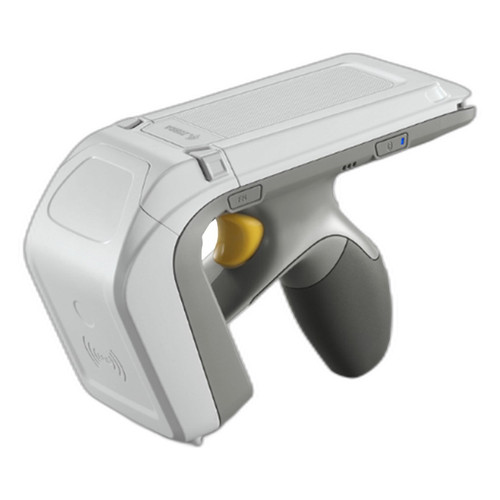
The Zebra RFD9091-G30G700-US is built exclusively around Premium Plus Long-Range UHF RFID, designed to read dense rack and pallet tags in a single pass over wired Serial/USB connectivity. No barcode imager or cellular radio is specified in the provided data.
The Janam XT3-STHJBMGW00 offers a multi-modal capture stack: a Honeywell N6703 1D/2D omnidirectional imager supporting QR Code, Data Matrix, PDF417, Code 128, Code 39, UPC, and EAN; plus RFID/NFC covering ISO14443 Type A/B, ISO15693, MIFARE 1k/4k/Plus/UltraLight/DESFire, and Sony FeliCa. Barcode scanning range and RFID read distance are not specified in the provided data for the Janam.
For operations centered on UHF pallet or rack RFID at long range, the Zebra is the purpose-built choice. For mixed workflows requiring both barcodes and NFC/HF RFID on a single device, the Janam covers more ground without a separate sled.
How do drop rating, IP protection, and wireless mobility compare for harsh environments?
The Zebra RFD9091-G30G700-US is rated to survive 1.2-meter drops and specifies electrostatic discharge protection of +/-8kV direct discharge. IP rating is not stated in the provided specifications. Connectivity is wired (Serial/USB), meaning it requires a host device and tether for operation.
The Janam XT3-STHJBMGW00 carries a higher drop rating of 1.5 meters (5 ft) to concrete across a wide temperature range and is IP67-rated for dust and water ingress protection. It operates as a standalone untethered device over Wi-Fi 802.11a/b/g/n/ac, Bluetooth 5.0 BLE, and optional LTE/GSM cellular via micro SIM.
The Janam edges out the Zebra on rated drop survivability (1.5m vs. 1.2m) and adds a documented IP67 seal. The Zebra's IP rating is absent from the provided data, which is a meaningful gap for buyers specifying wet or dusty environments. The Janam's wireless-first architecture also eliminates the cable dependency inherent to the Zebra's wired sled design.
Which device delivers longer shift endurance, and what platform does each require?
The Zebra RFD9091-G30G700-US carries a 3160mAh battery. No rated shift hours are provided in the specifications. As a wired sled, it depends on a compatible host mobile computer for its operating system, display, and wireless connectivity; the host platform is not specified in the provided data.
The Janam XT3-STHJBMGW00 uses a 2900mAh hot-swappable Li-ion battery rated for 8–10 hours of typical field use, with an optional 5800mAh extended pack. It runs Android 11 with Google Mobile Services (GMS) and Android Enterprise Recommended (AER) certification on a 2.2 GHz Qualcomm Snapdragon octa-core processor with 4GB RAM and 64GB storage, making it a fully self-contained device.
The Zebra's 3160mAh cell is larger in raw capacity, but without a stated hour rating, direct shift-endurance comparison cannot be made from available specs. The Janam's 8–10 hour estimate and hot-swap capability give buyers a concrete planning figure. The Janam requires no separate host device, whereas the Zebra's utility is wholly dependent on the paired host.
Which should you choose: the RFD9091-G30G700-US or the XT3-STHJBMGW00?
Our take: The RFD9091-G30G700-US is the stronger choice when your primary workflow is high-density UHF RFID scanning of pallets or rack locations and you already operate a compatible wired host platform. Its Premium Plus Long-Range UHF engine and 3160mAh battery are purpose-engineered for that single task. However, three concrete spec differences favor the Janam XT3-STHJBMGW00 in broader deployments: the Janam posts a higher drop rating (1.5m vs. 1.2m), carries a documented IP67 ingress-protection rating (absent from Zebra's provided specs), and operates as a fully standalone Android 11 device with cellular LTE, Wi-Fi, Bluetooth 5.0, and a multi-symbology 2D imager—eliminating the host-device dependency the Zebra sled requires. Choose the Zebra for a warehouse already invested in UHF RFID infrastructure; choose the Janam for field teams needing untethered multi-modal capture across barcode, NFC, and cellular networks.
Side-by-Side Comparison
Spec-for-spec, from manufacturer data.
| Specification | Zebra RFD9091-G30G700-US | Janam XT3-STHJBMGW00 |
|---|---|---|
| Product Type | Wired UHF RFID Sled / Mobile Computer | Rugged Handheld Mobile Computer |
| Form Factor | Handheld Sled (wired host required) | Standalone Handheld |
| Operating System | — | Android 11 (GMS / AER) |
| Processor | — | 2.2 GHz Qualcomm Snapdragon octa-core |
| Memory / Storage | — | 4GB RAM / 64GB; microSD expandable |
| RFID Technology | Premium Plus Long-Range UHF | NFC/RFID: ISO14443 A/B, ISO15693, MIFARE, FeliCa |
| Barcode Imager | — | Honeywell N6703 1D/2D omnidirectional |
| Connectivity | Wired (Serial/USB) | Wi-Fi 802.11a/b/g/n/ac, BT 5.0, LTE/GSM (optional), USB-C |
| Bluetooth | — | Bluetooth 5.0 BLE |
| Drop Rating | 1.2m | 1.5m to concrete |
| IP Rating | — | IP67 |
| ESD Protection | +/-8kV direct discharge | — |
| Battery Capacity | 3160mAh | 2900mAh (5800mAh optional) |
| Battery Life (rated) | — | 8–10 hours typical |
| Hot-Swap Battery | — | Yes |
| Warranty | 1 year | — |
| Weight | ~310g (sled with battery) | 272g (with battery) |
| Display | — | 5" HD IPS 1280×720, 500 nits, Gorilla Glass |
Frequently Asked Questions
Which should you choose: the RFD9091-G30G700-US or the XT3-STHJBMGW00?
The RFD9091-G30G700-US is the stronger choice when your primary workflow is high-density UHF RFID scanning of pallets or rack locations and you already operate a compatible wired host platform. Its Premium Plus Long-Range UHF engine and 3160mAh battery are purpose-engineered for that single task. However, three concrete spec differences favor the Janam XT3-STHJBMGW00 in broader deployments: the Janam posts a higher drop rating (1.5m vs. 1.2m), carries a documented IP67 ingress-protection rating (absent from Zebra's provided specs), and operates as a fully standalone Android 11 device with cellular LTE, Wi-Fi, Bluetooth 5.0, and a multi-symbology 2D imager—eliminating the host-device dependency the Zebra sled requires. Choose the Zebra for a warehouse already invested in UHF RFID infrastructure; choose the Janam for field teams needing untethered multi-modal capture across barcode, NFC, and cellular networks.
Is the RFD9091-G30G700-US or XT3-STHJBMGW00 better for warehouse pallet scanning?
The Zebra RFD9091-G30G700-US is specifically engineered for long-range UHF RFID pallet and rack scanning, which is its sole stated capture method. The Janam XT3-STHJBMGW00 supports RFID/NFC but is primarily positioned as a multi-modal barcode and NFC device; UHF read range is not specified in the available data. For pure high-density UHF RFID warehouse workflows, the Zebra is the purpose-built option.
Which device is more rugged—the RFD9091-G30G700-US or the XT3-STHJBMGW00?
On the specs provided, the Janam XT3-STHJBMGW00 edges ahead: it is rated to 1.5m drops versus 1.2m for the Zebra, and carries an IP67 rating for dust and water protection. The Zebra's IP rating is not stated in the provided specifications. The Zebra does specify +/-8kV electrostatic discharge protection, which is absent from the Janam's provided data. Buyers specifying wet or outdoor environments should note the Janam's documented IP67 seal.
Can the XT3-STHJBMGW00 replace the RFD9091-G30G700-US in a cellular field deployment?
Yes, with a caveat. The Janam XT3-STHJBMGW00 is a self-contained Android 11 device with optional LTE/GSM cellular (micro SIM), Wi-Fi, and Bluetooth, making it capable of standalone cellular field deployment without a host device. The Zebra RFD9091-G30G700-US is a wired sled with no cellular radio of its own; cellular capability depends entirely on the paired host. If your deployment requires untethered cellular connectivity and multi-modal capture, the Janam is the appropriate choice.
More Mobile Computer Comparisons
- Janam XT40-ATHKRMGW00 vs Zebra MC3390XR
- Janam XT40-ATHKRMGW00 vs Zebra MC3330XR
- Janam XT40-ATHKRMGW00 vs Janam XT3-STHGBMGW01
- Janam XT40-ATHKRMGW00 vs Janam XT3-STHJBMGW00
- Janam XT3-STHGBMGW01 vs Zebra MC3390XR
- Janam XT3-STHGBMGW01 vs Zebra MC3330XR
Mobile Computer Buying Guides
Get a Second Opinion on Your Camera Choice
Share your site layout, coverage goals, and budget. Our team will validate the camera selection, flag anything we would change, and recommend products that match the use case.