
Zebra RFD4031-G00B700-FT vs Janam XT3-STHJBMGW00: Specification Comparison
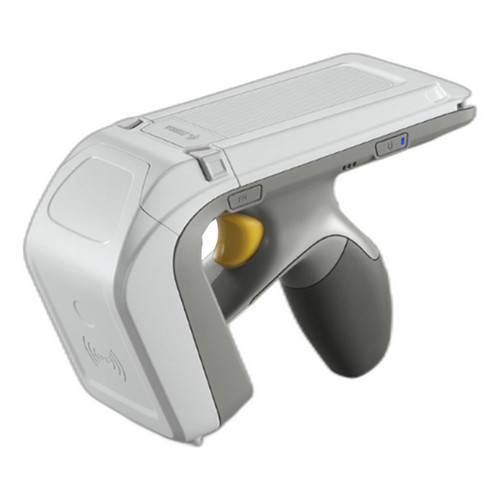
Both the Zebra RFD4031-G00B700-FT and the Janam XT3-STHJBMGW00 are handheld mobile computers targeting enterprise field and warehouse workflows that require RFID and NFC capture alongside wireless connectivity. The Zebra is positioned as a multi-OS RFID sled/reader with Wi-Fi 6, while the Janam is a self-contained Android 11 rugged handheld with integrated LTE, a 2D barcode imager, and a hot-swappable battery. Buyers comparing these are typically evaluating total capture capability, ruggedization level, wireless generation, and ecosystem fit before committing to a fleet deployment.

In This Guide
- Which device covers more capture modalities and delivers stronger wireless connectivity?
- Which device is more ruggedized and offers better sustained field battery performance?
- Which device fits better into a multi-OS enterprise fleet or a standardized Android deployment?
- Which should you choose: the RFD4031-G00B700-FT or the XT3-STHJBMGW00?
- Side-by-Side Specs
- FAQ
Which device covers more capture modalities and delivers stronger wireless connectivity?
The Zebra RFD4031-G00B700-FT leads on wireless generation, supporting Wi-Fi 6 (802.11ax) and Bluetooth 5.3. Its RFID capability is explicitly spec-documented to EPC Gen2 / ISO 18000-6C protocols. NFC is listed but protocol detail is not enumerated in the provided specs. The Zebra spec does not list an integrated barcode imager.
The Janam XT3-STHJBMGW00 supports Wi-Fi 802.11a/b/g/n/ac (Wi-Fi 5 generation) and Bluetooth 5.0 BLE, one wireless generation behind the Zebra on both radios. It adds integrated LTE/GSM via a micro SIM slot (listed as optional WWAN). Its NFC implementation is extensively documented: NFC Forum Tag 1–5, ISO 14443 Type A/B, ISO 15693, MIFARE 1k/4k/Plus/UltraLight/DESFire, and Sony FeliCa. The Honeywell N6703 2D imager reads QR Code, Data Matrix, PDF417, Code 128, Code 39, UPC, EAN, Aztec, and a full 1D symbology set — a capture modality absent from the Zebra's provided specs.
For deployments requiring cellular WAN independence or integrated barcode scanning alongside RFID/NFC, the Janam's integrated capture stack is broader per the provided specs. For high-density Wi-Fi 6 environments prioritizing RFID throughput, the Zebra's radio generation advantage applies.
Which device is more ruggedized and offers better sustained field battery performance?
On drop rating, the Janam XT3-STHJBMGW00 is rated to 1.5 m (5 ft) to concrete across a wide temperature range. The Zebra RFD4031-G00B700-FT is rated to 1.2 m (4 ft) to concrete. The Janam also carries an IP67 ingress protection rating per the provided specs; no IP rating is listed in the provided specs for the Zebra.
Battery capacity favors the Zebra at 3160 mAh lithium-ion versus the Janam's 2900 mAh standard battery. However, the Janam's battery is documented as hot-swappable with an optional 5800 mAh extended pack, and the spec lists 8–10 hours of typical field shift life. No battery life hour figure is provided in the Zebra's specs. The Janam spec also documents a storage temperature range of —; the Zebra spec lists storage temperature of -40 °C to 70 °C (-40 °F to 158 °F).
On the ruggedization axes available in the provided specs, the Janam holds advantages in drop height (1.5 m vs. 1.2 m) and has a documented IP67 rating. The Zebra has a larger fixed battery but no IP or hot-swap data in its provided specs.
Which device fits better into a multi-OS enterprise fleet or a standardized Android deployment?
The Zebra RFD4031-G00B700-FT is documented to run Android, iOS, and Microsoft Windows natively. This multi-OS support is a meaningful differentiator for organizations running mixed mobile fleets where the RFID reader must attach to or work alongside iOS devices (iPhones, iPads) or Windows terminals without OS conversion overhead.
The Janam XT3-STHJBMGW00 runs Android 11 with Google Mobile Services (GMS) and is Android Enterprise Recommended (AER). It does not support iOS or Windows per the provided specs. The GMS/AER certification means it qualifies for zero-touch enrollment and standard Android Enterprise management through EMM platforms such as VMware Workspace ONE or Microsoft Intune. Hardware specifics include a 2.2 GHz Qualcomm Snapdragon octa-core processor, 4 GB RAM / 64 GB storage (3 GB/32 GB optional), and a 5-inch HD IPS display with Corning Gorilla Glass at 500 nits. None of these processor, memory, display, or camera specs are present in the Zebra's provided data.
Buyers standardizing on Android Enterprise with a single integrated device will find the Janam's GMS/AER certification and documented hardware specs easier to evaluate. Buyers needing a single RFID peripheral that bridges iOS, Android, and Windows hosts will find the Zebra's multi-OS support directly relevant.
Which should you choose: the RFD4031-G00B700-FT or the XT3-STHJBMGW00?
Our take: The RFD4031-G00B700-FT is the stronger choice when the deployment runs a mixed-OS mobile fleet (Android, iOS, and Windows hosts) and operates in a high-density Wi-Fi 6 environment where RFID is the primary capture modality. The Janam XT3-STHJBMGW00 is the stronger choice when the deployment requires a single self-contained rugged device: it carries a higher drop rating (1.5 m vs. 1.2 m), a documented IP67 seal absent from the Zebra's provided specs, and an integrated Honeywell N6703 2D imager plus optional LTE/GSM that the Zebra specs do not list. The Zebra's 3160 mAh battery exceeds the Janam's 2900 mAh standard pack, but the Janam offers a hot-swappable 5800 mAh option and documented 8–10 hour shift life. For Android-standardized fleets with EMM management, the Janam's GMS/AER certification and documented Snapdragon octa-core platform provide clearer procurement criteria; the Zebra's processor, memory, display, and IP specs are not provided.
Side-by-Side Comparison
Spec-for-spec, from manufacturer data.
| Specification | Zebra RFD4031-G00B700-FT | Janam XT3-STHJBMGW00 |
|---|---|---|
| Product Type | Mobile Computer (RFID Handheld) | Mobile Computer (Rugged Handheld) |
| Form Factor | Handheld | Handheld |
| Operating System | Android, iOS, Microsoft Windows | Android 11 (GMS/AER) |
| Wi-Fi Standard | Wi-Fi 6 (802.11ax) | Wi-Fi 5 (802.11a/b/g/n/ac) |
| Bluetooth | Bluetooth 5.3 | Bluetooth 5.0 BLE |
| Cellular (WWAN) | — | LTE/GSM (optional micro SIM) |
| RFID Protocol | EPC Gen2, ISO 18000-6C | RFID/NFC (ISO 14443, ISO 15693, MIFARE, FeliCa) |
| NFC | NFC (protocol detail not specified in provided specs) | NFC Forum Tag 1–5; ISO 14443 A/B; ISO 15693; MIFARE; FeliCa |
| Barcode Imager | — (not listed in provided specs) | 1D/2D Honeywell N6703 (QR, DM, PDF417, C128, C39, UPC, EAN) |
| Drop Rating | 1.2 m (4 ft) to concrete | 1.5 m (5 ft) to concrete |
| IP Rating | — (not listed in provided specs) | IP67 |
| Battery Capacity | 3160 mAh lithium-ion | 2900 mAh (hot-swappable; 5800 mAh optional) |
| Battery Life | — (not listed in provided specs) | 8–10 hours typical |
| Charging Interface | USB-C | USB-C |
| Weight | ~310 g (sled with battery) | 272 g (with battery) |
| Warranty | 1 year | — (not listed in provided specs) |
Frequently Asked Questions
Which should you choose: the RFD4031-G00B700-FT or the XT3-STHJBMGW00?
The RFD4031-G00B700-FT is the stronger choice when the deployment runs a mixed-OS mobile fleet (Android, iOS, and Windows hosts) and operates in a high-density Wi-Fi 6 environment where RFID is the primary capture modality. The Janam XT3-STHJBMGW00 is the stronger choice when the deployment requires a single self-contained rugged device: it carries a higher drop rating (1.5 m vs. 1.2 m), a documented IP67 seal absent from the Zebra's provided specs, and an integrated Honeywell N6703 2D imager plus optional LTE/GSM that the Zebra specs do not list. The Zebra's 3160 mAh battery exceeds the Janam's 2900 mAh standard pack, but the Janam offers a hot-swappable 5800 mAh option and documented 8–10 hour shift life. For Android-standardized fleets with EMM management, the Janam's GMS/AER certification and documented Snapdragon octa-core platform provide clearer procurement criteria; the Zebra's processor, memory, display, and IP specs are not provided.
Is the RFD4031-G00B700-FT or the XT3-STHJBMGW00 better for a deployment that already uses iPhones and iPads?
Based on the provided specs, the Zebra RFD4031-G00B700-FT is the only one of the two documented to support iOS alongside Android and Windows. The Janam XT3-STHJBMGW00 is listed as Android 11 only in the provided specs, so it would not function as an iOS-compatible peripheral.
Which device is more rugged for outdoor or manufacturing environments?
Per the provided specs, the Janam XT3-STHJBMGW00 has a higher drop rating (1.5 m to concrete vs. 1.2 m for the Zebra) and a documented IP67 ingress protection rating. The Zebra RFD4031-G00B700-FT's provided specs do not include an IP rating, so a direct ingress-protection comparison cannot be made from available data.
Does either device support cellular LTE for use outside Wi-Fi coverage?
Based on the provided specs, the Janam XT3-STHJBMGW00 supports LTE/GSM via an optional micro SIM (WWAN model). The Zebra RFD4031-G00B700-FT's provided specs list Wi-Fi 6 and Bluetooth 5.3 but do not mention cellular connectivity.
More Mobile Computer Comparisons
- Janam XT40-ATHKRMGW00 vs Zebra MC3390XR
- Janam XT40-ATHKRMGW00 vs Zebra MC3330XR
- Janam XT40-ATHKRMGW00 vs Janam XT3-STHGBMGW01
- Janam XT40-ATHKRMGW00 vs Janam XT3-STHJBMGW00
- Janam XT3-STHGBMGW01 vs Zebra MC3390XR
- Janam XT3-STHGBMGW01 vs Zebra MC3330XR
Mobile Computer Buying Guides
Get a Second Opinion on Your Camera Choice
Share your site layout, coverage goals, and budget. Our team will validate the camera selection, flag anything we would change, and recommend products that match the use case.