
Zebra RFD4031-G00B700-FT vs Janam XR2-ATHKYMGWU0: Specification Comparison
Both the Zebra RFD4031-G00B700-FT and the Janam XR2-ATHKYMGWU0 are handheld UHF RFID mobile computers targeting enterprise field operations such as inventory management, asset tracking, and warehouse picking. Each integrates an RFID reader into a portable form factor with wireless connectivity and barcode scanning capability. This comparison examines the three dimensions most critical to RFID deployment buyers: wireless and RFID capability, battery and physical durability, and OS platform with scanning breadth.
In This Guide
- Which device offers stronger RFID throughput and wireless connectivity for dense enterprise environments?
- Which device is built to sustain longer shifts and harsher physical conditions?
- Which device provides broader OS flexibility and scanning capability for mixed-fleet or multi-application deployments?
- Which should you choose: the RFD4031-G00B700-FT or the XR2-ATHKYMGWU0?
- Side-by-Side Specs
- FAQ
Which device offers stronger RFID throughput and wireless connectivity for dense enterprise environments?
The Janam XR2-ATHKYMGWU0 specifies a UHF RFID scan rate of 1,300+ tags/sec and supports EPC Gen2 UHF protocols. The Zebra RFD4031-G00B700-FT lists RFID protocol support for EPC Gen2 and ISO 18000-6C but does not specify a tags/sec throughput figure in the provided specs.
On wireless, the Zebra RFD4031-G00B700-FT offers WiFi 6 (802.11ax) and Bluetooth 5.3 — the newer WiFi generation providing improved throughput and reduced latency in high-density RF environments. The Janam XR2-ATHKYMGWU0 specifies WiFi 802.11a/b/g/n (WiFi 4) and Bluetooth 5.1, plus GSM/LTE dual-SIM cellular connectivity across FDD-LTE and TD-LTE bands — a capability the Zebra spec does not list.
For buyers in environments with dense WiFi deployments (warehouses, distribution centers), the Zebra's WiFi 6 is a meaningful infrastructure advantage. For mobile field deployments requiring cellular WAN coverage without a separate device, the Janam's integrated dual-SIM LTE is a differentiator the Zebra specs do not address.
Which device is built to sustain longer shifts and harsher physical conditions?
The Janam XR2-ATHKYMGWU0 carries a 9,000 mAh 3.7V Li-ion battery — nearly three times the 3,160 mAh lithium-ion battery in the Zebra RFD4031-G00B700-FT. All else being equal, the larger capacity battery directly translates to longer continuous operating time before a recharge or swap is required.
Both devices share an identical drop rating of 1.2m (4 ft) to concrete per their respective specs. The Janam XR2-ATHKYMGWU0 adds an IP67 ingress protection rating, confirming dust-tight and immersion-to-1m water resistance. The Zebra RFD4031-G00B700-FT spec notes electrostatic discharge protection of ±8kV direct discharge and a storage temperature range of -40°C to 70°C (-40°F to 158°F), but does not list an IP rating in the provided specifications.
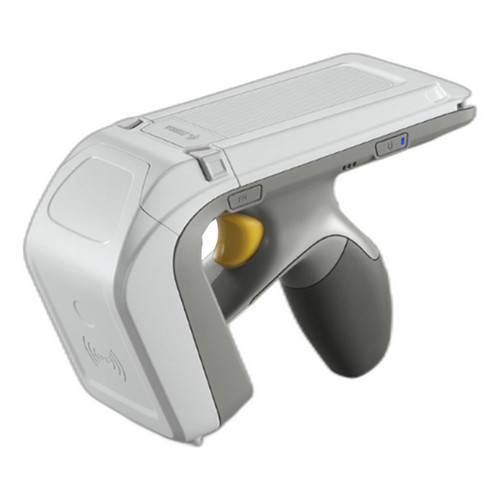
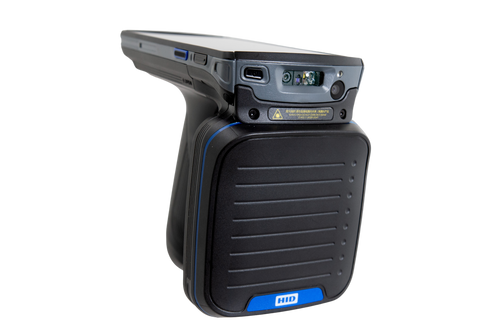
The Janam's heavier build (678 g / 23.9 oz) versus the Zebra's sled-with-battery weight of approximately 310 g (10.9 oz) reflects the larger battery and integrated cellular radio. Buyers in wet, dusty, or outdoor environments will favor the Janam's confirmed IP67 rating; those prioritizing lighter carry weight will note the Zebra's significant weight advantage.
Which device provides broader OS flexibility and scanning capability for mixed-fleet or multi-application deployments?
The Zebra RFD4031-G00B700-FT is specified to support Android, iOS, and Microsoft Windows — three distinct operating systems. This multi-OS support is explicitly listed as a design feature for mixed-fleet deployments and eliminates OS lock-in when pairing the reader sled with host devices running different platforms.
The Janam XR2-ATHKYMGWU0 runs Android 13 (AOSP) and is listed as upgradable to Android 15. It is a self-contained device with integrated scanning; no secondary host device is required. Its Honeywell N5703 1D/2D imager supports a defined set of barcode symbologies including GS1-128, Code 39, Code 128, QR Code, and Data Matrix. The Zebra spec does not list supported barcode symbologies or a named scan engine in the provided specifications.
The Janam also integrates a 5 MP front camera and 13 MP rear camera with flash, a 5.7-inch Gorilla Glass display (720×1440), 4 GB RAM, 64 GB storage expandable via microSD up to 512 GB, and multi-constellation GPS (A-GPS, GLONASS, BeiDou, Galileo). The Zebra spec does not list display size, RAM, internal storage, camera, or GPS capability, as it operates as a sled accessory paired with a host device.
Which should you choose: the RFD4031-G00B700-FT or the XR2-ATHKYMGWU0?
Our take: The XR2-ATHKYMGWU0 is the stronger choice when the deployment requires a fully self-contained rugged handheld with maximum battery endurance, cellular connectivity, and confirmed IP67 environmental protection. The Janam's 9,000 mAh battery is approximately 2.85× the Zebra's 3,160 mAh, its IP67 rating is explicitly specified while the Zebra lists no IP rating, and its integrated dual-SIM LTE eliminates dependence on WiFi infrastructure in field environments. The Zebra RFD4031-G00B700-FT is the stronger choice when the buyer already operates a mixed-OS mobile fleet — Android, iOS, and Windows — and needs a reader sled that attaches to existing host devices without replacing them, and where WiFi 6 infrastructure is in place to leverage its 802.11ax radio. Buyers must confirm that the Zebra sled's host-device dependency fits their workflow before selecting it over the Janam's all-in-one form factor.
Side-by-Side Comparison
Spec-for-spec, from manufacturer data.
| Specification | Zebra RFD4031-G00B700-FT | Janam XR2-ATHKYMGWU0 |
|---|---|---|
| Form Factor | Handheld RFID sled (host-dependent) | Self-contained rugged handheld |
| Operating System | Android, iOS, Microsoft Windows | Android 13 (AOSP); upgradable to Android 15 |
| RFID Protocol | EPC Gen2, ISO 18000-6C | UHF EPC Gen2 (North America) |
| RFID Scan Rate | — | 1,300+ tags/sec |
| WiFi Standard | WiFi 6 (802.11ax) | 802.11a/b/g/n (WiFi 4) |
| Cellular | — | GSM/LTE dual-SIM (FDD-LTE + TD-LTE) |
| Bluetooth | Bluetooth 5.3 | Bluetooth 5.1 |
| NFC | Yes | — |
| Battery Capacity | 3,160 mAh Li-ion | 9,000 mAh 3.7V Li-ion |
| Drop Rating | 1.2m to concrete | 1.2m (4 ft) to concrete |
| IP Rating | — | IP67 |
| Weight | ~310 g (10.9 oz) sled with battery | 678 g (23.9 oz) |
| Display | — | 5.7 in. 720x1440 Gorning Gorilla Glass |
| Processor | — | 2.45 GHz Qualcomm octa-core |
| RAM / Storage | — | 4 GB RAM / 64 GB (microSD up to 512 GB) |
| Barcode Scan Engine | — | Honeywell N5703 1D/2D (GS1-128, Code 39, Code 128, QR, Data Matrix) |
| GPS | — | A-GPS, GLONASS, BeiDou, Galileo |
| Charging Interface | USB-C | — |
| Warranty | 1-year | — |
Frequently Asked Questions
Which should you choose: the RFD4031-G00B700-FT or the XR2-ATHKYMGWU0?
The XR2-ATHKYMGWU0 is the stronger choice when the deployment requires a fully self-contained rugged handheld with maximum battery endurance, cellular connectivity, and confirmed IP67 environmental protection. The Janam's 9,000 mAh battery is approximately 2.85× the Zebra's 3,160 mAh, its IP67 rating is explicitly specified while the Zebra lists no IP rating, and its integrated dual-SIM LTE eliminates dependence on WiFi infrastructure in field environments. The Zebra RFD4031-G00B700-FT is the stronger choice when the buyer already operates a mixed-OS mobile fleet — Android, iOS, and Windows — and needs a reader sled that attaches to existing host devices without replacing them, and where WiFi 6 infrastructure is in place to leverage its 802.11ax radio. Buyers must confirm that the Zebra sled's host-device dependency fits their workflow before selecting it over the Janam's all-in-one form factor.
Is the RFD4031-G00B700-FT or XR2-ATHKYMGWU0 better for all-day outdoor field operations without reliable WiFi?
Based on the provided specs, the Janam XR2-ATHKYMGWU0 is better suited for this use case. It offers a 9,000 mAh battery for extended runtime, integrated dual-SIM GSM/LTE cellular connectivity so it does not depend on WiFi, and a confirmed IP67 ingress protection rating for dust and water resistance. The Zebra RFD4031-G00B700-FT spec lists no IP rating and no cellular radio, and its 3,160 mAh battery is significantly smaller.
Can the RFD4031-G00B700-FT work with iPhones and Windows tablets already in our fleet?
Per its specifications, yes — the Zebra RFD4031-G00B700-FT lists support for Android, iOS, and Microsoft Windows operating systems, making it designed for use as a reader sled paired with existing host devices across all three platforms. The Janam XR2-ATHKYMGWU0 runs Android 13 (AOSP) only and is a standalone device, so it would not attach to or extend an iOS or Windows host.
Which device has faster RFID read performance — the RFD4031-G00B700-FT or the XR2-ATHKYMGWU0?
The Janam XR2-ATHKYMGWU0 spec explicitly states a UHF RFID scan rate of 1,300+ tags per second. The Zebra RFD4031-G00B700-FT spec does not provide a tags-per-second throughput figure in the supplied specifications; both devices list EPC Gen2 protocol support. Buyers requiring a verified throughput benchmark for the Zebra should consult the manufacturer's datasheet directly at the listed PDF path.
More Mobile Computer Comparisons
- Janam XT40-ATHKRMGW00 vs Zebra MC3390XR
- Janam XT40-ATHKRMGW00 vs Zebra MC3330XR
- Janam XT40-ATHKRMGW00 vs Janam XT3-STHGBMGW01
- Janam XT40-ATHKRMGW00 vs Janam XT3-STHJBMGW00
- Janam XT3-STHGBMGW01 vs Zebra MC3390XR
- Janam XT3-STHGBMGW01 vs Zebra MC3330XR
Mobile Computer Buying Guides
Get a Second Opinion on Your Camera Choice
Share your site layout, coverage goals, and budget. Our team will validate the camera selection, flag anything we would change, and recommend products that match the use case.